YOUR FISH. YOUR COAST. YOUR RIGHTS.
The Lawsuit to Save North Carolina's Coastal Fisheries
A guide to this generation’s most important conservation case in North Carolina
What Is This Case About?
The fish in North Carolina's sounds, rivers, and coastal waters belong to every North Carolinian as a public trust resource. Under state law and the North Carolina Constitution, the State is obligated to protect and manage those fish for the benefit of all citizens, now and in the future.
For nearly 30 years, the State hasn't done that. Fisheries that were once the lifeblood of the North Carolina coast are collapsing, and in some cases, are all but gone.
In November 2020, the Coastal Conservation Association of North Carolina (CCA NC) and 86 North Carolina citizens filed a lawsuit against the State, arguing that it has broken its legal and constitutional promise to the people of North Carolina. A five-week trial concluded in early 2026. The judge's ruling is now pending.
Summary
The State of North Carolina passed the Fisheries Reform Act in 1997, promising to rebuild its coastal fisheries. It hasn't kept that promise. In fact, things have gotten worse. This lawsuit asks a judge to force the State to take action.
Why Is This Happening?
North Carolina is the last state on the entire Atlantic and Gulf Coast that still allows destructive fishing practices in its coastal nursery waters.
Shrimp Bottom Trawling in Nursery Waters
Picture a net dragged across the bottom of a sound, a place that's meant to be a safe haven for young fish to mature and reproduce. That's inshore shrimp trawling, and North Carolina is the only shrimping state on the Atlantic and Gulf coasts that still allows this practice at scale in these critical areas.
The State's own studies show that for every pound of shrimp harvested, about four pounds of juvenile fish are killed and thrown away. In a single year (2014), an estimated 100 million juvenile spot and 800 million juvenile croaker were wasted before they ever had a chance to grow up and reproduce. That means the main catch in a shrimp bottom trawl is not shrimp; in fact, it’s juvenile fish with value to both the ecosystem to the public, and to coastal economies.
Who Is Involved?
The Plaintiffs
CCA NC is joined by 86 co-plaintiffs — regular North Carolinians from 29 counties across the state, including five former members of the NC Marine Fisheries Commission. These are people who fish, who depend on healthy coastal waters, and who have watched the decline firsthand.
This lawsuit was primarily brought about by citizens to hold their own state government accountable.
The North Carolina Wildlife Federation — A Voice for Conservation
North Carolina Wildlife Federation (NCWF) is not a plaintiff in this case, but we filed a formal "friend of the court" brief in support. NCWF brings together scientists, hunters, anglers, conservationists, and industry partners to conserve North Carolina's natural resources.
NCWF has been raising the alarm about fisheries mismanagement for more than a decade. NCWF tried rulemaking petitions, pushed for legislation, and engaged directly with state agencies.
The Defendant —
The State of North Carolina
The State, through the NC Division of Marine Fisheries, is responsible for managing these shared resources. The lawsuit argues the State hasn't just failed to do so, it has actively worked against science-based reforms, shielded destructive commercial practices from accountability, and allowed a small number of operators to exploit resources that belong to everyone.
The State attempted to have the case dismissed in 2021 and sought summary judgment in 2024. Both motions were denied. The case went to a full five-week trial that ended in February 2026.
What Is the Lawsuit Asking For?
The plaintiffs are asking the court for two things:
- A legal declaration that the State has violated its constitutional obligations to manage public trust fisheries resources.
- A permanent injunction (a court order) requiring the State to stop the practices that are causing further harm and to manage coastal fisheries in accordance with the law.
In plain terms: they want the State to do its job. If the court agrees, it could force reforms that state agencies and the legislature have refused to make for decades — including restrictions on destructive gear practices that every other southeastern shrimping state has already put in place.
Why Should You Care?
Even if you've never cast a line or set foot on the coast, this case matters.
- North Carolina's coastal fisheries are part of the state's identity, economy, and natural heritage. They support fishing communities, tourism, and a way of life that has defined the NC coast for generations.
- Public trust resources — water, fish, wildlife — belong to all of us. This case is about whether the State can be held accountable when it fails to protect what belongs to the public. The precedent this case sets could shape how North Carolina manages its natural resources for generations to come.
What happens in North Carolina's sounds affects communities far beyond the waterfront. Healthy fisheries mean jobs, local seafood, and coastal tourism.
The Bigger Picture
This case calls into question whether citizens have the legal right to demand that their government honor its obligations, and whether the courts will enforce those obligations when the government refuses. Every North Carolinian who has ever fished our sounds, eaten our seafood, or simply valued what our coast means to this state should be paying attention.
Where Things Stand Now
Trial testimony wrapped up over five weeks in January and February 2026. Closing arguments were completed in February 2026. All legal filings are being submitted to the judge, who will issue a final ruling.
Our Fish Belong to All of Us. North Carolina Isn’t Honoring That Promise.
Read the full-length op-ed from Tim Gestwicki, CEO of North Carolina Wildlife Federation.
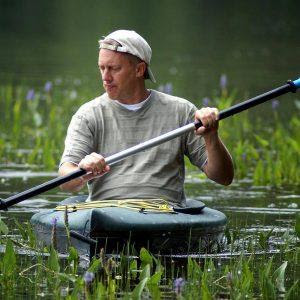
Tim Gestwicki, Chief Executive Officer
The Fisheries Reform Act of 1997 (“FRA”) was enacted to rebuild our depleted marine fisheries. In the 29 years since, North Carolina hasn’t rebuilt a single coastal fishery. In fact, every stock managed under the Fisheries Reform Act has declined further. From where I sit, the biggest challenge facing conservation in North Carolina is the blatant mismanagement, abuse, and waste of our fisheries by state government.
Closing arguments in a landmark lawsuit that could force the State to finally accept responsibility for that reality concluded last month. Every North Carolinian who has ever fished our sounds, eaten our seafood, or simply valued what our coast means to the state should be paying attention.
This lawsuit resurfaced issues that the North Carolina Wildlife Federation (“NCWF”) has been emphasizing for more than a decade. NCWF is an organization that brings together scientists, conservationists, wildlife enthusiasts, hunters and anglers, government, and industry to protect North Carolina’s natural resources. I have been with the Federation since the early 1990s and have served as CEO since 2009. In that time, I’ve seen many changes in our state’s natural resources – some good and some bad. For our marine resources, some are overwhelmingly negative.
The North Carolina Wildlife Federation is not a plaintiff in this case, but we filed a formal "friend of the court" brief in support. North Carolina Wildlife Federation brings together scientists, hunters, anglers, conservationists, and industry partners to protect North Carolina's natural resources.
North Carolina Wildlife Federation has been raising the alarm about fisheries mismanagement for more than a decade. The Federation tried rulemaking petitions, pushed for legislation, and engaged directly with state agencies. These solution-based efforts were thwarted and even out right lobbied against by the state via the agencies overseeing fisheries management in North Carolina-NC Department of Environmental Quality which oversees the Marien Fisheries Commission and the NC Department of Marine Fisheries.
The state of North Carolina is only responsible for managing 14 coastal fish stocks, species that were the backbone of our coastal ecology and economy, culture, and history. By scientific definition, a stock is considered "collapsed" if landings fall below 10% of historical highs. In the 30 years since the FRA became law, every stock has declined further. Our weakfish and southern flounder fisheries are all but gone. Other fisheries, once cornerstones of NC’s fishing economy, have collapsed or are collapsing, including spot, croaker, and blue crab. These fisheries have declined by as much as 95% over the past three decades.
The mechanism of this collapse is not a mystery to those paying attention. North Carolina remains the last state on the East and Gulf Coasts permitting large-scale estuarine shrimp trawling and unattended gill nets in waters designated as juvenile fish nurseries. For every pound of shrimp harvested by trawl, studies show more than four pounds of these valuable juvenile finfish are killed as bycatch. That means the dominant catch in a shrimp trawl is not shrimp, it’s fish, many of which are juvenile and will never spawn because they are shoved overboard by the millions of pounds. Bycatch reduction devices have not solved this problem. Meanwhile, the bottom habitats of the Pamlico Sound – the sea whips, sponges, and seagrass that form the foundation of the entire ecosystem – are destroyed by trawl after trawl. Allowing this continued practice in our well-designed, but unprotected, nursery grounds is a classic case of the Tragedy of the Commons and a precursor to ecosystem collapse.
The good news is that recovery is possible, and it would come faster than most people expect. Remove trawlers from the sound, and mature, high-quality fish would return within a year. Spring harvests would improve. Summer recruitment of new spawning population members would rise. Bottom habitats would begin to recover within a decade, but the benefits to the fishery, both commercial and public, would be nearly immediate.
Opposition to reform has been fierce and organized. However, the most prominent arguments against reform aren’t grounded in science. They are unsubstantiated anecdotes from a few interested parties with an economic stake in the outcome of reform. We observed that in the testimony provided during last month’s trial.
The trial concluded after five weeks of testimony. By April, all legal filings should be submitted to the judge, who will make the final ruling. All sworn case expert testimonies and state positions will soon become public record, allowing the world to learn what we’ve been working to correct for years.
North Carolina's coastal fisheries are a public trust resource. They belong to every citizen of this state. The question before this court is whether the state has honored that trust. From my perspective, and that of the Federation, after years of fighting and monitoring, the answer is clear. The fish in our sounds belong to the people of North Carolina. It’s time the State started acting like it.
NCWF Issue Timeline - A History of Events
February 2026 - Coastal Conservation Association lawsuit arguments conclude.
January 2026 - Coastal Conservation Association lawsuit proceeds to NC Superior Court. Trial begins.
July 2025 – NC Senate approves measures to remove shrimp trawling from NC inshore waters by a vote of 39-2
February 2022 - Clarification requested on the Flounder FMP Amendment 3 and failures of the state to rebuild stocks
February 2022 - Amicus Brief filed by North Carolina Wildlife Federation in support of Coastal Conservation Association case and public trust resource management failure by the state.
November 2021 - NCWF comments submitted on Division of Marine Fisheries Recommendations for Shrimp Fisheries Management Plan Amendment 2
November 2021 - NCWF comments submitted to Marine Fisheries Commission on rebuilding the flounder stocks
November 2020 - Coastal Conservation Association + 86 Citizens file lawsuit against the State for Coastal Fisheries Mismanagement
June 2019 - HB 483 "Let Them Spawn", legislation to allow priority finfish to mature to reproduce at least one time, passed in the NC House by a vote of 58-47
November 2019 - NCWF adopts Resolution ‘Consolidation of the North Carolina Division of Marine Fisheries into the North Carolina Wildlife Resources Commission to Eliminate Redundancy and Improve Natural Resource Management Efficacy’
May 2019 - NCWF Submits a 2nd formal Petition for Rulemaking to protect juvenile finfish from large-scale bottom trawling in NC’s juvenile fish nurseries
March 2019 - Commercial Fishing License Reform bill introduced by NCWF (HB 486) to curb out of state boats and standardize requirements for marine license holders
Feb 2019 - Rebuttal to DMF/MFC analysis of NCWF rulemaking petition
May 2018 - MFC passed the NCWF Petition for Rulemaking
January 2017 - NCWF submitted a formal legal Petition for Rulemaking to protect juvenile fish spawning nursery areas and reduce wasteful bycatch.
2015 - NCWF launched Sound Solutions, an approach to impact change in the way NC's marine fisheries and habitats are managed and regulated; and to influence changes to destructive fishing gear and unsustainable harvest methods.
In the Press
North Carolina's coastal fisheries haven't just declined — they've collapsed. Here's what the data shows:
03/19/2026 by Tim Gestwicki
03/07/2026 by Gareth McGrath
03/07/2026 by Gareth McGrath
01/27/2026 by Gareth McGrath
08/25/2023 by Emily Cataneo
11/20/2020 by Mike Shutak
08/25/2020 by Jack Igleman
05/16/2015 by