
Tracks, Feathers, and Fun: Exploring Winter Wildlife with ecoEXPLORE
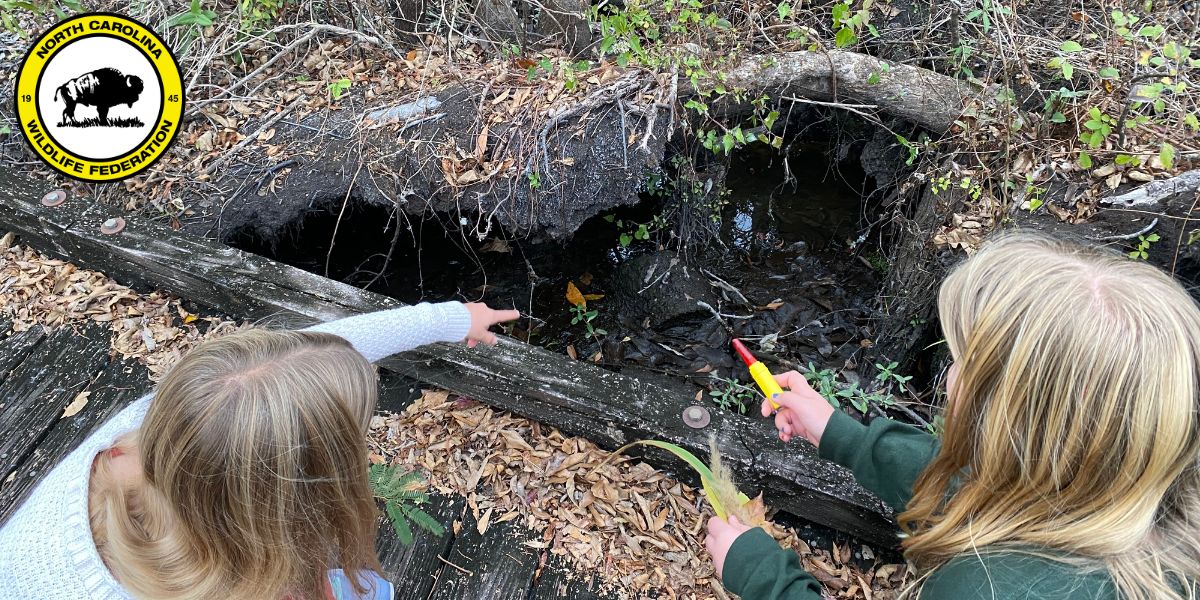
During the winter months, shorter days and cooler temperatures can cause many species of wildlife to slow down. Our reptiles and amphibians enter a dormancy period known as brumation, many mammals hunker down in their dens for extended periods of time, and insects overwinter underground, in fallen leaf litter, and “snug as a bug” in plant stems. Though many species may be less visible during winter and it may be more challenging to find reasons to get outside in the cold, there are still plentiful signs of wildlife when we take the time to explore. One of the ways that NCWF engages youth and families with nature in northeastern NC is through monthly ecoEXPLORE programs in partnership with Tyrrell County Library and Pocosin Lakes National Wildlife Refuge.
 Created by the North Carolina Arboretum, ecoEXPLORE is a community science initiative that encourages youth and families to explore nature together while submitting photo observations to iNaturalist. In addition to photos, participants complete themed educational challenges that tie into a given field season badge. Badge season topics include herpetology, entomology, botany, mammalogy, and ornithology as well as rotating badges like ichthyology, arachnology, and mycology. Upon completing the required number of photo observations and challenges, participants are awarded their field season badges. For each photo observation and challenge submitted, ecoEXPLORErs are not only connecting with nature and fulfilling their badge requirements but they’re also collecting points that can be cashed in for prizes like binoculars, insect nets, field guides, trail cameras, and more!
The monthly programs at Tyrrell County Library usually involve a short presentation followed by a hands-on activity or nature walk. Only a 7 minute stroll from the library, Pocosin Lakes National Wildlife Refuge’s Scuppernong River Interpretive 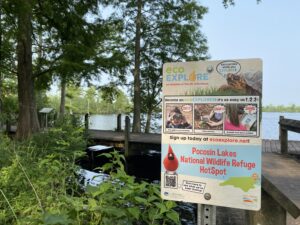 Boardwalk and pollinator pitstop behind the refuge visitor center provides opportunities for wildlife observation in the heart of Columbia. The refuge is an ecoEXPLORE HotSpot, meaning that photo observations taken on the refuge count for extra points, and Tyrrell County Library serves as both a HotSpot and LoanSpot. LoanSpots are places, like libraries, where participants can check out observation tools, such as a trail camera or insect net, to assist with fulfilling a badge season’s requirements.
Mammalogy season runs November – December and in 2023, the field focus badge–a badge that encourages a deeper dive into taxonomy and identification–was ‘mammal signs.’ To find signs of mammals, families were encouraged to slow down and look closely for tracks, scat, tufts of fur, signs of foraging, and possible dens or nests. Finding the frosted mud pawprints or steamy scat piles from white-tailed deer, river otters, raccoons, black bears, or bobcats helps remind ecoEXPLORErs that wildlife are present and worthy of appreciation throughout even the coolest months of the year.
January kicks off the ecoEXPLORE ornithology badge season. Winter is an exciting season for wildlife observation in northeastern NC as the region provides overwintering habitat for a variety of migratory waterfowl and songbirds. This month’s program is a guided hike along the Scuppernong River Interpretive Boardwalk where we’ll be looking for yellow-rumped warblers, bald eagles, great blue herons, a variety of waterfowl, woodpeckers, and more. From the boardwalk, we’ll be able to listen and watch for birds while also making note of nests, cavities, feathers, tracks, and guano (bird poop).
ecoEXPLORE is an engaging tool for youth and families in North Carolina to stay connected with the outdoors throughout all the seasons while learning more about their natural surroundings. To learn more about participating in this community science program, visit ecoexplore.net.
Written by:
– Laura Frazier, Refuge Conservation Coordinator