Following the Signs: How Lynda Mastronardo Helps Young People Learn to Read the Wild
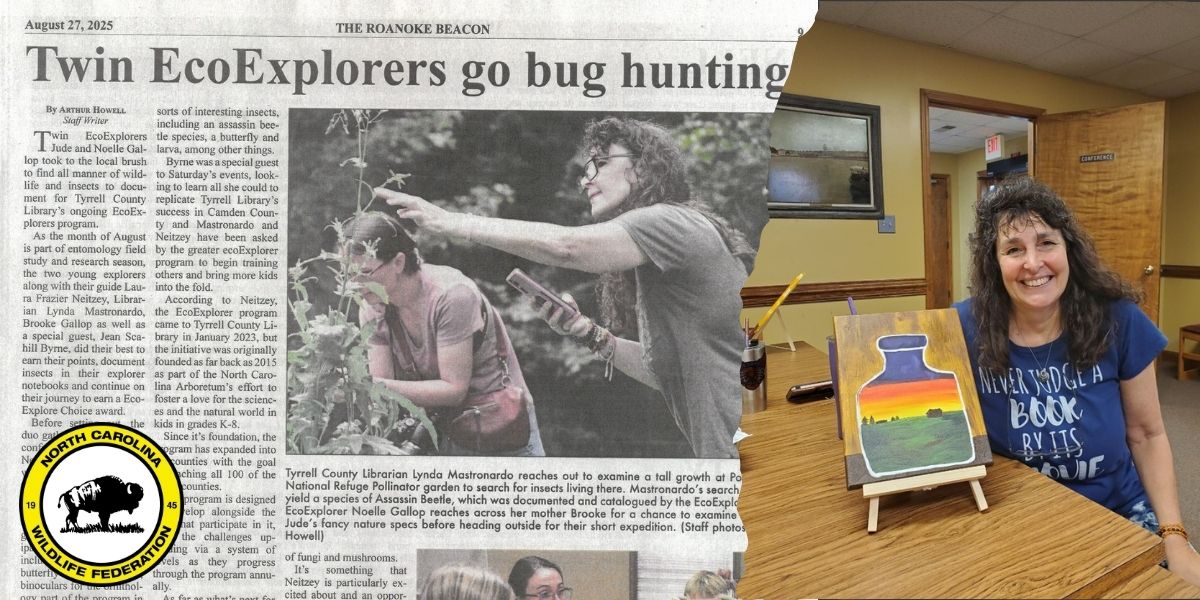
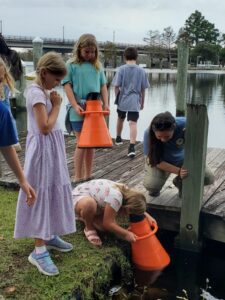 For Lynda Mastronardo, conservation begins with curiosity.
“It’s not about sitting behind a screen,” she says. “There is so much you can do outside. Kids want to learn – you just have to make it fun.”
As Branch Librarian & Program Specialist at Tyrrell County Library and a longtime volunteer with North Carolina Wildlife Federation, Lynda has built youth programs that turn curiosity into connection – and connection into stewardship. While her job is rooted in the library, much of her work happens beyond its walls, on boardwalks, trails, and in the spaces where wildlife leaves its quiet clues behind.
Lynda grew up in New Jersey in a generation where “the sun was up, you were outside – and you came home when the streetlights came on.” That early, unstructured time outdoors shaped her belief that learning is something you do, not something you passively receive.
That philosophy became central when she began homeschooling her son. Lessons were hands-on and curiosity-driven – often outdoors, often tied to whatever fascinated him most. After moving to North Carolina and taking a part-time job at Tyrrell County Library, this mindset presented her with the opportunity to bring that same experiential learning into her community.
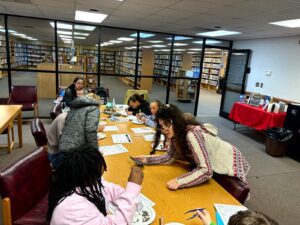 Drawing on her background in program development and outreach, she began designing programs that welcomed homeschoolers and public-school students alike – especially during daytime hours when space and attention were easier to find.
In 2021, Lynda connected with NCWF through ecoEXPLORE, and the partnership quickly took root. “If I can make learning fun and not a grind, kids want to come back,” she explains. “They want to learn, and they want to share what they find.”
Since 2023, Lynda and NCWF Conservation Coordinator Laura Neitzey have built a vibrant ecoEXPLORE program in Tyrrell County, with a strong emphasis on wildlife identification and sign. Youth learn to recognize tracks, scat, game trails, feathers, and feeding signs – the evidence animals leave behind even when they’re not visible.
Programs have included mammal sign hikes, birding walks, dragonfly counts, moth nights, mycology explorations, and outdoor scavenger-style investigations near the library and at nearby refuge. One program involved creating Red Wolf paw-print ornaments; another challenged kids to locate a hidden Red Wolf tracking collar using teamwork and observation.
That shift – from searching to seeing – is at the heart of her approach.
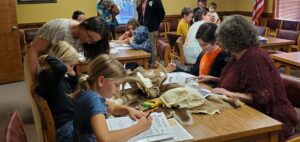 The impact extends beyond the kids. Parents and grandparents often participate alongside them, learning together. Some families have gone on to create Pollinator Pitstops on NCWF’s Butterfly Highway at home. Others have reconsidered long-held views about wildlife in their community, including species like Red Wolves.
For Lynda, this work is deeply personal. She views her role as one voice that helps children practice curiosity and critical thinking in a supportive environment. “Kids absorb so much from screens and conversations around them,” she says. “I try to give them space to explore ideas, ask questions, and learn through hands-on experiences – 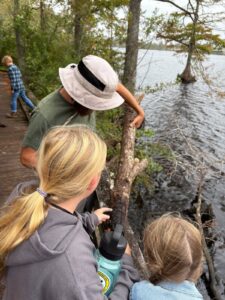 because when learning is joyful, it stays with them.”
Through hands-on learning, muddy shoes, and careful observation, Lynda Mastronardo is helping young people learn to read the landscape around them – one track, one feather, one question at a time.
And when kids learn to recognize wildlife signs in their own backyard, conservation stops feeling distant. It becomes something they can see, understand, and carry forward. Mastronardo reinforces this by reminding students that they are community scientists. Each photo they take and upload through ecoEXPLORE contributes real observations to researchers at the North Carolina Arboretum, helping scientists better understand North Carolina’s natural world.