
NCWF In The Field – April, 2026
North Carolina Wildlife Federation staff and Community Wildlife Chapters connected 2,290 people to nature through 61 wildlife and habitat events and activities in April, including:
- Planting 521 native trees and plants – including white oak, sugar maple, Eastern redbud, bee balm, aster, false indigo, big bluestem, and ironweed to support birds, pollinators, and other wildlife
- Removing 20 pounds of trash from habitats across the state, helping keep urban, woodland, and aquatic ecosystems clean and healthy
- Hosting a wide range of educational and hands-on experiences such as butterfly surveys, bird walks, native plantings, and Earth Day celebrations
- Engaging volunteers from the mountains to the coast in meaningful conservation work, getting hands dirty and feet wet to improve wildlife habitat
- Providing opportunities for people of all ages to connect with nature, learn about wildlife and habitat, and make a tangible impact alongside NCWF Community Wildlife Chapters and conservation partners
Explore our Events Calendar to discover where NCWF and our Community Wildlife Chapters are hosting in-person and virtual events near you. Check out a few highlights below from our conservation outreach team.
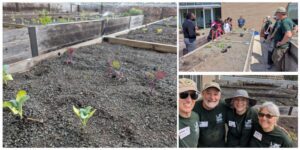
March 27, SWC Eco Kids Garden Workday: NCWF South Wake Conservationists Chapter’s Eco Kids project to launch a sustainable garden program on the roof of Southeast Raleigh Elementary School kicked off its first hands-on session with 25 fourth and fifth-grade students. Everyone got to help plant native pollinator plants and vegetable crops in raised beds which will be adopted by student teams. These will provide living examples of the beneficial effects of pollinator plants on food crops and the pollinators they attract and support. Students also learned about using natural compost for soil enrichment and not to use pesticides. As the crops develop, the students will be able to see the fruits of their labor and have some sample produce to take home with them!
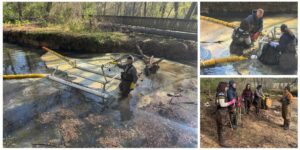
March 28, SWC Trash Trap Cleanout: NCWF South Wake Conservationists Chapter led a trash trap training and cleanup in Walnut Creek. This first trap clean out and training, in partnership with the Great Raleigh Clean Up and Sound Rivers, helped educate volunteers how to clean out trash traps. As part of this hands-on training, the group cleaned out 16 pounds of trash from the trap in Walnut Creek which feeds into Lake Johnson in Raleigh.
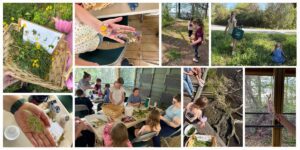
April 1, Flower-Pressed Bookmarks w/ Pocosin Arts: NCWF teamed up with Pocosin Lakes National Wildlife Refuge and Pocosin Arts School of Fine Craft for a flower-pressed bookmark workshop. Together, families enjoyed foraging along the Scuppernong River for flowers and other plants to preserve in bookmarks while learning about the importance of native plants and pollinators.
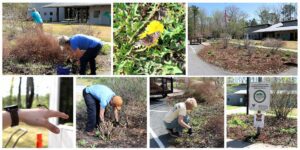
April 1, Pollinator Garden Workday: NCWF Wildlife Habitat Stewards of Northeastern NC Chapter volunteers came out for a pollinator garden workday at Merchants Millpond State Park. This garden was the chapter’s first Butterfly Highway pitstop installation back in 2023. The black-eyed Susans, purple coneflowers, spotted beebalm, and other native plants came back strong and are ready to support a variety of pollinators with fuel!
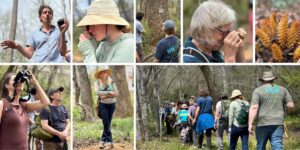
April 4, Wildlife Wonders of Swannanoa. Swannanoa Valley WILD and Friends of Fox Creek Park alongside Luke Cannon of Astounding Earth explored all things WILD! at Fox Creek Park in Swannanoa. We experienced the songs of the brown thrasher, stories of an old black locust tree, travels of a crack capped polypore fungus, and adventures of a mischievous groundhog. All while the park’s resident red shouldered hawks cried and screeched overhead. Thanks to everyone who joined as we learned and asked questions together. Building fellowship as we snacked on Easter egg candy.
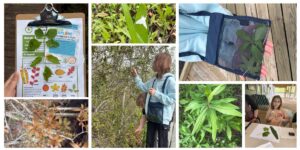
April 7, ecoEXPLORE Leaf No Doubt!: NCWF and Pocosin Lakes National Wildlife Refuge came together for our monthly ecoEXPLORE program where we completed the “Leaf No Doubt” challenge along the Scuppernong River Interpretive Boardwalk Trail. Families observed tree leaves of all different shapes and sizes while learning more about the wildlife that rely on trees for food, shelter, and places to raise young.
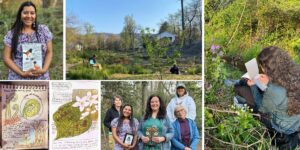
April 7, Nature Journaling Workshop. Swannanoa Valley Wild alongside the Friends of Fox Creek Park enjoyed a bright and sunny afternoon of nature journaling at Fox Creek Park in Swannanoa! Carolina Corona of Corona Fine Art was our guide as we walked, observed, sketched, and reflected. Nature journaling is a life changing practice that deepens one’s connection with nature and establishes a greater sense of place. It uses writing, drawing, and numbers to help us slow down, pay attention, foster curiosity, and build a more robust memory and understanding of the natural world.
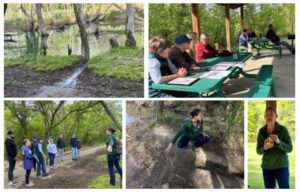
April 8, DWS Beaver Stroll: NCWF Durham Wildlife Stewards Chapter hosted Falyn Owens, NC Wildlife Resources Commission Wildlife Extension Biologist, for a presentation about beavers in Sandy Creek Park. The afternoon started with a short presentation about the history of beavers in North Carolina. After learning about these ecosystem engineers, participants set off on a stroll through the park to look for signs of beavers. The group observed beaver prints, beaver slides, and a beaver lodge!
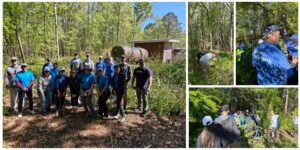
April 10, Earthshare Workday: NCWF led the 2026 Triangle EarthShare volunteer challenge in partnership with Xylem at Beech Bluffs County Park in Willow Spring. In celebration of Earth Day, volunteers from Xylem enthusiastically removed invasive privet from the park, clearing lots of space for native plants to reestablish themselves.
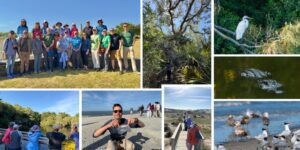
April 10-12, NCWF Southeast Chapter Leadership Outing: The outreach team led chapter leaders through two days and two nights exploring the shorelines, dunes, marshes, and old-growth maritime forest at Bald Head Island. The BHI Conservancy hosted us in their education center and gave us a night-time tour of the marshes, forest, and heron rookery. Royal terns mated in a colony at the shoals where the Atlantic Ocean and the Cape Fear River meet. Upwelling pushed masses of seaweed, invertebrates, Portuguese man o’ wars, and horseshoe crabs on the beach alongside plastic that told a story of summer tourism returning to our coastlines. We learned about conservation initiatives including posted nesting habitat, sea turtle surveys, terrapin tallies, pollinator gardens, and oyster reef installations. The sun sat high in the sky all weekend, illuminating thousands of silk threads from caterpillars dripping from the oak leaves like icicles.
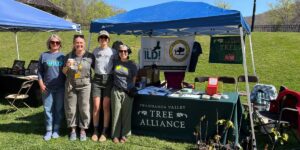
April 11, Montreat Arbor Day Festival. Swannanoa Valley Wild joined forces with Swannanoa Valley Tree Alliance and Amphibian and Reptile Conservancy to celebrate a beautiful day at the Montreat Landcare and Arbor Day Festival. The chapter inspired positive change and gave away trees!
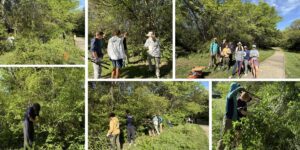
April 11, Habitat Builders Invasive Plant Removal: A hardworking group of 13 children and adults joined NCWF Habitat Builders Chapter for a fun morning of invasive plant removal in the common area at Marvin Creek. Volunteers participated in a brief training session before digging right in to remove priviet, honeysuckle, autumn olive, and more! With every plant removed, the Habitat Builders are improving habitat and restoring forest health in West Union County.
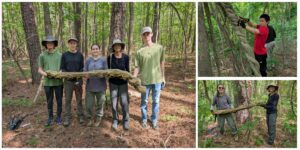
April 12, TCC Venturing Crew Invasive Removal: Venturing Crew3, part of NCWF Tri-County Conservationists Chapter, held their first event – an invasive removal and recruiting event at Headwaters Preserve in Chapel Hill. Volunteers rescued mature, native trees from Chinese wisteria vines that were strangling the trees.
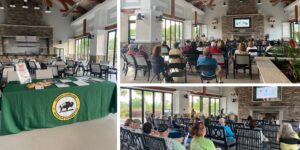
April 13, Landscaping for Wildlife: Over 50 residents from the Compass Point community in Leland gathered for a presentation on native plants and gardening for wildlife. Participants learned about the Butterfly Highway, Certified Wildlife Habitat, and Doug Talamy’s vision for a homegrown national park. Organizers look forward to hosting future presentations at community centers across the many new developments in Leland, educating new residents about NC wildlife and our native landscapes.
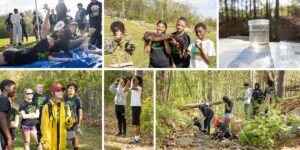
April 14, Reynolds Environmental Field Day. Hosted by Buncombe County Soil and Water Conservation District with support from NCWF ReWild AVL, Mills River Partnership, NC DEQ, WNC Nature Center, and Holmes Educational State Forest. Eighth graders from A.C. Reynolds Middle School in Asheville stepped outside the classroom for a hands-on Environmental Field Day, rotating through interactive stations focused on water, ecology, air quality, and environmental stewardship. Students explored real-world science concepts while connecting them to issues impacting their own lives. Throughout the day, students cycled through seven stations covering topics like air quality, wildlife investigation, soil science, stream ecology, birding, habitat restoration, and fire ecology. Each experience was designed to bring science to life through hands-on learning and direct interaction with experts in the field.
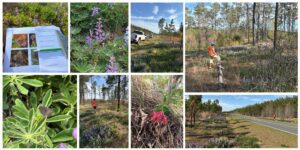
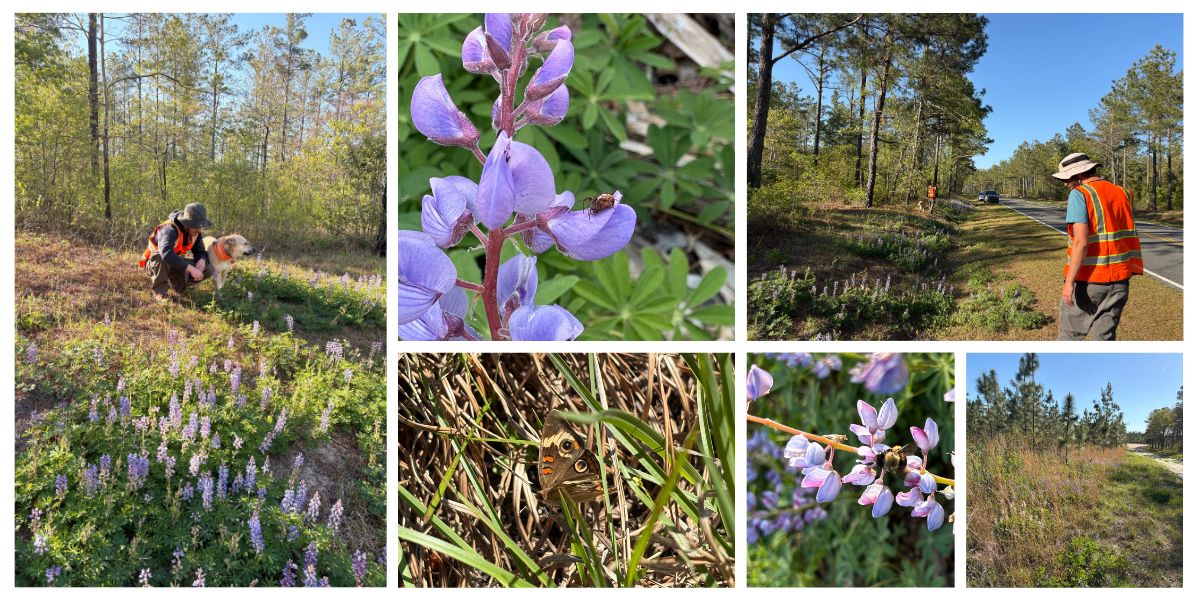
April 14, Frosted Elfin Survey: NCWF Wildlife Habitat Stewards of Northeastern NC Chapter gathered volunteers to conduct frosted elfin butterfly surveys on Chowan Swamp Game Land. While no frosted elfins were spotted, we enjoyed observing other butterflies like red-banded hairstreaks, Eastern tiger swallowtails, zebra swallowtails, and Juvenal’s duskywings while listening to the sound of birdsong, hearing over 14 different species while surveying in and along beautiful longleaf forests!
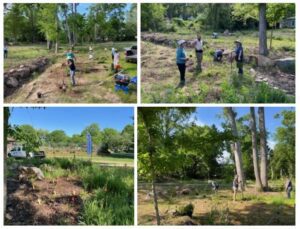
April 14, TCC Bolin Creek Planting: NCWF Tri-County Conservationists Chapter restored native plants along Bolin Creek with the Town of Chapel Hill! Volunteers helped the Town plant some of the native plants they obtained to help manage stormwater following flooding from Tropical Storm Chantal in 2025. These plants will now help soak up storm water and provide wildlife benefits for years to come.
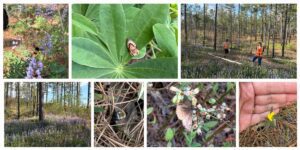
April 17, Frosted Elfin Survey: NCWF Wildlife Habitat Stewards of Northeastern NC Chapter ventured back to Gates County for continued frosted elfin butterfly surveys at Chown Swamp Game Land. Still no frosted elfins, but many pollinator species were quite active around the patches of sundial lupine (Lupinus perennis), one of the local host plants for frosted elfins. We observed a variety of butterflies and moths as well as blueberry digger bees and American bumble bees!
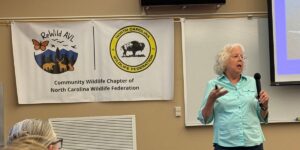
April 17, Save our Sounds. NCWF ReWild AVL hosted Ann Somers, passionate conservationist and a Senior Lecturer Emerita at the University of North Carolina at Greensboro, for a conversation about one of North Carolina’s most treasured natural resources: our estuarine sounds. Estuaries, sometimes described as “nurseries of the sea”, are crucial because they filter pollutants, provide critical nurseries for fish and shellfish, as well as economic benefits through recreation, tourism, and jobs, all while supporting immense biodiversity. Our shallow sounds are in deep trouble for several reasons, not the least of which is our fisheries management. Participants gathered at the Reuter Center at UNC Asheville to learn more about the issue, engage with experts in the field, and take action by contacting their representatives following the presentation. Restoration is not a pipe dream; it is just waiting for us to get on board!
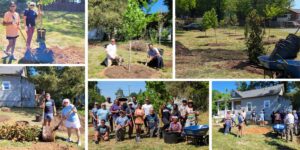
April 18, NCWF Urban Tree Planting: In partnership with the City of Charlotte Tree Canopy Preservation Program, and with funding from the North Carolina Forest Service, a group of 15 community volunteers joined NCWF and City staff for a morning of native tree planting on a city property near uptown. Volunteers planted 15 native trees, including white oak, southern magnolia, serviceberry, yaupon holly, and sugar maple. These trees will provide shade, reduce urban heat, and create wildlife habitat for Charlotte Residents to enjoy.
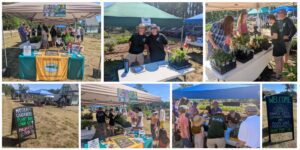
April 18, SWC Native Plant Sale: NCWF South Wake Conservationists Chapter hosted a native plant sale at Simple Gifts Community Garden in Apex. Over a dozen species of native pollinator plants were sold as the community showed up in strong support of planting native. The morning consisted of garden tours and pollinator activities and crafts for kids, in addition to the sale.
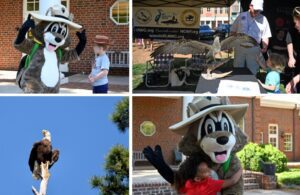
April 18, LNW Earth Day: NCWF Lake Norman Wildlife Chapter exhibited at Earth Day festivals in Cornelius and Davidson. Chapter leaders, alongside Ranger Rick, spread the good word about wildlife and habitat on Lake Norman, including how to adopt an island through the Island Habitat Program.
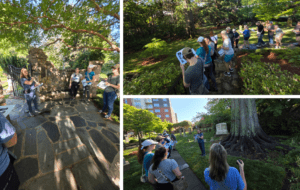
April 18, CWA Memorial Garden Tour: NCWF Concord Wildlife Alliance Chapter put together an engaging natural history walk and tour of Memorial Gardens in Concord. Participants were blessed with a beautiful day and enjoyed exploring the grounds while uncovering the stories of several notable individuals laid to rest there, including a traitor’s widow, a Revolutionary War veteran, and a daring circus bareback rider.
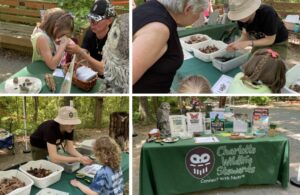
April 18, STEAM Day: Hosted by the Carolina Raptor Center, NCWF Charlotte Wildlife Stewards Chapter participated in STEAM Day. Participants discovered the wonders of science, technology, engineering, arts, and wildlife. Chapter leaders led a hands-on decomposer activity and shared their knowledge of fungi, bacteria, and invertebrates with kids of all ages!
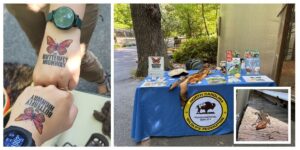
April 18, Sylvan Heights Earth Day Celebration: NCWF showcased our work across the northeast at Sylvan Heights Bird Park’s annual Earth Day Celebration. Visitors of all ages got to learn more about Red Wolves, our Butterfly Highway program, and ways that they can get involved and make a difference for wildlife and habitat at home and in their communities!
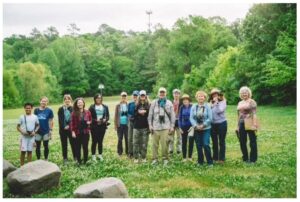
April 19, DWS Bird Walk: NCWF Durham Wildlife Stewards held a family-friendly bird walk in Sandy Creek Park in partnership with the New Hope Bird Alliance (NHBA). Birders from NHBA led a guided bird walk in the park, listening and looking for birds along the way.
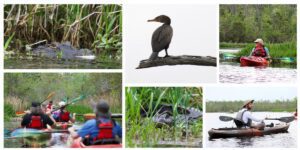
April 19, Alligator River Wildlife Paddle: NCWF Wildlife Habitat Stewards of Northeastern NC Chapter hosted a wildlife paddle adventure on Alligator River National Wildlife Refuge that did not disappoint! Paddlers observed several American alligators in their natural habitat as well as a double crested cormorant and pileated woodpecker as they navigated open stretches of water and narrow canals teeming with white water lilies, floating bladderwort, and blue flag irises.
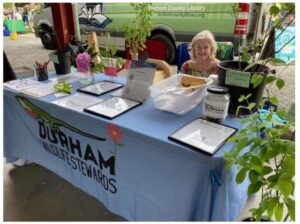
April 19, DWS Earth Day: NCWF Durham Wildlife Stewards participated in Earth Day in downtown Durham. In honor of Earth Day, the chapter engaged with community members about native and invasive plants, as well as upcoming chapter events.
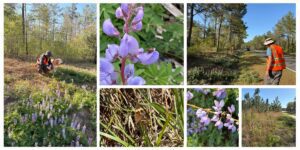
April 21, Frosted Elfin Survey: NCWF Wildlife Habitat Stewards of Northeastern NC Chapter continued their series of frosted elfin butterfly surveys, in search of these elusive and rare butterflies during their narrow flight window. During this survey, chapter volunteers worked to locate patches of Eastern wild indigo (Baptisia tinctoria), the other local host plant for frosted elfins, only to find that the few recorded patches have yet to flower this year, making them behind their usual bloom window. Volunteers still enjoyed observing a variety of pollinators, like the pictured common buckeye, and a few orbweavers on lupine!
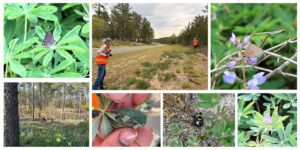
April 22, Frosted Elfin Survey: NCWF Wildlife Habitat Stewards of Northeastern NC Chapter wrapped up their group surveys for adult frosted elfin butterflies at Chowan Swamp Game Land. We enjoyed observing multiple Southern plains bumble bees and other pollinators throughout the sundial lupine patches. The frosted elfins retained their “elusive” title as volunteers did not observe any of the rare butterflies during their group surveys. However, we are happy to report that there were several frosted elfin observations made in the survey area by other members of the public who could not join our scheduled group surveys but went out independently! These sightings were reported to NCWRC.
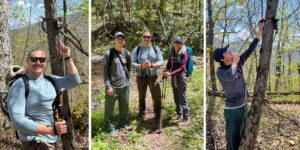
April 23, Cerulean Warbler & Avian Diversity Study. The North Carolina Wildlife Federation led volunteers in the field to monitor and record cerulean warblers within Craggy Mountains – Pisgah National Forest where the presence of ceruleans and many other avian species is largely unknown. The survey is a collaborative effort between the North Carolina Wildlife Federation, National Parks Conservation Association, the Center for Biological Diversity, Defenders of Wildlife, MountainTrue, and the N.C. Wildlife Resources Commission with support from the U.S. Forest Service.
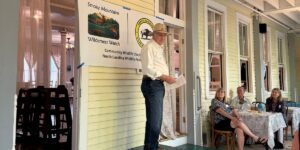
April 23, Smoky Mountains Wilderness Watch Earth Day Social and Chartering Ceremony. Smoky Mountains Wilderness Watch celebrated their official status as a new chapter of NCWF. They advocate for wildlife conservation, habitat protection, and responsible land stewardship across the Western North Carolina counties of Haywood, Jackson, and Swain.
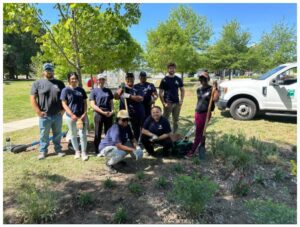
April 23, TW VFC Corporate Workday: NCWF and NCWF Triad Wild Chapter led a corporate workday at Woven Works Park in Greensboro in celebration of Earth Day. Volunteers from VFC enthusiastically weeded the native garden, planted over 230 native pollinator plants, and removed trash from the urban stream in the park. The parks’ pollinator garden received a refresh just in time to celebrate the completion of the City’s greenway system in May.
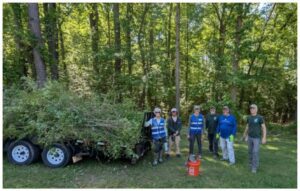
April 23, SWC Invasive Removal: NCWF South Wake Conservationists Chapter teamed up with Wake Audubon to tackle invasives at Carroll Howard Johnson Environmental Education Park in Fuquay-Varina. Volunteers cut down Chinese privet, Japanese honeysuckle, and Tree of Heaven. Removing these invasives revealed a number of hidden treasures like American strawberry bush, trumpet vine, and a variety of ferns that were concealed by invasive plants.
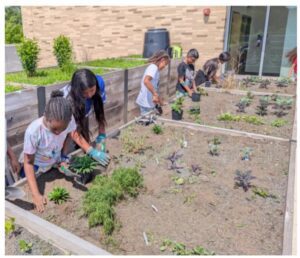
April 24, SWC Rooftop Garden Workday: NCWF South Wake Conservationists Chapter’s Eco Kids project on the roof of the Southeast Raleigh Elementary School held their second garden workday with 4th and 5th grade students. Students helped weed around the new crops and plant pollinator plants on the remaining raised beds. The kids were excited to see how their crops have been growing since last month. Volunteers also talked about pollinators, how important they are, and how to protect them (no insecticides!). This was a refresher of that topic from second grade, and the students remembered a lot. We finished off with an indoor pollinator game, where pollinators had to find their preferred plant by calling out their plant’s name.
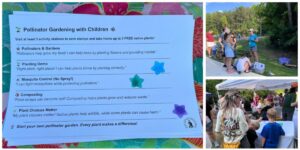
April 24, NRHC Rolesville Arbor Day: NCWF Neuse River Hawks Conservationists Chapter had a pollinator gardening for kids workshop at Rolesville Arbor Day. Participants visited stations manned by the chapter with hands-on activities about composting, mosquito dunks, native bees, keystone vs invasive plants, and how to properly plant native plants. After visiting stations, participants got to choose three native plants to go home with, thanks to funding from the Rolesville Community Group Funding Grant.
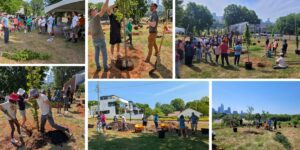
April 25, NCWF Urban Tree Planting: In partnership with the City of Charlotte Tree Canopy Preservation Program, and with funding from the North Carolina Forest Service, nearly 50 community volunteers of all ages joined NCWF and City staff for a morning of native tree planting on a city property near uptown. Volunteers planted 15 native trees, including white oak, southern magnolia, serviceberry, river birch, Eastern redbud, and sugar maple. These trees will provide shade, reduce urban heat, and create wildlife habitat for Charlotte Residents to enjoy.
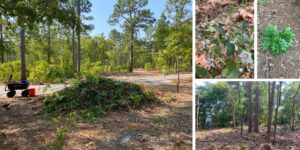
April 25, Halyburton Wisteria Removal: A small group of volunteers helped clear another half-acre of wisteria runners at Halyburton Park. American crows mobbed a red-tailed hawk above as downy woodpeckers drilled on longleaf pines. Vaccinium stamineum flowers poked through the web of rooted vines. Future removals at this site will target the larger trunks outside the park fence in the fall.
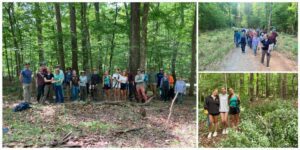
April 25, TCC Invasive Removal Workday: NCWF Tri-County Conservationists Chapter, along with volunteers from the Chapel of the Cross and Rewild NC, removed autumn olive and tree of heaven from Carolina North Forest in Chapel Hill. Over 25 volunteers turned out to cut down autumn olive shrubs that were threatening to fill the understory of the woods and to push back the tree of heaven that was spreading along the forest edge. The removed shrubs were then stacked into habitat or brush piles to be used by countless birds, reptiles, and small mammals. Many thanks to the volunteers that helped transform this space in just under 3 hours!
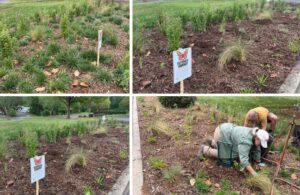
April 26, UCWC Pollinator Garden Workday: A small – but mighty – group of volunteers joined NCWF Union County Wildlife Chapter for routine maintenance on NCWF’s Pollinator Pitstop at the Union County Agricultural Center. In October of 2025, Wildlife Habitat Stewards installed hundreds of native plants and sowed several ounces of Butterfly Highway seed mix at the Center. Volunteers weeded the encroaching fescue and provided necessary watering to get the plants established.
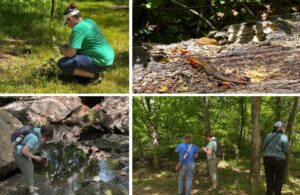
April 26, CWA City Nature Challenge: A group of passionate nature enthusiasts joined NCWF Concord Wildlife Alliance Chapter for a nature hike at Frank Liske Park. Folks learned how to use iNaturalist and practiced making observations of plants, trees, and other wildlife they found at the Park. Each observation contributed to this year’s City Nature Challenge, an international bioblitz empowering people around the world to get out and explore the wildlife in their communities while documenting their observations along the way.
Written by:
– Page Turner, Conservation Coordinator
– Laura Neitzey, Refuge Conservation Coordinator
– Alden Picard, Conservation Coordinator
– Kara Solomon, Conservation Coordinator
– Luke Bennett, Conservation Coordinator
– Mary Bures, VP of Outdoor Engagement