
NCWF In The Field – March, 2026
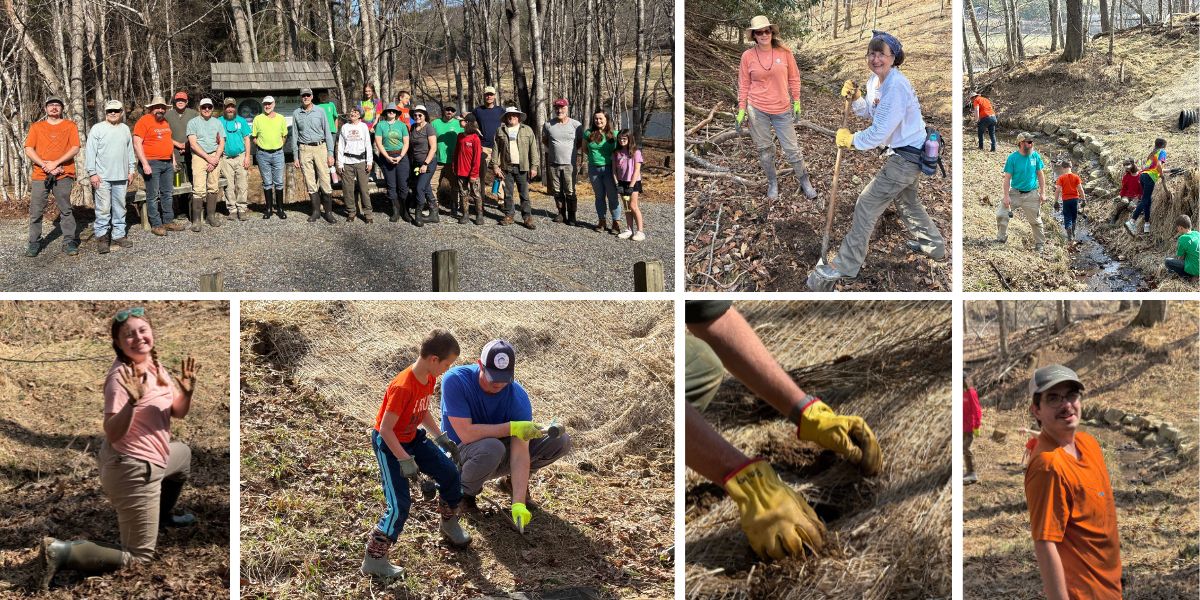
North Carolina Wildlife Federation staff and Community Wildlife Chapter volunteers jumped into March with a full head of spring fever. They connected people to the outdoors through a variety of meaningful wildlife and habitat opportunities, including river cane restoration, wildlife habitat stewards training, owl prowling, chapter building, caterpillar screening, wetland appreciating, and much more! In March, 1,413 people were given the opportunity to connect with nature through one of NCWF’s 65 events! This month from the mountains to the sea, volunteers were able to get outside and restore habitat. We removed 5,825 pounds of trash and planted 4,777 native plants. Native plant species included willow oak, red maple, American hornbeam, pawpaw, persimmon, Eastern hemlock, elderberry, silky willow, spotted beebalm, common milkweed, blue false indigo, and more! Kids and adults across the state were given meaningful opportunities to go outside, connect with nature, and learn about wildlife and habitat. Big thanks to our NCWF Community Wildlife Chapters and amazing conservation partners for making this work possible.
Explore our Events Calendar to discover where NCWF and our Community Wildlife Chapters are hosting in-person and virtual events near you. Check out a few highlights below from our conservation outreach team.
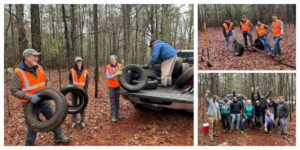
February 27, SWC Trash Removal with Wake Big Sweep: NCWF South Wake Conservationists Chapter participated in a trash clean up on a family farm in Wendell. The owners are preparing to have their land protected by an agricultural easement which will provide protections to keep the land undeveloped. In order to qualify for the easement protections, trash identified in the woods had to be removed. Volunteers removed 5,200 pounds of trash and 52 tires. In the piles of decades-old seed protection plastic, volunteers also discovered a ring-necked snake, a marbled salamander, and lots of red ants.
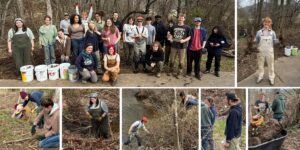
February 27, Swannanoa River Planting: Swannanoa Valley WILD! partnered with Dr. John Wilson Community Garden and Warren Wilson College to plant nearly one thousand native shrubs along the Swannanoa River in Black Mountain. We planted a variety of species including elderberry, ninebark, buttonbush, viburnum, and more! These plants will help control erosion, improve water quality, outcompete invasive plant species, protect the community garden during flood events, and serve as critical habitat for wildlife. We’re so grateful for all the volunteers and partners for making this inspiring workday possible.

February 28, Invasive Plant Species Removal: NCWF Wildlife Habitat Stewards of Northeastern NC Chapter hosted an invasive plant removal, targeting nandina (Nandina domestica) and Chinese privet (Ligustrum sinense), on Spruill Conservation Farm in Roper. To enhance habitat for wildlife, the chapter worked with the farm to remove a 1.5 acre patch of nandina and privet through manual removal and stump treatment with herbicide. Following the removal, the farm provided a healthy lunch which provided a moment for folks to relax and reflect on a morning of hard work for wildlife and habitat!
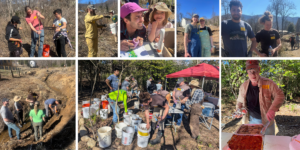
February 28, Fox Creek Livestaking Workshop & Planting: Swannanoa Valley Wild! In partnership with the Friends of Fox Creek Park, Chris DeFiore of WNC Grows, hosted a livestake workshop and planting in Swannanoa. 30 volunteers spent the day planting over a thousand native trees and shrubs along the creek. These new plants will help to shade the creek, stabilize disturbed soil, allow pollinators to reproduce, and provide food for birds, mammals and reptiles that call Fox Creek home. This workday is following a large kudzu removal effort back in January. We’re excited to host a seed spreading workday in March followed by educational programs in April at Fox Creek Park! Huge thanks to the National Wildlife Federation’s Trees for Wildlife Program and the Pigeon River Fund for making this project possible.
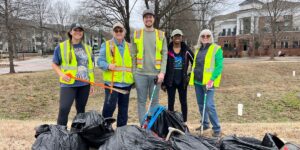
February 28, Help Keep Charlotte Beautiful: NCWF Charlotte Wildlife Stewards Chapter was back at it, keeping Tyvola Road clean. Through the Keep Charlotte Beautiful (KCB) Adopt-a-Street program, CWS adopted a one-mile stretch along Tyvola Road to give back to the community. Volunteers enjoyed the beautiful day and removed 140lbs of litter from the roadside habitat along Tyvola Rd.
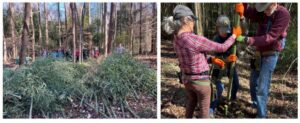
February 28, SWC Bamboo Redux: NCWF South Wake Conservationists Chapter participated in an invasive removal in Cary. Volunteers tackled some entrenched bamboo stalks, along with trifoliate orange and privet shoots, at this Preserve run by the city of Cary and the state of North Carolina. Volunteers learned how to safely remove the tall stalks of bamboo using two separate cuts. It didn’t take long to form large piles of bamboo!
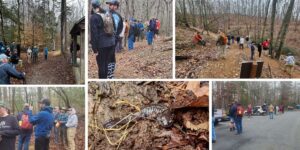
February 28, Morrow Mountain Hikes: NCWF Uwharrie Wildlife Stewards Chapter held their inaugural event at Morrow Mountain State Park in Albemarle, NC. Over 20 wildlife enthusiasts of all ages participated in an exploration of the trails at Morrow Mountain. Participants learned about natural history, native American inhabitants, and even discovered a spotted salamander and a large number of egg masses in vernal pools along the trail.
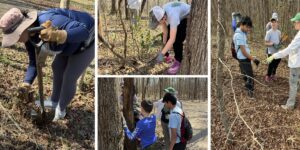
March 1, Invasive Plant Removal: A group of community volunteers, including several hard-working scouts, joined NCWF Habitat Builders of West Union Chapter for an invasive plant removal at Marvin Efird Park. Participants learned how to identify and remove privet, honeysuckle, and other invasive plants in nearly an acre of habitat at the park!
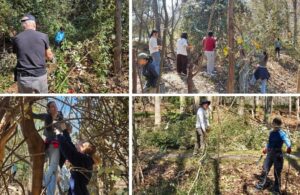
March 1, Invasive Plant Removal: More than 40 volunteers came out to help NCWF Habitat and Wildlife Keepers Chapter remove invasive autumn olive and privet from Sardis Park in Matthews. This hardworking group cleared nearly an acre of shrubs, making way for the mulching and planting of native trees!
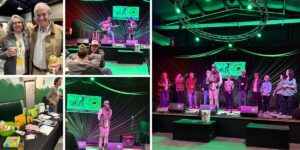
March 3, Swannanoa Valley WILD! Chartering Ceremony: Swannanoa Valley WILD! celebrated its OFFICIAL status as a newly formed chapter of the North Carolina Wildlife Federation! We gathered at Pisgah Brewing in Black Mountain for an evening of live music, drinks, stories, conversation, and laughter while we reflected on the chapter’s accomplishments thus far and looked forward to the future. Representatives from many organizations and partners were on hand to help us celebrate and collaborate. We are especially thankful for, and want to shout-out to, John Lamon who has fearlessly stepped up to lead our chapter as President alongside an all-star chapter board. Some are even calling it a dream team. We’re so excited for what’s to come in the Valley! Onward!
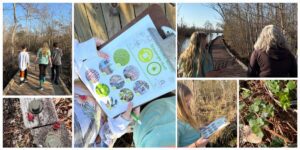
March 3, ecoEXPLORE Plant Scavenger Hunt: NCWF and Pocosin Lakes NWR came together to kick off the Botany Field Season with a plant scavenger hunt along the Scuppernong River Interpretive Boardwalk. ecoEXPLORErs worked together to check off plants on their list and learned more about the vegetation around them and what wildlife species benefit from different plants as food and habitat.
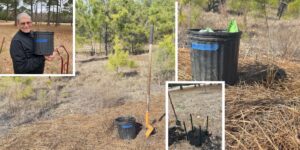
March 3, Native Tree Planting: St. James residents planted paw-paw and persimmons to fortify forest edge habitat along protected preserves in their community. Plant communities along forest edges are key foraging sites for many species, including deer, rabbits, opossums, and migratory songbirds.
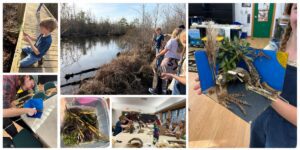
March 4, Wetland Dioramas with Pocosin Arts: Families joined NCWF, Pocosin Lakes NWR, and Pocosin Arts School of Fine Craft for a fun afternoon dedicated to one of the most dynamic and crucial ecosystems in the world – wetlands! Participants learned about different types of wetlands and the species they support while they foraged for natural materials along the Scuppernong River Boardwalk. Once inside, everyone built their own mini wetland ecosystems inspired by the wetlands in Tyrrell County and surrounding areas!
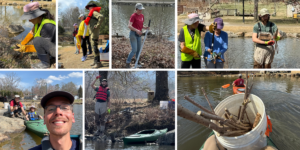
March 5, Lake Tomahawk Island Planting: Swannanoa Valley WILD!, alongside Black Mountain Recreation, planted nearly 200 livestakes and 100 grass plugs at Lake Tomahawk Island. We had a warm and sunny day, perfect for the Lake Tomahawk ferry service as we shuttled folks to and from the island. Big thanks to Leonora and Clint from the Town along with a handful of volunteers who joined in on the fun. We removed multiflora rose and other invasive plant species, and then the crew followed up by planting elderberry, buttonbush, ninebark, and virginia wild rye.
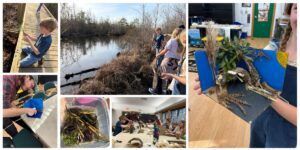
March 4, Wetland Dioramas with Pocosin Arts: Families joined NCWF, Pocosin Lakes NWR, and Pocosin Arts School of Fine Craft for a fun afternoon dedicated to one of the most dynamic and crucial ecosystems in the world – wetlands! Participants learned about different types of wetlands and the species they support while they foraged for natural materials along the Scuppernong River Boardwalk. Once inside, everyone built their own mini wetland ecosystems inspired by the wetlands in Tyrrell County and surrounding areas!

March 6, Ayles Creek Planting: North Carolina Wildlife Federation and Southern Appalachian Highlands Conservancy are gearing up for another great year at Bowditch Bottoms in Yancey County. We focused our effort in March on planting livestakes (dormant, live cuttings from native, woody plants) along Ayles Creek with species including buttonbush, viburnum, elderberry, and ninebark. In under three hours, we planted nearly a thousand livestakes! These new plants will help control erosion, shade the creek, improve water quality, outcompete invasive plant species, and serve as critical habitat for wildlife.
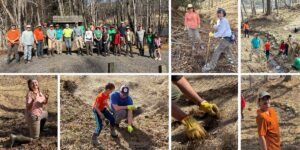
March 7, New River State Park Planting: High Country Wild in partnership with New River Conservancy, New River State Park, and Keep Ashe Beautiful hosted a workday along a tributary feeding into the New River. Over 20 volunteers planted hundreds of livestakes along with bareroot and potted trees. Species included elderberry, silky willow, silky dogwood, sycamore, red maple, beech, hemlock, white oak, and more! These native species will help shade the water, improve water quality, stabilize the soil, and provide habitat for the wildlife that call New River State Park home. It was a warm and fun day and all the volunteers were treated to a hot dog lunch
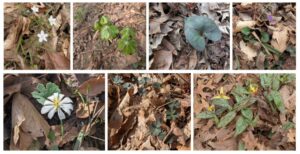
March 7, SWC Spring Ephemeral Walk: NCWF South Wake Conservationists Chapter hosted Dr. Eric Pauley for a spring ephemeral walk at Swift Creek Bluffs Nature Preserve in Cary. Participants were treated to a wonderful guided walk through the forested bottom-lands of the preserve. A variety of spring ephemerals had already emerged and beautifully displayed their delicate flowers. Participants also learned about this rare mountain-like microclimate nestled between suburban developments in Southwest Raleigh.
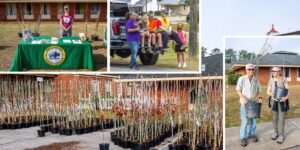
March 7, Riegelwood Tree Giveaway: More than 1,000 trees were given away by the Alliance for Cape Fear Trees in Riegelwood, including oaks, elms, birches, and hornbeams. NCWF had a table on site to educate residents about herbaceous plants to accompany their new tree plantings. A weekend of free trees and seeds in Riegelwood boosts biodiversity for wildlife across the lower Cape Fear!
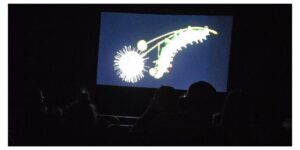
March 8, The Extraordinary Caterpillar Screening: NCWF Habitat and Wildlife Keepers (HAWK) Chapter hosted a special screening of The Extraordinary Caterpillar, a beautifully shot 60-minute documentary that reveals the vital—and often overlooked—role caterpillars play in our ecosystems. From blooming meadows to city parks and backyard gardens, this inspiring film celebrated the magic of nature while showing families practical ways to make a difference.
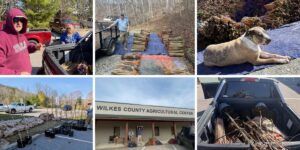
March 11, 13, 19, 20, High Country Livestake Giveaways: NCWF High Country Wild alongside New River Conservancy, Blue Ridge RC&D, NC Cooperative Extension, and NC Soil & Water Conservation joined forces to giveaway native livestakes to the High Country community. This was an opportunity for landowners in Ashe, Watauga, Alleghany, and Wilkes County to receive free livestakes to restore riparian areas on their property impacted by Helene. Landowners who signed up to receive plants were able to connect with conservation organizations and receive free educational materials on how to plant native livestakes and how livestakes support habitat for wildlife, control erosion, and improve water quality. In total, over this series of 4 events, we gave away over 20,000 livestakes. Special thanks to the National Wildlife Federation’s Trees for Wildlife Program for making this possible.

March 13-15, NCWF Wildlife Habitat Stewards Training: NCWF hosted 29 trainees for Wildlife Habitat Stewards Training at the Bonnie B. Davis Environmental and Agricultural Center in Hillsborough. Participants had the opportunity to engage with like minded conservationists, hear from a panel of expert speakers, and take part in hands-on activities like installing native plants, birding, and group garden design exercises.
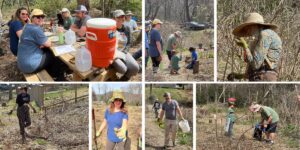
March 14, Wildflower Seed Spreading: Swannanoa Valley WILD supported Friends of Fox Creek Park for another great workday. A couple of dozen good friends (New and old), gathered in Swannanoa to spread thousands of native wildflower seeds throughout the park. Increasing plant diversity for the abundance of wildlife that call Fox Creek home. It was a beautiful early spring day in the sun.

March 14, UCWC Invasive Species Removal: The entrance to the Carolina Thread Trail at the Union County Agricultural Center received some much-needed TLC, with removal of Chinese privet and Japanese honeysuckle. This trail has accumulated numerous invasive species including nandina, English ivy, Chinese wisteria, and Bradford pear. More events will be scheduled this year to continue restoration of the trail!
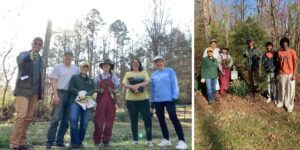
March 14, McGee Park Pollinator Garden Workday: NCWF Concord Wildlife Alliance removed invasive plants and refreshed the pollinator garden at McGee Park. This is the first pollinator garden planted by CWA that helped the City of Concord become a certified Community Wildlife Habitat by the National Wildlife Federation!

March 14, HB Pollinator Garden Workday: NCWF Habitat Builders Chapter held a pollinator garden workday at Marvin Efird Park. Over the course of two weekends, the garden was weeded and pruned. Talk about spring cleaning!
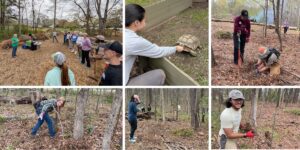
March 15, Invasive Plant Removal at Unsheltered Tortoise & Turtle: Charlotte Wildlife Stewards hosted an invasive plant removal. The chapter removed English ivy, Japanese honeysuckle, bush honeysuckle, privet, and more. The bonus was finding a variety of native plants popping up including Cranefly orchid, pipsessewa, grape fern, crossvine, red oak, dogwood, and maybe Ladies Tresses orchid. Big thanks to the 26 hardworking volunteers who made this workday a success!

March 15, Invasive Plant Removal: NCWF Habitat and Wildlife Keepers (HAWK) Chapter brought volunteers together for a morning of hands-on conservation at Sardis Park in Matthews. Volunteers helped remove invasive plants like autumn olive and ligustrum which improves habitat for native plants and wildlife to thrive. In addition to removing invasive species, the chapter also spread mulch and planted 17 trees with species including 3 different oaks, American hornbeam, black gum, maple, tulip poplar, and American beech.
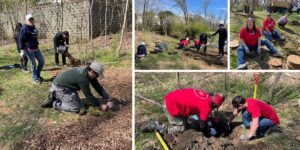
March 19, McAline Creek Greenway Planting: Charlotte Wildlife Stewards joined Trees Charlotte along McAline Creek Greenway. The crew worked together to plant 200 native shrubs including pawpaw, silky dogwood, and more. These shrubs will help increase urban tree canopy while also serving as a food and nesting source for local wildlife.
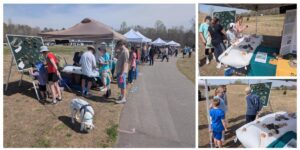
March 21, SWC Beech Bluff Bash: NCWF South Wake Conservationists Chapter participated in Beech Bluff Bash at Beech Bluff County Park in Willow Spring. The chapter’s table theme was “Wildlife Habitat.” Passersby could participate in nature trivia, pinecone bird feeder crafts, and animal sound guessing. What a blast!
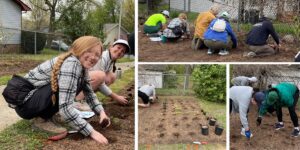
March 21, Polk Street Pollinator Habitat Planting: Charlotte Wildlife Stewards and the city Tree Canopy Preservation Program created pollinator habitat along the Urban Arboretum Trail in Charlotte’s Greenville neighborhood. Pocket gardens are a great way to support pollinators and other wildlife by installing native plants. Volunteers installed hundreds of pollinator plugs and small containerized plants during this fun workday!
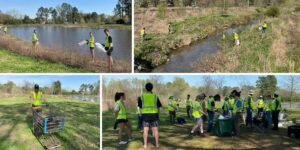
March 22, Creek Week – Briar Creek Cleanup: Charlotte Wildlife Stewards in partnership with Charlotte Mecklenburg Storm Water Services hosted over 20 volunteers who came out on a gorgeous Sunday afternoon and cleaned up 475 pounds of trash in and around Briar Creek at Chantilly Ecological Sanctuary. Along with the usual bottles and cans, tires, a grocery cart, barbed wire, lawn mower parts, fire extinguishers, and more were found. Trash and debris in waterways create a host of problems for wildlife including entanglement, ingestion, habitat contamination, and degraded water quality. Cleanup efforts are vital in keeping our waterways clean and maintaining suitable habitat for wildlife.
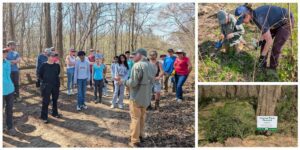
March 22, TCC Saxapahaw Tour and Invasive Removal: NCWF Tri-County Conservationists Chapter held a nature walk and invasive removal in Saxapahaw Island Park in Graham. Participants first went on a walk around this 30-acre island in the middle of the Haw River, noting spring ephemerals along the way. After the walk, volunteers tackled privet in the park, removing it before it goes to seed and spreads downstream.
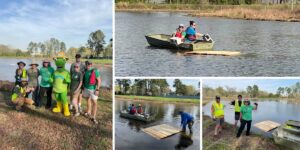
March 22, Turtle Basking Platform Launch: Charlotte Wildlife Stewards designed and built a basking platform for the turtles at Chantilly Ecological Sanctuary. The chapter hosted a successful and seamless launch! The turtles now have another place to enjoy the sunshine. Thanks to Stormy for joining the fun!
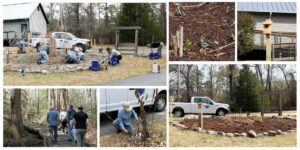
March 26, Dismal Swamp Pollinator Garden Workday: Volunteers with NCWF Wildlife Habitat Stewards of Northeastern NC Chapter came together to clean up Dismal Swamp State Park’s educational pollinator garden that the chapter planted back in 2024. Participants helped trim back vegetation, removed invasive species, refreshed the site with compost and mulch, and even installed a new bluebird house. After the work was done, volunteers enjoyed a relaxing stroll along the park’s boardwalk trail, where a pair of spotted turtles were observed. After the walk, the group was delighted to find at least a dozen zebra swallowtail butterflies puddling in the freshly watered garden!
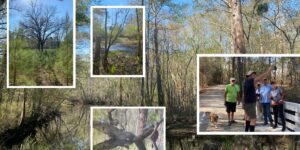
March 27, Birds at the Battlefield: The char on the ground from a recent prescribed burn attracted dozens of birds, foraging for seeds that become more visible in contrast to the charcoal. Blue-grey gnatcatchers, Northern parulas, Carolina chickadees, tufted titmice, pine warblers, yellow-throated warblers, swamp, and chipping sparrow calls rustled behind freshly emerged leaves. Red chokeberry, serviceberry, blueberries, sweetleaf, phlox, and ragwort flowers caught the glow of dipping sunlight on the forest edges. The distant call of a prothonotary warbler teased avid birders, itching to see that migrant back in its blackwater swamp breeding grounds.

March 29, Fox Creek Whiffle-Dodger Day: Friends of Fox Creek Park and Swannanoa Valley WILD gathered alongside friends and neighbors for a celebration of Fox Creek Park. We planted native wildflowers, cleared trails, and gave the park a nice spring cleaning. A delicious meal and performance by the Asheville Second Line band was the icing on the cake to a magical and memorable day.
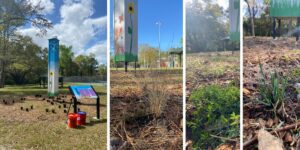
March 30, Maides Park Planting: Students in the afterschool program at Davis Community Center planted 13 different species of native larval host plants around the chimney swift tower at Maides Park. Goldenrod, bee balm, blue-eyed grass, wild indigo, and other species will increase diversity in the park, help retain water in the soil, and support birds that use Burnt Mill Creek as a habitat corridor.

March 30, High Country Wild Chartering Ceremony: High Country Wild celebrated its OFFICIAL status as a newly formed chapter of the North Carolina Wildlife Federation! We gathered at the Blue Ridge Conservancy Conservation Campus in Blowing Rock for an evening of nature walks, bingo, refreshments, stories, and laughter while we reflected on the chapter’s accomplishments thus far and looked forward to the future. We are especially thankful for, and want to shout-out to, Debby Hanley who has fearlessly stepped up to lead the chapter as President alongside an all-star chapter board. We’re so excited for what’s to come in the High Country!
Written by:
– Page Turner, Conservation Coordinator
– Laura Frazier, Refuge Conservation Coordinator
– Alden Picard, Conservation Coordinator
– Kara Solomon, Conservation Coordinator
– Luke Bennett, Conservation Coordinator
– Mary Bures, VP of Outdoor Engagement