

Aho Branch: Vernal Pools and Wetlands for Wildlife
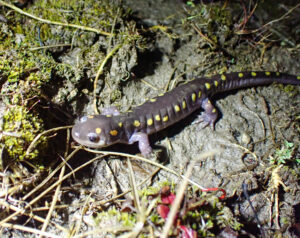 The Southern Appalachian Mountains are widely regarded as the Salamander Capital of the World, and for good reason. The North Carolina mountain region alone has over 50 species.
It’s a region characterized by high rainfall, relatively cool temperatures, and dynamic topography that creates a mosaic of moist microhabitats. Mossy streambanks and damp forest floors blanket the landscape, creating conditions ideal for salamanders’ sensitive and permeable skin that absorbs oxygen from the surrounding environment.
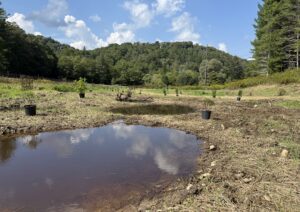
Rainfall and melting snow in the mountains fill shallow depressions in the ground, creating temporary wetlands known as vernal pools. These temporary pools provide salamanders with a safe place to breed because they are void of fish that would otherwise love the opportunity to feast on salamander eggs.
One of North Carolina’s greatest wildlife wonders happens when you least expect it… a cold and wet night in early spring. It’s been referred to as the “Big Night.”
 When salamanders, mostly those in the family Ambystomatidae (mole salamanders), emerge from underground in nearby woodlands and march toward vernal pools. Some vernal pools in North Carolina have recorded thousands of individual mole salamanders migrating at once, moving with purpose and in unison to their breeding grounds.
It’s a spectacle of nature that commands attention and highlights the necessity of vernal pools, especially for species like the yellow-spotted salamander (Ambystoma maculatum) that rely exclusively on vernal pools to breed, lay eggs, and allow larvae to grow.
Other North Carolina mountain species like the wood frog (Rana sylvatica) are also heavily reliant on vernal pools and are seen alongside yellow-spotted salamanders during the Big Night.
Habitat restoration opportunities are vast in a rapidly changing mountain landscape under constant pressure from habitat degradation and fragmentation. This also brings a greater sense of urgency as we come to grips with the impacts of Hurricane Helene.
 The North Carolina mountains are a treasure, and through collaborative habitat restoration efforts, we can tip the scales in favor of these unique species – not only for the sake of wildlife biodiversity, but for our own communities that are inextricably linked to healthy ecosystems and clean water.
In addition, wetlands help mitigate flood events and provide wonderful educational opportunities to learn about native plant and animal species. The queensnake (Regina septemvittata), for example, requires vegetated streambanks and clean water in the North Carolina mountains to support healthy populations of crayfish, which serve as their primary food source.
Tucked along Aho Branch in Watauga County is a success story for wildlife and habitat. Blue Ridge Conservancy’s (BRC) 46-acre Conservation Campus is located between Blowing Rock and Boone, and has become a “community hub” for people in the area. BRC has worked with numerous community partners to establish a rain garden to contain stormwater runoff, a half-acre pollinator garden trail, a 2.2-mile public hiking trail, a shrub transition zone for wildlife between the forest and field, an agricultural plot to grow food for the community, and the most recent stream restoration and wetland creation project in the bottomlands. With the help of partners and volunteers, these projects have been completed and are already contributing to a thriving community.
 Funding and assistance for the stream restoration and wetland creation came from multiple sources, including a grant from the NC DEQ’s Water Resources Development Grant Program, in-kind services from NC Soil and Water that include design, engineering, permitting, surveys, and soil analysis, and a grant from the NC Soil and Water Conservation’s Community Conservation Assistance Programs (CCAP), High Country Audubon Society, NCWF High Country Wild Chapter, and North Carolina Wildlife Federation.
“Restoration projects like the Aho Branch require significant funding, planning, and community support. We are fortunate to have partners who recognize the value of investing in healthy streams and wetlands in the High Country. North Carolina Wildlife Federation, High Country Wild, and Audubon Society and their dedicated volunteers have been an important part of this effort, helping create habitat that will continue to grow and improve for years to come,” said BRC’s Wendy Patoprsty. “It’s exciting to see what we can accomplish when our community comes together for conservation.”
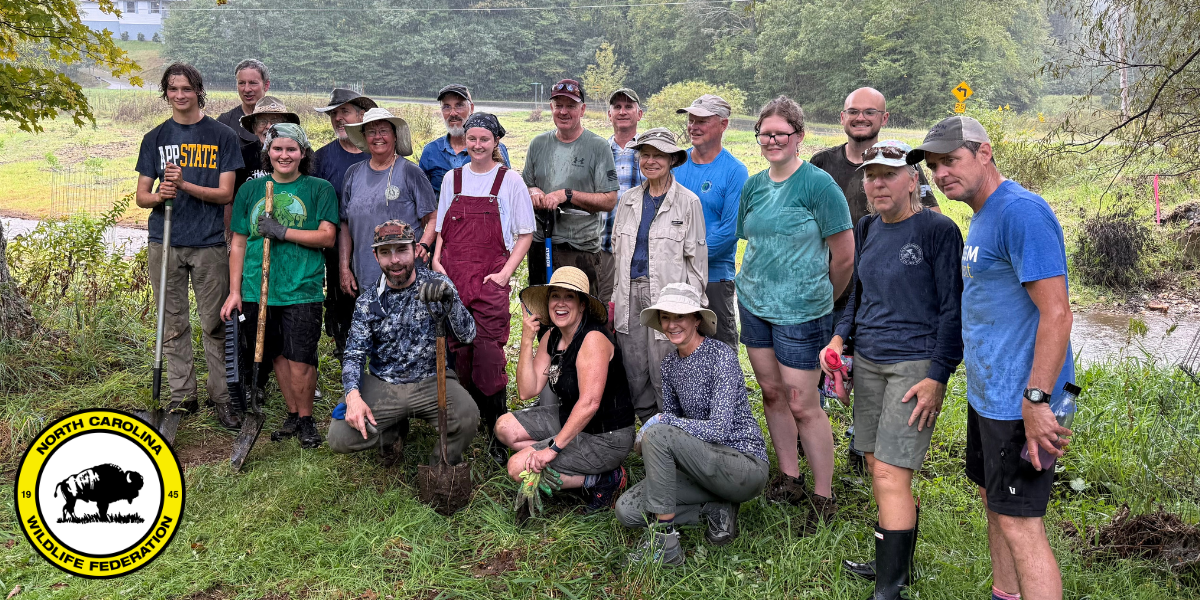
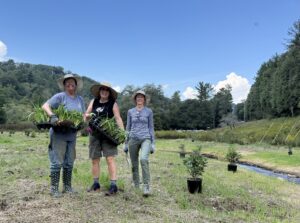
Recently, NCWF’s High Country Wild Chapter partnered with BRC and High Country Audubon to plant the stream and wetland areas of the restoration project on the BRC Conservation Campus. The project ultimately transformed a former cattle pasture into a healthy, functioning habitat with riparian habitat and vernal pools along 800 linear feet of Aho Branch, eventually flowing into the Middle Fork of the New River. This important work is mitigating some of the still-present impacts of Hurricane Helene, which increased erosion on the banks of Aho Branch, resulting in habitat loss and stream degradation.
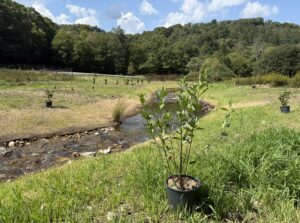
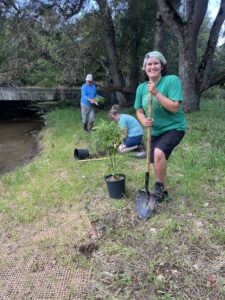 This restoration project included a natural channel design to improve in-stream habitat, stabilize stream banks, and provide stream access to the floodplain. We planted a riparian buffer on both sides of the stream and enhanced the former pasture with vernal pools and wetlands.
The riparian buffer planting included a variety of native grasses, perennials, shrubs, and hardwood trees for aquatic and terrestrial species to thrive, such as the willow flycatcher (Empidonax traillii), a Species of Greatest Conservation Need that has been documented in Watauga County along wet and shrubby riparian buffers during migration season. The plants will help shade the stream to regulate water temperatures and ambient surrounding soil temperatures, keeping the stream cool to support native brook trout (Salvelinus fontinalis) and other aquatic species.
The plants also store nutrients, the roots hold soil in place, and the leaf material provides food and cover for many organisms, including a variety of pollinators. The floodplain includes vernal pool habitat for yellow spotted salamanders that utilize this site, among numerous other salamander species such as marbled salamanders (Ambystoma opacum) found in the adjacent woodland habitat.
North Carolina Wildlife Federation and our Community Wildlife Chapters are always poised and ready to take action for wildlife and wildlife habitat. We are grateful for the opportunity to collaborate with conservation partners and volunteers who make these high-impact projects a reality. This project will serve as a replicable demonstration to teach and inspire the High Country community about the importance of healthy, functioning ecosystems and the wildlife they support.
Written by:
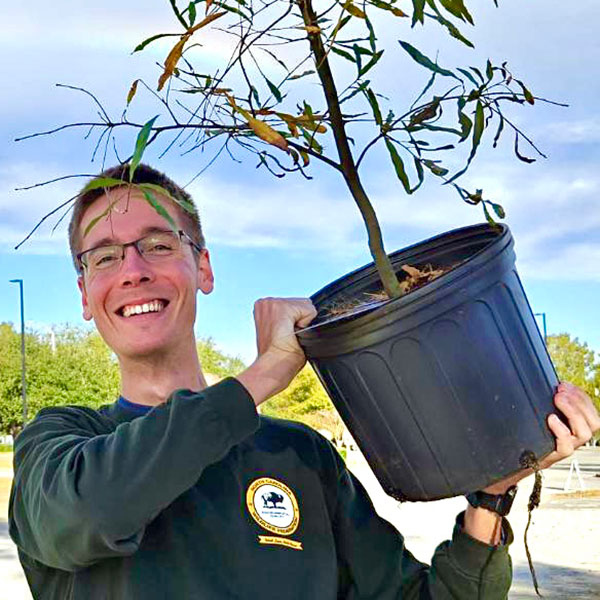
– Luke Bennett, Conservation Manager