

NCWF In The Field – October, 2026
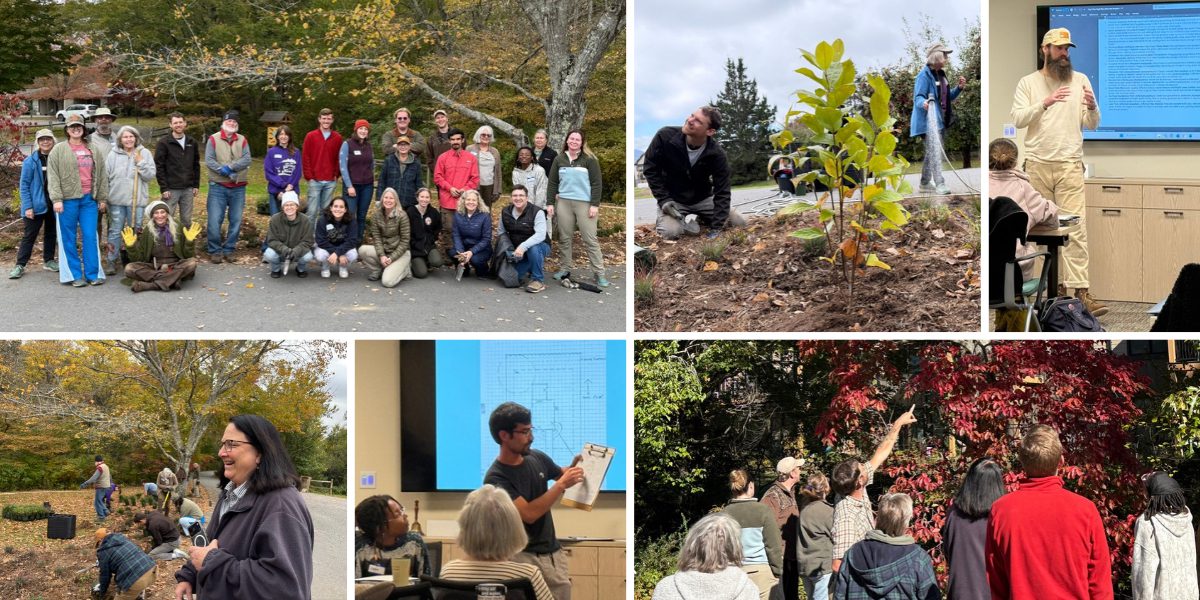
North Carolina Wildlife Federation staff and Community Wildlife Chapter volunteers connected 2,455 people to nature through 70 wildlife and habitat events and activities in October, including:
-
Clearing nearly 7 acres of invasive species – helping restore healthy habitat for native plants and wildlife across the state
-
Hosting a wide range of educational and hands-on experiences – such as swift watch parties, wildlife outings, urban forest plantings, meadow restorations, invasive species removals, and Wildlife Habitat Steward Trainings
-
Introducing people to North Carolina’s incredible wildlife habitats – from the spruce-fir forests of the highest mountain peaks to longleaf pine savannas on the coastal plain
-
Engaging staff and volunteers from Waynesville to Southport – getting outside and working together to improve wildlife habitat and connect people with nature
-
Providing opportunities for people of all ages across the state – to connect with nature, learn about wildlife and habitat, and make a tangible impact alongside conservation partners
Explore our Events Calendar to discover where NCWF and our Community Wildlife Chapters are hosting in-person and virtual events near you. Check out a few highlights below from our conservation outreach team.
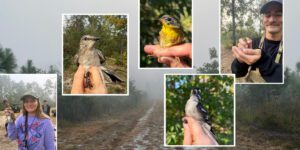
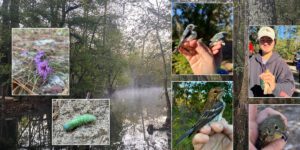
October 1, Bird Banding at Black River: NCWF and Cape Fear Bird Observatory used mist nets to capture and survey songbirds at Black River. Carolina wrens, a downy woodpecker, tufted titmouse, Northern cardinal, Carolina chickadee, Acadian flycatcher, Eastern wood peewee, black & white warbler, wood thrush, common yellowthroat, magnolia warblers, American redstarts, and catbirds were caught. Fog obscured much of the river’s edge, trading off with a smoky breeze as the day warmed. Birds are surveyed for scaly leg, fungus, injuries, and diseases that cannot be tracked from distant visual observations. All bird banding is conducted under permits issued by the U.S. Geological Survey.
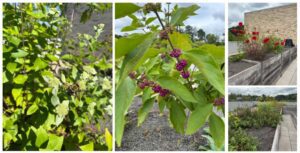
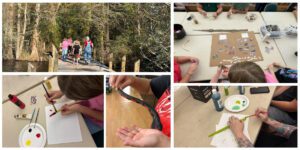
October 2, SWC Rooftop Garden Workday: NCWF South Wake Conservationists Chapter held a garden workday at Southeast Raleigh Elementary School. Fourth and fifth-grade students, led by chapter volunteers, learned first-hand some of the challenges when growing plants in a drought. While checking on the garden, everyone discovered that the native pollinator plants fared much better than the non-natives and food crops with the lack of rain. Button bush, beautyberry, mountain mint, big-headed aster, and partridge pea were flowering and surrounded by pollinators on this hot October day.
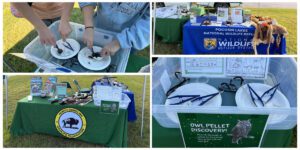
October 2, Roanoke Cooperative’s Clean Energy Expo: NCWF participated in Roanoke Cooperative’s Clean Energy Expo in Ahoskie where we had the opportunity to connect students from across northeastern NC with wildlife education. Students and adults alike were excited to learn about great horned owls and how nutrients and energy flow through an ecosystem during our owl pellet discovery activity. Participants also had the opportunity to learn more about Red Wolves and their conservation efforts. It was heartwarming to hear from locals that live in the same area as wild Red Wolves as they shared their support for their recovery and enthusiasm to continue learning more about this endangered species.
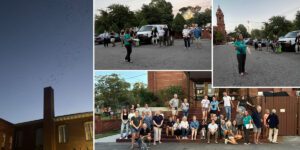
October 2, Swift Night Out: NCWF and Cape Fear Audubon gathered at the Tileston Gym to witness the spectacular spiral spectacle of migrating chimney swifts roosting for the night. In an effort to monitor roosting behavior and migration patterns for chimney swifts in NC, participants counted and submitted an estimated total for Wilmington’s largest recorded roosting site. Understanding where, when, for how long, and in what numbers swifts roost and nest around NC help identify conservation priorities for this species.
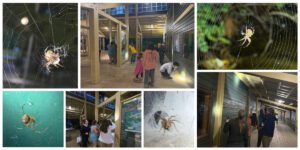
October 3, Evening Spider Search: NCWF and Pocosin Lakes National Wildlife Refuge partnered to host a night of spider-focused community science as part of Science Across NC’s NC Spider Search. Participants of all ages gathered under the Pocosin Lakes visitor center breezeway and pollinator garden to take photos of spiders and upload their observations to iNaturalist. Once 7 spider observations were submitted, folks filled out a short online form to claim their prize, an NC Spider Search badge or sticker, for participating in this community science opportunity. Youth and adults alike observed at least 10 different species of spiders, including red-femured spotted orbweavers, common house spiders, and funnel weavers like Barronopsis texana. In addition to the spiders, folks in our group also spotted an Eastern screech owl perched in a tree above the pollinator garden!
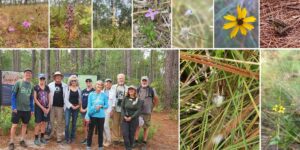
October 3, Green Swamp in the Fall: NCWF and Cape Fear Sierra Club went for a walk through Green Swamp Preserve. Leopard frogs on the pond’s edge and wolf spiders with egg sacs scurried beneath Carphephorous, Trilisa, Pleea, Coreopsis, Rhexia, Eryngium, and Seymeria flowers of purple, pink, white, and yellow. Stewardship by The Nature Conservancy has left Green Swamp as one of the few public longleaf pine pocosin habitats that still supports a high diversity of rare plants.
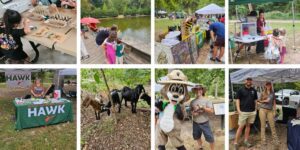
October 4, Kids in Nature Day
NCWF Habitat and Wildlife Keepers Chapter welcomed hundreds of children and adults to Squirrel Lake Park in Matthews, NC for their annual fall Kids in Nature Day. The event was filled with vendors that share the same passion for wildlife and conservation. You could hear the sounds of frog and toad calls, turkey gobbles, goats chomping on invasive plants, the laughter of kids as they got Ranger Rick’s signature, and the peaceful view of people fishing at the lake and having a good time.
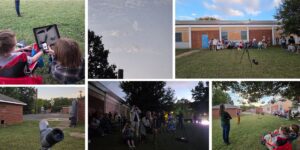
October 5, Swift Night Out: NCWF continued its swift watch party series with Mecklenburg Audubon Society hosting a grand finale event at Collinswood Elementary. The chimney at Collinswood is at risk of being removed for development. Nearly 50 swift enthusiasts attended to observe these incredible birds. Folks were encouraged to speak up for wildlife and take action to protect this chimney. Fortunately, these watch parties have rallied support for chimney swifts, and both Mecklenburg County and Charlotte-Mecklenburg Schools are working towards preserving the chimney.
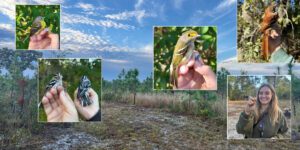
October 7, Bird Banding at Black River: NCWF and Cape Fear Bird Observatory used mist nets to capture and survey songbirds at Black River. Gray catbirds, black and white warblers, American redstarts, a Carolina chickadee, tufted titmouse, ruby-crowned kinglet, brown thrasher, Eastern towhee, common yellowthroat, magnolia warbler, pine warbler, and Northern cardinal were caught. A bright, sunny morning revealed many fruits on sparkleberry, Greenbriar, and beauty berry. Birds are surveyed for scaly leg, fungus, injuries, and diseases that cannot be tracked from distant visual observations. All bird banding is conducted under permits issued by the U.S. Geological Survey.
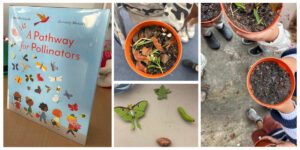
October 9, A Pathway for Pollinators: NCWF joined first grade students and staff at Tyrrell County Elementary School for a fun morning of pollinator conservation! We started by reading the children’s story, A Pathway for Pollinators by Michelle Schaub, where students learned about how important it is to create and connect pollinator habitats. Students were very excited to learn about different types of pollinators and the pollen and nectar sources that sustain them. After the reading, we went outside where students had the opportunity to plant their own Butterfly Highway seeds in containers that will be kept outside their classroom window for monitoring. Several students took initiative to collect fallen leaves and created a thin mulch layer on top of their seeds!
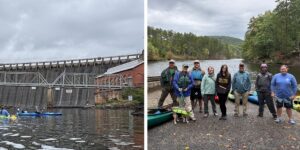
October 10, Paddle on Falls Reservoir
NCWF Uwharrie Wildlife Stewards Chapter hosted 9 participants and 1 adventurous dog for a paddle on Falls Reservoir. The group observed a variety of birds, including cormorants, great blue herons, a kingfisher, and a bald eagle. One paddler also spotted what may have been an otter swimming near one of the islands. An osprey nest near the boat ramp showed no signs of current activity, though it has been used by an osprey pair in previous years. Due to drought conditions, Moccasin Creek waterfall on the Uwharrie National Forest side was not flowing. The low water conditions and extra time allowed the group to visit the historic Narrows Dam on Badin Lake, built circa 1917. With guidance from the owner of Uwharrie Paddle Company, participants learned about the diversion tunnels used during the dam’s construction. Although the tunnels are closed to the public, the group was able to view them from a short distance away.
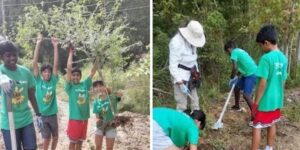
October 10, Planting Workday
NCWF Habitat Builders Chapter volunteers gathered to clear invasive plants and weeds from the grounds of the new garden at Marvin Efird Park. A mighty group of 7 people showed up and got to work. At the end of their time together, they had managed to clear the area enough for the new mulch to be spread the following week.
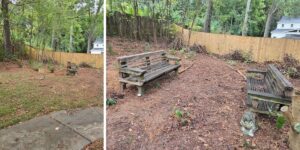
October 10, Native Garden Planting
NCWF Charlotte Wildlife Stewards Chapter continued its community garden project at Sedgefield Montessori Elementary School, building on last month’s efforts to clear invasive plants and prepare the space for planting! Despite the threat of rain, 15 volunteers came together to install a variety of native plants, including common violet, pawpaw, redbud, mistflower, crested iris, and native ferns. This collaborative effort is transforming the school garden into a valuable habitat that supports local wildlife, promotes biodiversity, and creates a quiet place for students to enjoy the natural beauty on their school campus
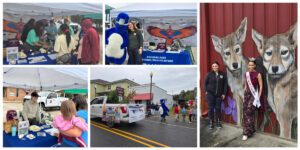
October 10, Scuppernong River Festival: NCWF, Pocosin Lakes National Wildlife Refuge and the Red Wolf Recovery Program came together for a day of community and conservation at the annual Scuppernong River Festival in Columbia. The day kicked off with the parade downtown followed by hours of engaging conversations with locals of all ages and interests. In addition to hosting tables that connected the community with resources and opportunities to get involved with NCWF and refuges, we also offered a shuttle service that transported event attendees to the Red Wolf Center for a chance to learn more about Red Wolves and view the wolves that live on habitat at the center.
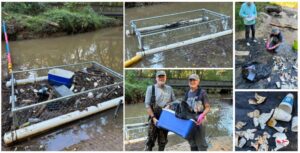
October 12, SWC Trash Trap Cleanout: NCWF South Wake Conservationists Chapter held a trash trap clean out in Raleigh’s Walnut Creek. After a day of rain from Hurricane Isaias, the trap was filled with trash (including lots of styrofoam bits) and plant debris that had washed downstream. Volunteers suited up and removed trash from the trap, including a tackle box and lidless cooler, before sorting it by category and weighing it. In total 300 items were removed from the trap totaling 12 pounds of litter.
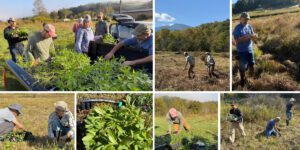
October 13, Bowditch Bottoms Wetland Planting & Restoration: North Carolina Wildlife Federation and Southern Appalachian Highlands Conservancy – with support from Wildbud Natives Nursery and community volunteers – planted nearly 2,000 young plants (aka plugs) throughout the 5-acre wetland area at SAHC’s Bowditch Bottoms Preserve in Yancey County. We planted a variety of native species, based on recommendations following a floristic quality inventory conducted last year. These newly planted species included: swamp milkweed, bushy bluestem, swamp hibiscus, blue lobelia, and more – all with the goal of increasing biodiversity and habitat quality for wildlife. We deeply appreciate all the volunteers and partners that have helped with this project so far, and we can’t wait to continue the work on this conserved land!
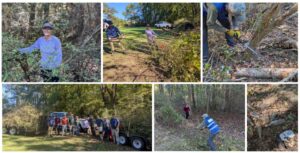
October 14, SWC Invasive Removal with Wake Audubon: NCWF South Wake Conservationists Chapter, in partnership with Wake Audubon, held an invasive removal workday at Carroll Howard Johnson Environmental Education Park in Fuquay-Varina. Volunteers gave native trees some breathing room as they removed a large patch of privet as well as Japanese stiltgrass, oriental bittersweet, and Chinese holly. While removing invasives, the group also found a pile of old bottles which they removed.
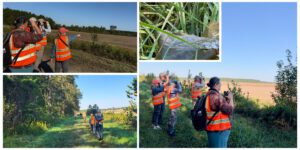
October 14, Wings Over Water Pungo Unit Tour: NCWF partnered with the Coastal North Carolina National Wildlife Refuge Complex to lead a special wildlife tour as part of the annual Wings Over Water (WOW) festival that takes place every October across the 9 refuges in the complex. Participants enjoyed a guided tour of the Pungo Unit of Pocosin Lakes National Wildlife Refuge where they learned more about the history, management, and biodiversity of the refuge. During the tour, we enjoyed identifying 19 species of birds while also observing black bears, white-tailed deer, dozens of squirrel tree frogs, and a variety of turtles basking along the canals.
October 14, Wings Over Water Pungo Unit Tour: NCWF partnered with the Coastal North Carolina National Wildlife Refuge Complex to lead a special wildlife tour as part of the annual Wings Over Water (WOW) festival that takes place every October across the 9 refuges in the complex. Participants enjoyed a guided tour of the Pungo Unit of Pocosin Lakes National Wildlife Refuge where they learned more about the history, management, and biodiversity of the refuge. During the tour, we enjoyed identifying 19 species of birds while also observing black bears, white-tailed deer, dozens of squirrel tree frogs, and a variety of turtles basking along the canals.
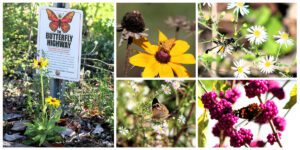
October 14, Pollinator Garden Cleanup: Volunteers with NCWF Wildlife Habitat Stewards of Northeastern NC Chapter came together to clean up and prepare the pollinator garden at Merchants Millpond State Park’s Visitor Center for winter. Leaves, twigs, and seedheads were intentionally left to provide habitat for overwintering insects and food for birds and other wildlife.
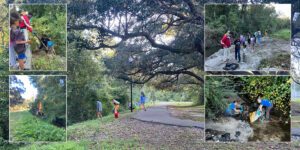
October 16, Kids Night Out: Maides Creek Clean-Up: NCWF, Davis Community Center, UNCW, and Keep New Hanover Beautiful removed over 400 lbs of trash from the creek at Maides Park. Shopping carts, scooters, electric bikes, rugs, bottles, and cans polluted the creek banks, trapping wildlife and displacing sediment. Large golden silk orb weavers, water bugs, turtles, mosquito fish, and many different songbirds are common in and around the creek. Removing the trash prevents it from being carried into Smith Creek and draining into the Atlantic Ocean, where it can be broken down into small pieces and consumed by wildlife.
October 16, Kids Night Out: Maides Creek Clean-Up: NCWF, Davis Community Center, UNCW, and Keep New Hanover Beautiful removed over 400 lbs of trash from the creek at Maides Park. Shopping carts, scooters, electric bikes, rugs, bottles, and cans polluted the creek banks, trapping wildlife and displacing sediment. Large golden silk orb weavers, water bugs, turtles, mosquito fish, and many different songbirds are common in and around the creek. Removing the trash prevents it from being carried into Smith Creek and draining into the Atlantic Ocean, where it can be broken down into small pieces and consumed by wildlife.
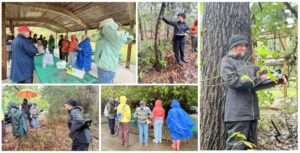
October 17, DWS Tree ID Walk: NCWF Durham Wildlife Stewards Chapter hosted a professor from the Nicholas School of the Environment at Duke to lead a tree identification walk through Sandy Creek Park. Participants walked around the park, stopping often to identify trees. Overarching ecological topics, including how trees communicate with each other, were also discussed. While exploring the park, participants were challenged to notice everything about a tree to aid in their identification, and they participated in exercises designed to make you think critically about what trees provide to both humans and wildlife.
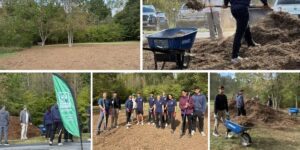
October 17, Garden Workday
NCWF Habitat Builders Chapter brought together pre-teens, teenagers, and adults for a collaborative effort at the new Marvin Efird Park. Through hard work and teamwork, volunteers moved a tremendous amount of mulch to prepare the park for Marvin’s Arbor Day Planting Celebration! Their dedication demonstrates the commitment the community has to its local parks.
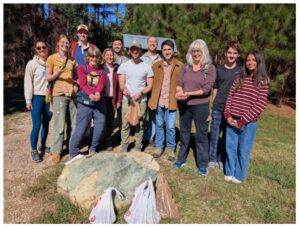
October 18, TCC Native Species Seed Collection: NCWF Tri-County Conservationists Chapter held a tree identification walk and seed collection event at Brumley North Preserve. Participants collected Southern and Northern Red oak acorns as well as seeds from white oaks and dogwood trees. All the seeds collected from this event will be planted in Brumley South or donated to Project Pando to grow into trees to give away to local restoration projects.
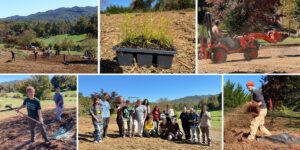
October 19 – 23, Black Mountain Meadow Installation: NCWF Swannanoa Valley Wild! alongside Patchwork Meadows and Warren Wilson College installed a one acre native pollinator meadow at the Black Mountain Golf Course with support from the Town of Black Mountain (staff from Recreation and Parks, Public Works and the BM Golf Course) and Friends of Lake Tomahawk. Around 30 volunteers helped plant nearly 4 thousand native plants over the span of a week including butterflyweed, wild strawberry, mountain mint, wild bergamot, little bluestem and more! The meadow will reduce the need for mowing while providing critical habitat for birds and beneficial insects. It will also serve as an inspiration for the local community to provide habitat for wildlife in their own backyards and community spaces.
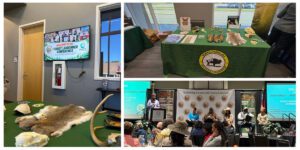
October 21-22, Roanoke Cooperative’s Landowner Conference: NCWF and conservation partners from across the state gathered in Rocky Mount to connect with landowners at the annual Forest Landowner Conference, hosted by Roanoke Cooperative’s Sustainable Forestry and Land Retention Project. It was wonderful meeting and catching up with landowners from northeastern NC, and beyond, over engaging conversations regarding personal connections to wildlife and the land, management tools like prescribed fire, and goals for managing their properties to support more wildlife and habitat.
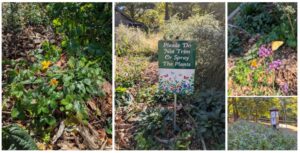
October 22, DWS Pollinator Garden Workday: Volunteers from NCWF Durham Wildlife Stewards Chapter planted native plants in the pollinator garden at Sandy Creek Park in Durham. DWS has officially adopted Sandy Creek Park and they hold regular garden workdays to plant and tidy up the two gardens in the park.
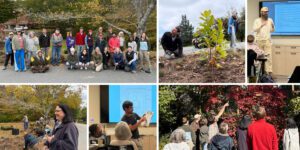
October 23 – 25, Black Mountain Wildlife Habitat Steward Training: What a great weekend! North Carolina Wildlife Federation alongside our local chapters Swannanoa Valley Wild and ReWild AVL hosted a Wildlife Habitat Steward Training in Black Mountain with generous support from Givens Highland Farms. 25 participants spent the weekend engaged with experts in the field on a variety of topics as we learned about the interconnectedness of wildlife, habitat, and people. We took a closer look at local ecology and how to restore ecological function. We discovered the foundational nature of native plants and the abundance of opportunity right outside the door in our backyard and in our community spaces. We learned how to conduct site assessments and how to apply our knowledge by completing a habitat installation on the Highland Farms’ campus. We transformed the 500 square foot space into bountiful habitat featuring nearly 200 native plants thanks to our friends at Carolina Native Nursery in Burnsville. We planted little bluestem, winterberry, sweetshrub, mountain mint, bee balm, pennsylvania sedge, and more in an effort to plant the seed for conservation in Western North Carolina.
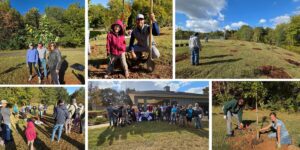
October 24, Native Tree Planting: NCWF Lake Norman Wildlife Chapter continued its work keeping the Town of Cornelius Clean and Green while enhancing habitat for wildlife. After removing over 500 pounds of trash in Cornelius this spring, 30 hardworking volunteers, youth and adults alike, returned to Cornelius to plant 75 native trees, enhancing wildlife habitat at Bailey Road Park!
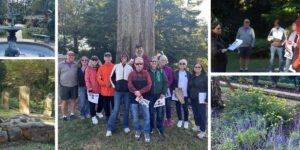
October 24, Stories Behind the Headstones
NCWF Concord Wildlife Alliance Chapter hosted 12 participants for a tour of Concord’s Memorial Garden. Maintained by First Presbyterian Church of Concord, the garden provided a beautiful setting to explore local history. Chapter leader and local, Marcia Brashear, shared stories from her research on 18 gravesites that highlight the people and families whose descendants still live in Concord today. A standout feature of the tour was a remarkably old oak tree and native pollinator plants, and participants also learned about the church’s annual tulip planting tradition around the fountain!
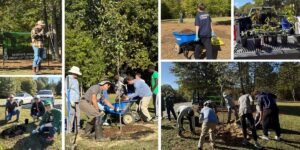
October 24, Arbor Day Planting
NCWF Habitat Builders Chapter wrapped up their October workdays at Marvin’s Arbor Day Planting Celebration, bringing the community together to enhance wildlife habitat. Volunteers planted 16 trees, including a variety of oaks and serviceberry, expanding the green space and creating valuable resources for wildlife. Following the planting, attendees were invited to a plant swap and had the opportunity to take a tree home, extending the impact beyond the park and inspiring continued stewardship in their own backyards!
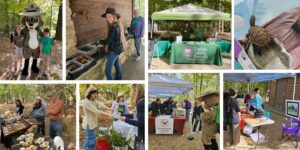
October 25, Kids in Nature Day
NCWF Charlotte Wildlife Stewards Chapter brought the community together for its annual Kids in Nature Day at Reedy Creek Park, partnering with local organizations to connect children and adults with nature. Through hands-on activities, participants explored wildlife anatomy through bones and feathers, practiced identifying trees, met native animals, learned about wildlife rehabilitation, and created art from fallen leaves, seeds, and other natural materials. With opportunities to take home a blue mistflower cutting and snap a photo with Ranger Rick. The event inspired curiosity, strengthened community connections, and encouraged the next generation of wildlife stewards.
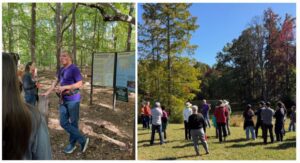
October 25, TW Guided Walk through the Guilford Woods: NCWF Triad Wild Chapter, in partnership with Piedmont Land Conservancy and T. Gilbert Pearson Audubon Society, held a guided walk through Guilford Woods. Over 25 participants gathered on Guilford College’s campus to meander the paths through 140 acres of Guilford Woods to learn about the natural and cultural history of the forest and the efforts to protect this land from development. Participants learned the importance of native trees, oaks in particular, and the critical wildlife habitat they provide as dead snags and deadwood on the forest floor. Following a conversation about invasive plants and their impact on native species, everyone stood in awe of the “Witness Tree,” a 350 year old tulip tree.

October 27, Shifting Species: Climate & Behavior and Arachnid Costume Party: NCWF, Pocosin Lakes National Wildlife Refuge, and Tyrrell County Library teamed up to host this month’s ecoEXPLORE program that focused on how species shift their behavior in response to changes in climate and weather events. Families explored multiple examples including how monarch butterflies alter their migration route ahead of a hurricane to avoid the storm’s impacts and how nine-banded armadillos have been able to expand their habitat range due to increasingly milder winters in NC. Participants then picked their favorite wildlife example to research further as part of one of their required challenges to earn their Climate Mission badge. To end the Arachnology Badge season, ecoEXPLORErs designed and dressed up in their own spider costumes to celebrate a successful badge season!
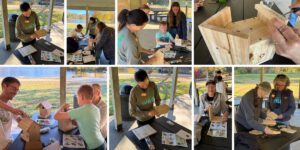
October 27, Nest Box Building Workshop: NCWF Swannanoa Valley Wild had a fun time constructing bluebird houses at the Lake Tomahawk pavilion followed by a pleasant bird walk around the lake. These bluebird houses will be installed in November alongside wood duck boxes to support the local birds in Black Mountain!
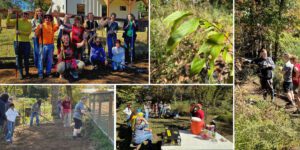
October 27, Swannanoa Cross Creek Project Workday: NCWF Swannanoa Valley Wild alongside Warren Wilson College and Friends of Fox Creek Park broke ground on a new project along Fox Creek in Swannanoa. The goals of the project are to provide a teaching garden to show visitors what is possible using native and resilient species in the garden. Enhance pollinator populations throughout Fox Creek Park and into the surrounding neighborhood. Stabilize the creek bank and enhance wildlife habitat. And mark the western edge of the park and provide a transition zone between the park and our neighbors’ properties.
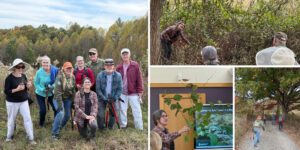
October 28, Invasive Plant ID and Removal Workshop: North Carolina Wildlife Federation, Carolina Mountain Club, and Appalachian Trail Conservancy hosted a non-native invasive plant training in Madison County! We kicked things off at the Marshall Public Library with a program led by ATC’s NNIP specialist, Emily Powell. After lunch, we headed over to the Appalachian Trail just outside of Hot Springs and applied our knowledge in the field. This was a great opportunity to learn about the different invasive plant species in Western North Carolina and effective strategies for removal. By taking action to control and eradicate invasive plant species, we can help protect native biodiversity, restore ecosystem and trail functionality, and ensure a healthier and more balanced natural world for both people and wildlife.
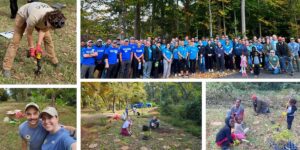
October 29, Native Shrub Planting: NCWF Charlotte Wildlife Stewards Chapter teamed up with TreesCharlotte to rebuild Charlotte’s urban forest at LC Coleman Park in Charlotte’s historical Washington Heights neighborhood. Chapter volunteers worked alongside TreesCharlotte volunteers and Duke Energy volunteers to plant 400 native shrub tubelings and 125 trees. A healthy shrub layer adds habitat, structural complexity, and improved ecosystem resiliency in an urban forest! Projects like this are made possible by NCWF Community Wildlife Chapters and conservation partners like TreesCharlotte.
Written by:
– Page Turner, Conservation Manager
– Laura Neitzey, Conservation Manager
– Alden Picard, Conservation Manager
– Kara Solomon, Conservation Manager
– Luke Bennett, Conservation Manager
– Mary Bures, VP of Outdoor Engagement
– Emily Strongin, Community Engagement Manager