NCWF In The Field – September, 2026
North Carolina Wildlife Federation staff and Community Wildlife Chapters connected 2,243 people to nature through 65 wildlife and habitat events and activities in September, including:
- Clearing nearly 14 acres of invasive species – helping restore healthy habitat for native plants and wildlife across the state
- Hosting a wide range of educational and hands-on experiences – such as swift watch parties, native plantings, invasive species removals, bird banding, and Hawk Watch events
- Introducing people to North Carolina’s incredible wildlife – including chimney swifts, broad-winged hawks, and a variety of migratory bird species
- Engaging staff and volunteers from Linville to Wilmington – getting outside and getting their hands dirty to improve wildlife habitat and connect people with nature
- Providing opportunities for people of all ages across the state – to connect with nature, learn about wildlife and habitat, and make a tangible impact alongside conservation partners
Explore our Events Calendar to discover where NCWF and our Community Wildlife Chapters are hosting in-person and virtual events near you. Check out a few highlights below from our conservation outreach team.
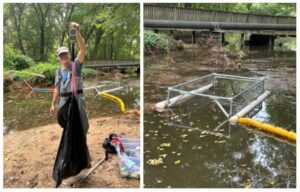
August 30, SWC Trash Trap Cleanout: NCWF South Wake Conservationists Chapter held a trash trap cleanout in Raleigh’s Walnut Creek. After a heavy rain, the trap was filled with trash and plant debris that had washed downstream. Volunteers suited up and cleaned out the trap before sorting everything by trash type and weighing it.
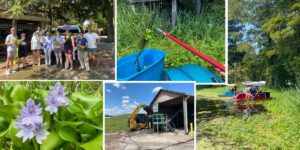
September 1, Water Hyacinth Removal at Greenfield Lake: At a first of its kind invasive aquatic removal in Wilmington, NCWF teamed up with Cape Fear River Watch to scoop up mats of water hyacinth (Pontederia crassipes) in Greenfield Lake. This invasive plant is introduced to natural waterways when it is discarded from backyard ponds. Water hyacinth blocks sunlight and reduces habitat for wildlife by smothering native plants. Over 500 pounds of water hyacinth was removed from the lake and taken to the county compost to be repurposed for restoring biodiversity.
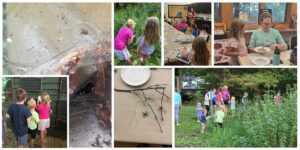
September 1, ecoEXPLORE Web Weavers: It’s Arachnology Season! NCWF and Pocosin Lakes National Wildlife Refuge kicked off the ecoEXPLORE Arachnology Badge Season with an introduction to the study of arachnids and nature walk around the educational pollinator garden. Families searched the visitor center breezeway and pollinator garden for different types of webs and were especially excited when they spotted the expert web weavers that built them. After observing a variety of different webs and spiders, we came back inside where participants had the chance to weave their own unique webs inspired by four main types of spider webs: orb, tangled, funnel, and sheet. Children and adults alike left the program with an increased appreciation and understanding for the roles that arachnids play in an ecosystem as skilled predators, food sources for other wildlife, and even decomposers–as some arachnids, like mites, help break down dead plants and animals–demonstrating the many services provided by arachnids of all shapes and sizes!
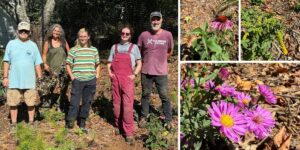
September 2, North Street Park Workday: Back in May, NCWF High Country Wild hosted a Wildlife Habitat Steward Training in Boone. Participants of the training put their learning into action by creating a native plant garden at North Street Park. Early in September, volunteers returned to the garden for a workday and got their hands dirty. Together, we weeded, worked the soil and planted more native plants to help the garden grow into a beautiful habitat to be enjoyed by wildlife and people alike. When a community comes together to create and care for wildlife habitat, it’s amazing what happens. And the work doesn’t end when the training is over, it grows!
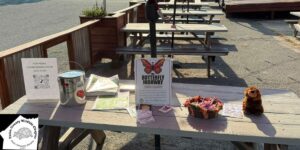
September 3, Wildlife Enthusiasts Social
NCWF Union County Wildlife Chapter welcomed 8 wildlife enthusiasts to Southern Range Brewing Co. for a casual meet and greet on the patio. The gathering provided a fun opportunity to connect, build relationships, and strengthen the local wildlife community.
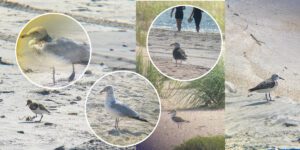
September 3, Nesting Shorebird Survey at Wrightsville Beach: 20 black skimmers (3 chicks), 18 brown pelicans, 7 laughing gulls, 4 American herring gulls, 2 great black-backed gulls, 2 ring-billed gulls, 2 sanderlings, 2 ruddy turnstones, 2 willets, 1 mourning dove, and an osprey.
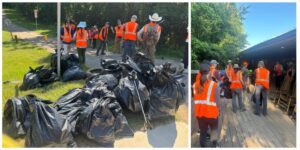
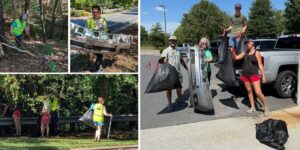
September 5, SWC Big Sweep: NCWF South Wake Conservationists Chapter participated in a trash clean up with Wake Big Sweep along the greenway near Walnut Creek Wetland Center in Raleigh. Volunteers removed over 800 pounds of trash along the greenway to help improve habitat for wildlife.
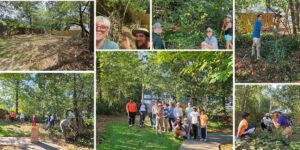
September 5, Invasive Plant Removal
NCWF Charlotte Wildlife Stewards chapter and community volunteers worked to remove invasive species at Sedgefield Montessori Elementary School in Charlotte. Members removed small non-native trees, shrubs and other invasive plants to prepare the site for a native plant garden. The project was completed in collaboration with a Girl Scout Silver Award candidate. Clearing the space was an important first step toward creating a space for students to appreciate a dedicated space for wildlife.
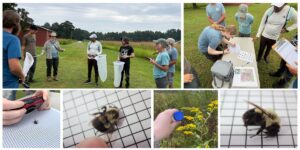
September 6, Southeast Bumble Bee Atlas Survey: Fellow community scientists joined NCWF Wildlife Habitat Stewards of Northeastern NC Chapter for their Southeast Bumble Bee Atlas (SEBBA) survey at their adopted priority block at Merchants Millpond State Park. A slight weather delay didn’t stop the survey crew from capturing and recording data for 2 common eastern bumble bees (Bombus impatiens). Observations and a detailed habitat assessment were submitted to Bumble Bee Watch where researchers with the Xerces Society verify species identifications and use this valuable data to monitor changes in bumble bee populations over time. Our bumble bees and other native pollinators are facing a series of threats from habitat loss, pesticide use, and climate change to low genetic diversity and the introduction and distribution of disease. To help track population changes that can inform conservation management, researchers need all of the support they can get from community scientists like you! To learn more about participating in next year’s SEBBA season, visit https://www.bumblebeeatlas.org/pages/southeast.
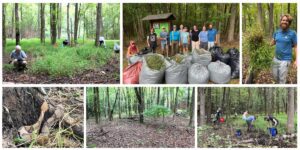
September 6, Invasive Stiltgrass Removal: Community volunteers came together to help NCWF Wildlife Habitat Stewards of Northeastern NC Chapter with their ongoing invasive species removal efforts along Merchants Millpond State Park’s Coleman Trail. Targeting invasive Japanese stiltgrass for 2 hours, the group removed 19 large trash bags of pulled plants across about half an acre of habitat. During the workday, volunteers also observed multiple examples of wildlife that benefit from this important restoration including a nest of southern yellowjackets, a southern toad, and a copperhead that provided the perfect learning opportunity for volunteers to observe this special species in its natural environment. There was no chasing or striking, only a mutual respect and acknowledgement of one another’s space.
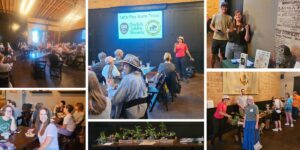
September 8, Nature Trivia Night
NCWF Charlotte Wildlife Stewards chapter held a seasonal Nature Trivia evening event that welcomed 38 attendees and was hosted in partnership with Sugar Creek Brewing Co. Participants enjoyed an engaging community gathering that highlighted the importance of local conservation efforts and fun trivia questions. A robust raffle featured a wide variety of native plants, giving attendees an opportunity to take home plants that could support local wildlife and pollinators.
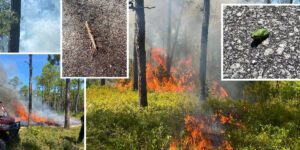
September 8, Prescribed Fire at Carolina Beach State Park: After the seeds of Venus flytraps and pitcher plants have dropped, fire in the longleaf pocosin at Carolina Beach State Park clears the foliage from bay, holly, and wax myrtle to help carnivorous plants germinate and establish. Two-striped walking sticks (Anisomorpha buprestoides) fled from the smoke in large numbers, scaling trees and searching for refuge during their late summer breeding. Squirrel tree frogs, Southern toads, oak toads, and grasshoppers jumped to refuge as bluebirds and American crows picked off invertebrates in the sky.
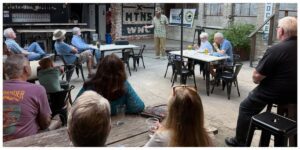
September 9, Black Mountain Conservation Social: NCWF Swannanoa Valley Wild hosted a conservation conversation at Old Town District in Black Mountain. The chapter discussed past and current initiatives in the Swannanoa Valley region while opening up invitations to the upcoming ‘All Hands’ Open Invite Board Meeting and the upcoming Wildlife Habitat Steward Training at Highland Farms in Black Mountain. It was a great opportunity for the community to discover ways to get involved in conservation on a grassroots level and make some friends along the way!
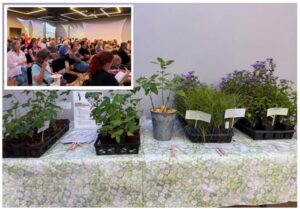
September 10, TW The Extraordinary Caterpillar: NCWF Triad Wild Chapter held a screening of The Extraordinary Caterpillar at the Greensboro Science Center. Participants enjoyed the documentary screening followed by a Q&A about native gardening. Everyone left with a native plant to help them begin their native plant journey and provide more habitat for caterpillars!
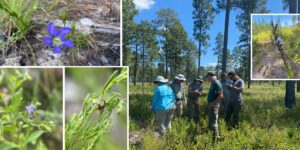
September 10, Plant Walk at Suggs Mill Pond Game Land: Suggs Mill Pond is managed with fire to support a diverse longleaf pine savanna understory with seasonal blooms year-around. In late summer, Euphorbia, Solidago, Gentiana, Liatris, Carphephorous, Trichostema, Seymeria, Helenium, Sisyrinchium, Lespedeza, and Pycnanthemum species are blooming with shades of purple, yellow, white, and green painting the grassy, open landscape.
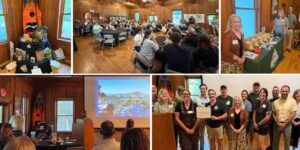
September 10, Uwharrie Chartering Ceremony: NCWF Uwharrie Wildlife Stewards Chapter brought the community together at Morrow Mountain State Park to celebrate being chartered as an official NCWF Chapter joining a network of 20 chapters across the state. The night was filled with food, fellowship, raffles, and door prizes. North Carolina rattlesnake expert Mr John Sealy delivered an engaging presentation about the biology and conservation of our state’s timber rattlesnakes.
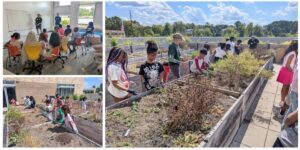
September 11, SWC Rooftop Garden Workday: NCWF South Wake Conservationists Chapter held a garden workday at Southeast Raleigh Elementary School. Fourth and fifth-grade students, led by chapter volunteers, planted fall crops and learned how to weed and water the rooftop plants. Students were also taught about the importance of native plants for attracting pollinators to the food crops as native plants intentionally make up half of each bed.
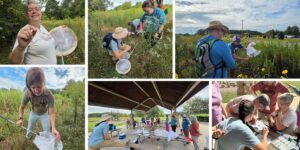
September 12, Southeast Bumble Bee Atlas: NCWF partnered with the Central Carolinas Master Naturalist Program and NCWF Charlotte Wildlife Stewards Chapter to continue participation in the Southeast Bumble Bee Atlas at Clarks Creek Nature Preserve in Charlotte. The Xerces Society leads the Southeast Bumble Bee Atlas, a community science project that tracks bumble bee populations across the Southeast. Volunteers collected 23 common Eastern bumble bees, including several males! Nests shift to producing male drones and new virgin queens for reproduction towards the end of the season.
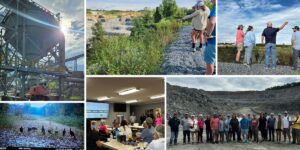
September 12, Vulcan Quarry Tour
NCWF Concord Wildlife Alliance chapter gathered for a sold out tour of the Vulcan Concord Quarry, a Wildlife Habitat Council certified enhanced habitat for native wildlife on corporate lands. Participants traveled in groups in a cooled transit van, learning about quarry operations, the site’s habitat certification, and its wildlife conservation efforts. The quarry was also home to a raptor that had been released after rehabilitation at the Carolina Raptor Center.
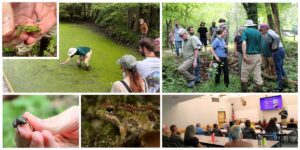
September 12, Herps & Habitats – Education & Exploration: NCWF Wildlife Habitat Stewards of Northeastern NC Chapter hosted NC Wildlife Resources Commission’s Statewide Herpetologist, Jeff Hall, for their second annual Herps & Habitats – Education & Exploration workshop at Merchants Millpond State Park. Participants enjoyed an engaging presentation that dived into specific reptile and amphibian (herp) species that can be found at the park and surrounding areas and conservation efforts to support those species. Following the presentation, everyone went out for a guided discovery walk where we observed 1 red-bellied water snake, 1 pickerel frog, at least 6 southern cricket frogs (of various colors and patterns), 3 leopard frogs, 1 green treefrog, and a scute shed from a turtle shell! The group also observed a few non-herp species including a northern parula, red-shouldered hawk, and a pair of American redstarts.
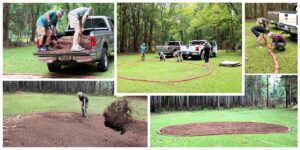
September 12, Merchants Millpond Rain Garden Prep: Volunteers with NCWF Wildlife Habitat Stewards of Northeastern NC Chapter helped prepare the planting site for their upcoming native plant rain garden project at Merchants Millpond State Park. Folks placed edging stones, laid down cardboard, and covered the area with mulch to help smother non-native grass, ensuring that the site will be ready for a successful planting later this fall. The rain garden will not only help absorb and filter stormwater runoff but it will also support habitat connectivity at the park by providing food and shelter for a variety of pollinators and other wildlife at the park.
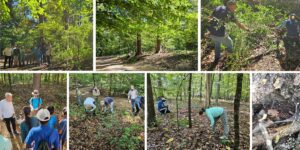
September 13, Invasive Plant Removal
NCWF Habitat and Wildlife Keepers chapter worked to remove harmful invasive plant species from Squirrel Lake Park in Matthews, NC. The group focused on removing wisteria and saw the positive impact of previous invasive plant removal efforts. Volunteers learned to identify common invasive plants and gained hands-on experience with their removal, helping restore quality wildlife habitat and support native biodiversity. A special group of students from the First Lego League also participated in the project. Their enthusiasm and hard work made a meaningful contribution to the effort.
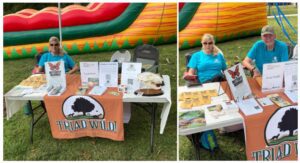
September 13, TW Day in the Park: NCWF Triad Wild Chapter tabled at a Day in the Park in High Point. Chapter leaders gave away Butterfly Highway seed packets and fielded questions about native plant gardening. Volunteers also promoted upcoming Triad Wild events and ways to get involved with the chapter.
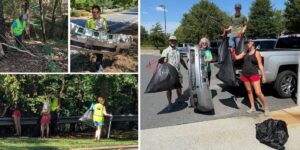
September 13, Trash Clean-Up
NCWF Charlotte Wildlife Stewards chapter braved the heat and Charlotte traffic to pick up litter. Through the Keep Charlotte Beautiful (KCB) Adopt-a-Street program, CWS adopted a one-mile stretch along Tyvola Road to give back to the community. Volunteers enjoyed the beautiful day and removed 170 pounds of litter from the roadside habitat!
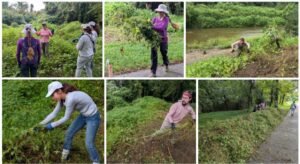
September 13, SWC Walnut Creek Invasive Removal: NCWF South Wake Conservationists Chapter removed invasive Japanese hops at Walnut Creek Wetland Park in Raleigh. Volunteers removed this incredibly aggressive invasive plant, cutting a path between the greenway to the creek for access to be used for environmental education groups. The invasive vines were removed before they went to seed and spread further. As the vines were removed, native plants like elderberry and river cane were freed. Volunteers spread elderberry seeds in the reclaimed area to encourage them to grow and rewild.
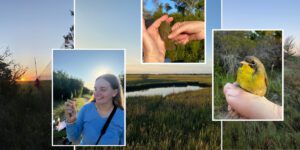
September 17, Bird Banding at Fort Fisher: NCWF and Cape Fear Bird Observatory used mist nets to capture and survey songbirds at Fort Fisher. Common yellowthroats and Northern cardinals were caught. The sunrise over the marsh revealed a kingfisher, a flock of white ibis, two juvenile yellow-crowned night herons, and a pair of Northern flickers. Birds are surveyed for scaly leg, fungus, injuries, and diseases that cannot be tracked from distant visual observations. All bird banding is conducted under permits issued by the U.S. Geological Survey.
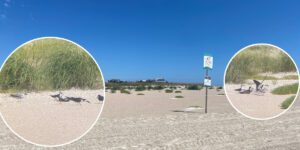
September 17, Nesting Shorebird Survey at Wrightsville Beach: 45 black skimmers, 14 laughing gulls, 6 ruddy turnstones, 6 brown pelicans, 4 sanderlings, 2 willets, 2 mourning doves, 1 American herring gull, 1 great black-backed gull, 1 sandwich tern, and an osprey. Only five chicks remain in the black skimmer colony, with less than a week until all are flying.
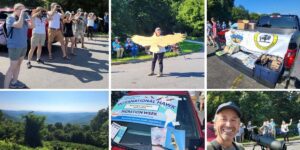
September 18, Hawkwatch on the Blue Ridge Parkway: NCWF ReWild AVL hosted a hawkwatch at Mills River Overlook on the Blue Ridge Parkway. The chapter watched the skies and spotted dozens of migrating hawks soaring overhead. Mills River Overlook is one of the premier spots along the Blue Ridge Parkway for watching fall raptor migration. As the mountains warm, rising columns of air—or thermals—give migrating hawks a lift, allowing them to soar with surprisingly little effort as they make their way south. Late September is peak migration season in Western North Carolina, and the chapter was lucky enough to catch a glimpse of this amazing annual spectacle. A huge THANK YOU to the amazing volunteers and to Vicky Burke and the Hawk Migration Association for sharing their knowledge and helping everyone understand the incredible journey these birds make each fall. The chapter was also joined by WNC Nature Center & Wild Birds Unlimited.
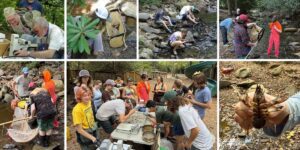
September 18, Flat Creek Bioblitz: NCWF Swannanoa Valley Wild alongside community members and students from Warren Wilson College’s Freshwater Invertebrate Zoology class came together to find and identify as many living species as possible along a small stretch of Flat Creek in Montreat. Dr. Kenneth Hobson and Dr. Patrick Ciccotto brought all sorts of field gear including nets, jars, hand lenses, buckets, enamel observation trays, field guides, microscopes, insect displays and more. We observed a variety of wildlife both in and around the creek including stoneflies, crayfish, salamanders, aquatic snails, mayflies, a variety of plant species, and so much more! Hosting a bioblitz is a great way to create a quick snapshot of the biodiversity in a certain area. It helps to generate momentum for conservation and builds a stronger connection between nature and the local community.
September 19, Pollinator Workday:
NCWF Union County Wildlife Chapter hosted 5 hardworking pollinator enthusiasts to continue routine maintenance on NCWF’s Pollinator Pitstop at the Union County Agricultural Center. Volunteers watered the established plants and removed lots of invasive fescue grass and other aggressive weeds. They planted new Carolina Petunia, Common Violet and Plantain pussytoes. The garden continues to flourish.
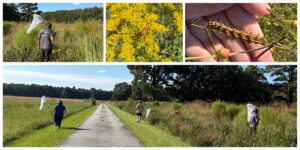
September 19, Southeast Bumble Bee Atlas Survey: NCWF Wildlife Habitat Stewards of Northeastern NC Chapter conducted their second and final Southeast Bumble Bee Atlas (SEBBA) survey of the season in their adopted priority block at Merchants Millpond State Park. While no bumble bees were observed nor captured, there was an abundance of pollinators at the survey site including several species of other bees, wasps, butterflies, moths, beetles, and flies with goldenrod soldier beetles (Chauliognathus pensylvanicus) being the most common species observed. The chapter’s survey efforts this SEBBA season supported priority data collection at Merchants Millpond State Park, a site that has been underrepresented in previous survey efforts. The chapter looks forward to continuing this monitoring project next year so that the park and scientists with the Xerces Society can learn more about bumble bee populations in northeastern NC and how we can best support them and their habitat.
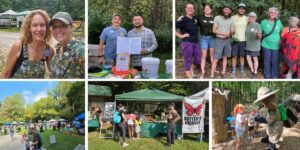
September 19, Charlotte Monarch Celebration: NCWF Charlotte Wildlife Stewards Chapter partnered with the City of Charlotte, Mecklenburg County Park and Recreation, and local conservation partners to host Charlotte’s annual Monarch Celebration! Council member JD Mazuera Arias read the Mayor’s Monarch Pledge, proclaiming September 19th, 2026 as “Mayors’ Monarch Pledge Day”. Over 600 folks came out to participate in this free educational festival. Attendees enjoyed a live monarch butterfly display, crafts, face painting, plant giveaways, pollinator plantings, and a monarch march led by Ranger Rick himself!
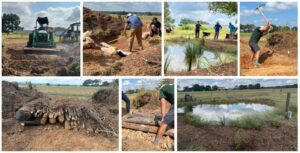
September 19, SWC Hibernaculum Building: NCWF South Wake Conservationists Chapter installed a hibernaculum to provide overwintering habitat for wildlife at Inwood Wildlife Garden in Raleigh. Together, volunteers built a hibernaculum, planted native plants along the garden’s pond, and mulched the pathways through the garden. This was the chapter’s first ever hibernaculum and we couldn’t be happier about the critical overwintering habitat it will provide for countless amphibians, reptiles, insects, and other wildlife!
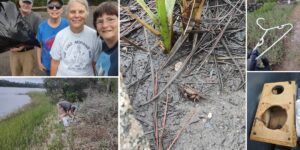
September 20, LCFW Southport Boat Ramp Clean-Up: In just one hour, volunteers picked up almost 50 lbs of trash at the Southport Boat Ramp. Plastic hangers, old speakers, and other discarded items were removed from the waterway and the crabs emerged to say thank you!
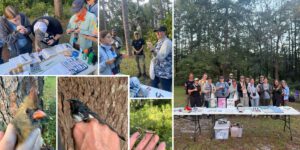
September 20, Bird Banding at Greenfield Lake: NCWF and Cape Fear Bird Observatory used mist nets to capture and survey songbirds at Greenfield Lake. Grey catbirds, a Carolina wren, a Northern cardinal, and a black-throated blue warbler were caught. Visitors stopped by all morning to see the banding in action, learn about migration, and help release birds. Birds are surveyed for scaly leg, fungus, injuries, and diseases that cannot be tracked from distant visual observations. All bird banding is conducted under permits issued by the U.S. Geological Survey.
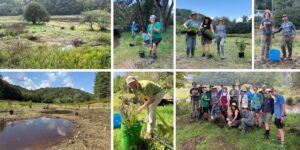
September 21, Aho Branch Wetland Planting: NCWF High Country Wild, Blue Ridge Conservancy, and High Country Audubon joined forces for a workday along Aho Branch at BRC’s Conservation Campus. The Campus, located between Boone and Blowing Rock, has become a community hub with a rain garden for stormwater runoff, native landscape around the office, half acre pollinator garden trail, 2.2-mile public hiking trail, shrub transition zone for wildlife habitat between the forest and field, and an agricultural plot growing food for the community. During this workday, we directed our effort toward planting native plants and building deer proof cages to contribute to the larger ongoing stream and wetland restoration project on campus. This project transformed a former cattle grazing pasture into healthy aquatic and terrestrial habitat with riparian and vernal pool plantings along 800 linear feet of Aho Branch. Numerous wildlife species will benefit from this project including yellow-spotted salamanders and brook trout.
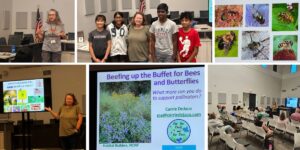
September 22, Beefing Up the Buffet for Bees and Butterflies
NCWF Habitat Builders chapter recently hosted Dr. Carrie DeJaco, an ecological consultant, who spoke about choices and actions our community can take to improve the availability and quality of resources for pollinators. Dr. DeJaco shared practical strategies for creating more supportive habitats, including understanding the amino acid profiles of specific native plants and how these nutritional resources can benefit pollinators. Her presentation highlighted the important role that thoughtful plant selection and habitat management can play in supporting healthy pollinator populations.
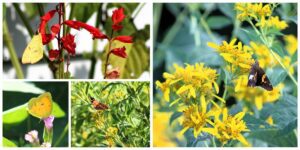
September 22, Carolinas Butterfly Monitoring Program Survey: Volunteers with NCWF Wildlife Habitat Stewards of Northeastern NC Chapter conducted a Carolinas Butterfly Monitoring Program (CBMP) survey along their established monitoring route in Pasquotank County. During the 80 minute survey, 75 butterflies across 13 species were observed including sleepy orange (Eurema nicippe), American lady (Vanessa virginiensis), cloudless sulphur (Phoebis sennae), and silver-spotted skipper (Epargyreus clarus). The chapter conducts these community science surveys throughout spring, summer, and fall to capture population changes across the different seasons which helps researchers track how changes in habitat, land management, and weather patterns impact butterflies.
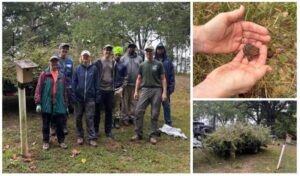
September 23, SWC Invasive Removal: NCWF South Wake Conservationists Chapter, in partnership with Wake Audubon, held an invasive removal workday at Carroll Howard Johnson Environmental Education Park in Fuquay-Varina. Volunteers removed Japanese stiltgrass before it went to seed and spread further into the park. While removing stiltgrass volunteers were pleased to find that most of the privet they worked to remove last year did not return. By the time they were done, most of the area where volunteers have spent the last year working appeared to be cleared of invasives with signs of native vines like greenbriar and Virginia creeper moving in to reclaim the area.
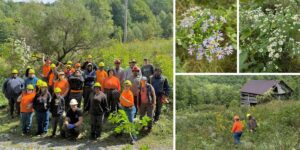
September 24, Stevens Creek Elk Habitat Workday: North Carolina Wildlife Federation’s Smoky Mountains Wilderness Watch Chapter alongside Southern Appalachian Highlands Conservancy had an awesome workday at the Stevens Creek Preserve alongside a group of hardworking students with the Oconaluftee Job Corps. SAHC’s Stevens Creek Preserve, a conserved property on the edge of the Great Smoky Mountains National Park, serves as a key wildlife corridor for species headed north and south between the Cataloochee area and 1-40. Working together, we removed tulip poplar saplings from the old cattle grazing pasture in an effort to actively manage the site as early successional habitat to benefit species like elk, deer, black bear, wild turkey, ruffed grouse, and migratory birds. Join us for the next workday at Stevens Creek!
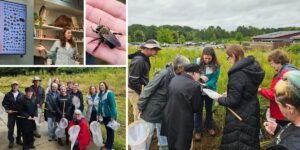
September 24, Bees of NC
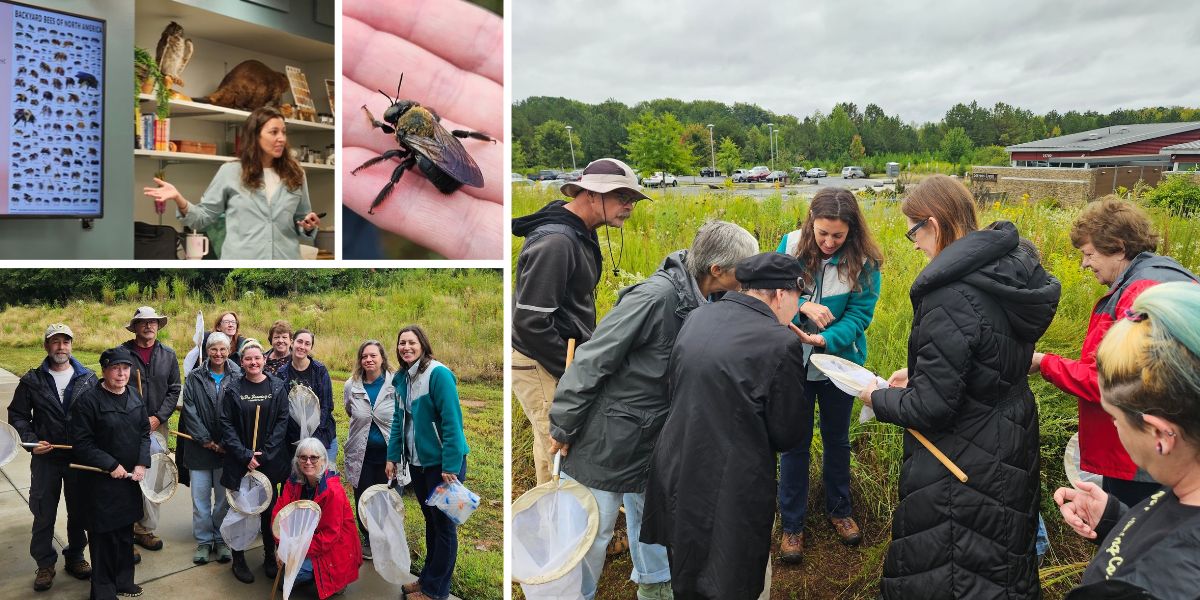
On a drizzly day, the NCWF Hawk and Wildlife Chapter welcomed Gabriela Garrison of the North Carolina Wildlife Resources Commission to share insights into the remarkable diversity of North Carolina’s wild bees. Gabriela discussed the life cycles of different bee species and how our actions can influence their success. Participants were given nets and encouraged to observe bees up close, discovering an abundance of carpenter bees and several eastern bumble bees at Steven’s Creek Nature Preserve. The hands-on experience fostered a sense of joy, curiosity, and appreciation for North Carolina’s native wildlife.
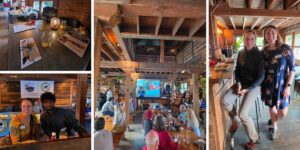
September 24, No Water No Beer: NCWF ReWild AVL alongside Burial Brewing and NC One Water hosted a fundraising event in Asheville to highlight the importance of clean water for wildlife, people, and beer! The event not only helped raise funds for the chapter but also brought awareness to one of the chapter’s goals to restore habitat and protect western North Carolina waterways.
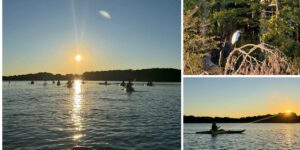
September 25 Sunset Kayak
The NCWF Union County Wildlife Chapter welcomed more than 20 children and adults for a kayaking adventure on the Cane Creek Reservoir. Families and friends paddled across the calm waters while enjoying the area’s wildlife, including great blue herons, egrets, and osprey. The event concluded with a stunning sunset, creating a memorable evening of connection with nature.
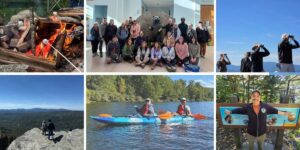
September 25 – 27, Mountains Chapter Leadership Outing: NCWF chapter leaders headed out to the North Carolina mountains… one of the most geologically and biologically diverse landscapes in eastern North America! Rising from the foothills at the dramatic Blue Ridge Escarpment and climbing to the peak of Mount Mitchell, these ancient mountains host a mosaic of habitats shaped by altitude, slope, water, and time. We explored Grandfather Mountain’s fall hawk migration and high elevation spruce-fir forest, learned about wildlife conservation efforts throughout the Watauga River floodplain, paddled on the scenic Price Lake along the Blue Ridge Parkway, and enjoyed the genuine fellowship and camaraderie characteristic of the NCWF chapter network.
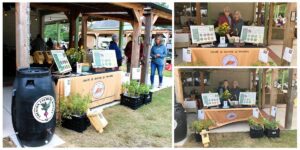
September 26, Edenton Farmers Market Native Plant Sale: NCWF Wildlife Habitat Stewards of Northeastern NC Chapter hosted a native plant sale fundraiser at the Edenton Farmers Market, providing the public with opportunities to purchase native plant plugs, Butterfly Highway seeds, and bluebird boxes. Community members of all ages also enjoyed stopping by the table to learn more about native plants and the unique wildlife of our region that depends on these plants for habitat.
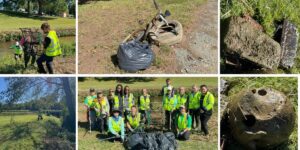
September 26, Litter Clean-Up
NCWF Union County Wildlife Chapter partnered with Monroe Stormwater to conduct a stream cleanup along Bearskin Creek in Monroe, NC. Volunteers participated in a fun, educational, and important workday focused on protecting local aquatic communities. Together, they removed more than 800 pounds of trash, including a shopping cart, a bicycle and other debris from the creek and surrounding areas. The positive impact was immediate as the cleanup significantly improved the appearance and condition of Bearskin Creek and helped protect the health of the local aquatic environment.
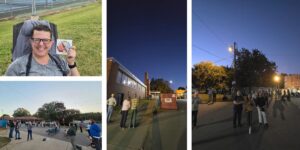
September 28, Swift Night Out: As the sun went down and dusk settled, 50 eager wildlife enthusiasts came out to witness the spectacle that is a swirling cloud of chattering chimney swifts dropping into a large brick chimney for the night. Thanks to a partnership with Mecklenburg Audubon Society and support from NCWF Charlotte Wildlife Stewards Chapter, folks experienced over 1,000 swifts perform their stunning migratory roosting behavior at East Mecklenburg High School and even took home a custom chimney swift sticker. With each watch party, we are raising awareness and rallying support to preserve these chimneys!
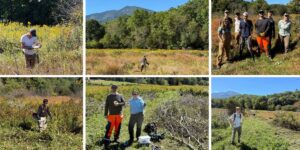
September 28, Bowditch Bottoms Wetland Planting Prep: North Carolina Wildlife Federation alongside Southern Appalachian Highlands Conservancy, Wildbud Natives, and a small army of volunteers worked together to prepare the Bowditch Bottoms wetland for planting in October. We marked and mowed planting zones and removed select vegetation to expand more desirable native wetland species. Bowditch Bottoms is a 87-acre SAHC property that contains important soils, farmland, undeveloped forested and non-forested habitat for wildlife, headwaters to the South Toe River, and intact wetland and riparian corridors.
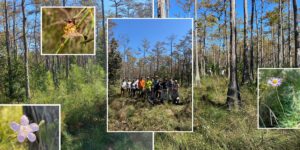
September 29, Antioch Bay Workday: Woody encroachment is an ecological change that happens when a fire is suppressed in an environment that needs regular burn intervals to give open, herbaceous understories an advantage over trees and shrubs. Antioch bay is a pond cypress savanna where loblolly pines and sweet gums encroach without fire. Volunteers from TNC, Carolina Wetlands Association, DNCR, Longleaf Alliance, and American Woodcock Society removed young trees and saplings from four acres of the bay, maintaining diversity by hand between burn intervals. Fall in the bay included red-headed, red-bellied, and downy woodpeckers, pine warblers, paper wasps, variegated and clouded sulfur butterflies.
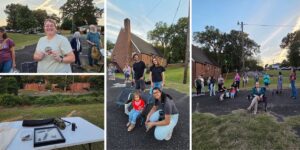
September 30, Swift Night Out: NCWF continued its swift watch party series in partnership with Mecklenburg Audubon Society. Each watch party raises awareness about chimney swifts and the importance of the brick chimneys that they rely on almost exclusively for roosting. Over 30 folks showed up to see several hundred birds drop into the chimney at a CMS surplus property. Participants were encouraged to take action by emailing their school board representatives and asking them to preserve these chimneys.
Written by:
– Page Turner, Conservation Manager
– Laura Neitzey, Conservation Manager
– Alden Picard, Conservation Manager
– Kara Solomon, Conservation Manager
– Luke Bennett, Conservation Manager
– Mary Bures, VP of Outdoor Engagement
– Emily Strongin, Community Engagement Manager