

Planting Trees, Growing Community: Charlotte Project Creates Lasting Benefits for People and Wildlife
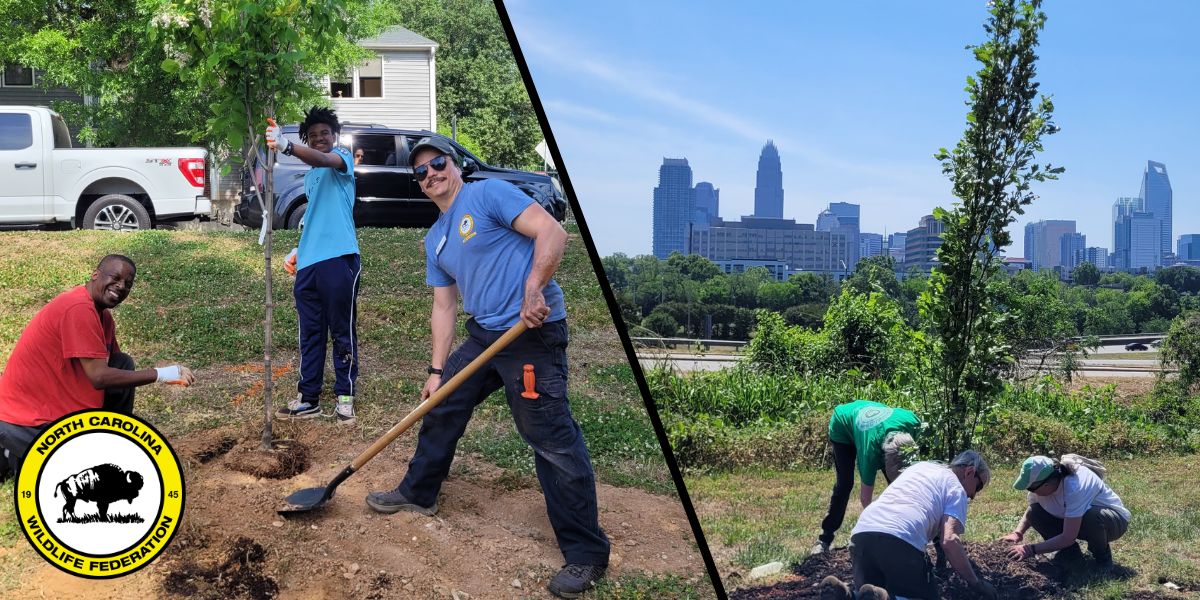
Imagine a bright April morning in Charlotte: birds singing overhead, neighbors sharing stories and laughter, and the steady sound of shovels breaking ground. The soundtrack of this project wasn’t speeches or fanfare; it was the sound of a community coming together with a shared purpose – to create a better future for both wildlife and people in Charlotte.
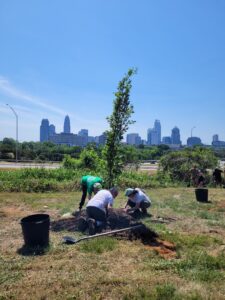
A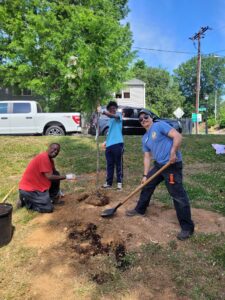 cross three sites in Charlotte, community members, local leaders, and partner organizations came together to plant 80 trees, helping transform underutilized public spaces into greener, healthier places for people and wildlife.
Supported by a grant from the N.C. Forest Service, and led by North Carolina Wildlife Federation (NCWF) in partnership with the City of Charlotte and CoolWood Urban Forestry, the trees planted and educational signage installed will connect people to nature in experiential and knowledgeable ways that will influence how residents and visitors think about the benefits of trees and how to care for them.
At more than 6 feet tall, the trees are still young, and their impact will grow year after year. Over time, these trees will provide increased shade along streets and public spaces, help cool the neighborhood during hot summer months, improve air quality, and improve stormwater absorption into the ground. Birds, pollinators, and other wildlife will also benefit from the improved green spaces within the city.
The 80 trees planted were carefully selected for their ability to thrive in Charlotte’s urban environment and for the benefits they provide to wildlife. Species such as white oak, black gum, American beech, serviceberry, hawthorn, eastern redbud, river birch, and southern magnolia provide food, shelter, and opportunities to raise young for a diversity of wildlife.
 Serviceberries and hawthorns offer spring blooms for native pollinators and berries that attract birds such as cedar waxwings, robins, and mockingbirds, while redbuds provide an early-season nectar source for bees and butterflies. Many of these trees also serve as host plants for native butterflies and moths, providing caterpillars with habitat to feed and develop. Eastern redbuds support the larvae of the Henry’s elfin butterfly, while river birches host species such as the mourning cloak butterfly.
Oaks are among the most ecologically valuable trees in North America, supporting more than 2,300 species of wildlife, many of which are insects, especially caterpillars, which are an essential, protein-rich food source for songbirds raising their young.
As these trees mature, they will become part of Charlotte’s growing urban habitat network – providing nectar, berries, seeds, shelter, and nesting sites while bringing more wildlife biodiversity into the heart of the city, a sentiment echoed by Tim Kramer, Tree Canopy Project Coordinator for the City of Charlotte.
“Through this partnership, these trees will enhance community canopy cover, improve air quality, and reduce urban heat impacts,” said Kramer, “They will also provide critical habitat, food sources, and connectivity for birds, pollinators, and other wildlife, helping to strengthen local ecosystem while creating a healthier and more resilient community.”
A Community Effort
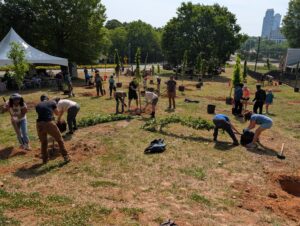 One of the most meaningful outcomes of the project was the people who came together to plant the trees. Their time and hard work planted trees and a better future for the people and wildlife that call Charlotte home.
“In the short term, the most impressive impact for me was seeing the engagement of the volunteers from the community that worked together toward a common goal of making improvements for their fellow community members and citizens,” said Dustin Counts of CoolWood Urban Forestry.
For Counts, the long-term benefits go beyond environmental improvements.
“I think the longer-term impact will be in people appreciating trees and the benefits they provide in a space that otherwise wouldn’t have them.”
The project also highlights what can happen when organizations, local government, and residents work together toward a shared goal for their community, and all of the life that exists within it.
“Community forestry engages the community in the completion of urban forestry practices. This supports local government, serves broader community needs, and works for positive change,” said Andy Pleninger, Urban and Community Forestry Program Head with the N.C. Forest Service.
Pleninger noted that partnerships like the one between NCWF and the City of Charlotte are essential for addressing community needs and called the project “a shining example of community forestry in action.”
Looking Ahead
For NCWF, the project represents more than a tree planting effort. It is an investment in the future of Charlotte’s neighborhoods and urban wildlife.
“Working with the City of Charlotte, the Urban and Community Forestry grant allowed NCWF to begin restoring city lots into habitats and greenspaces that people and wildlife will enjoy for generations to come,” said Alden Picard, NCWF Vice President of Community Engagement.
The trees planted this spring will take years to reach their full potential, but the benefits are already beginning. As they grow, they will provide more shade, support more wildlife, and contribute to greener, more welcoming spaces for those passing through and the people who live nearby. Thanks to the volunteers, partners, and community members who made this project possible, these sites will continue growing and giving back to the Charlotte community for decades to come.
Funding for this project provided by the USDA Forest Service, Urban and Community Forestry Program in partnership with the North Carolina Forest Service, Department of Agriculture and Consumer Services and the USDA Forest Service. This institution is an equal opportunity employer.