

Crossings: Habitat Connectivity and A Historic Investment in North Carolina Wildlife Crossings
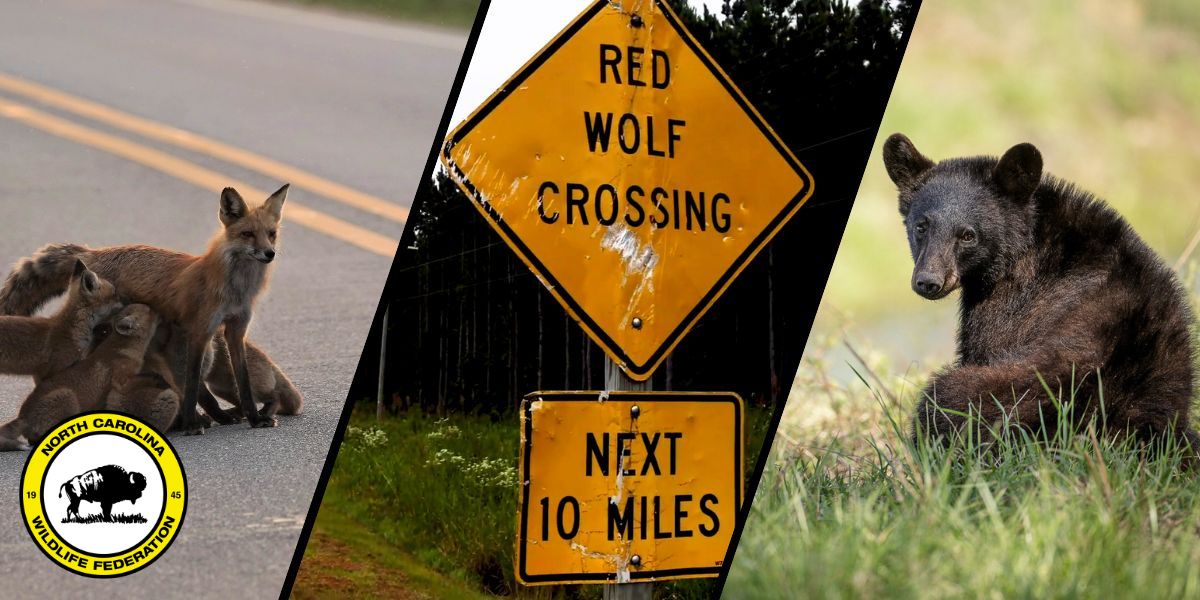
“The chief irony of biological annihilation is this: we are both its cause and its solution.” – Ben Goldfarb, Crossings
We live in a world with many severed connections – connections between communities, connections with the land, connections with the sources of our food, connection to place, and the list goes on. These are connections that connect us as people to other things that we not only desire, but that we depend upon, whether we realize it or appreciate them or not.
Similarly, wildlife faces the reality of severed connections – and nothing demonstrates this severance quite like the reality of our roadways and infrastructure fragmenting the habitats that many species depend on.
We built roads to connect our communities and fuel economic growth, only to discover that those same roads divide wildlife habitat and threaten both animals and people. Nevertheless, it is undeniable that we as people depend upon roads. Without them – particularly in our modern world, we would encounter even more severed connections to family, to community, to work, and more. So today, our task is not necessarily to undo infrastructure, but to build it more intelligently, and with a vast community of life in mind.
 And North Carolina just took a major step in that direction.
With the finalization of the state budget, lawmakers approved a historic $10.2 million in recurring funding for the North Carolina Department of Transportation’s Wildlife Highway Crossing and Mitigation Strategies Program. This marks the first time North Carolina has dedicated recurring funding specifically for wildlife crossings, creating a long-term investment that will benefit wildlife, motorists, and the state’s natural heritage for years to come.
More importantly, this investment signals something bigger: wildlife crossings are becoming recognized as essential infrastructure.
Every donation helps create safer pathways for North Carolina’s wildlife. Join us in protecting animals, preserving habitats, and reducing wildlife-vehicle collisions.
Roads Changed More Than Human Travel
Ironically, many of our earliest roads followed paths first carved by wildlife. Across the country, bison created remarkably efficient travel corridors that later became Native American footpaths before eventually evolving into wagon roads and highways.
Along with the building of railways and roads came more efficient commerce and even market hunting, which served to decimate the very wildlife that formed the foundation of these roads. And even then, it was not enough. This hunger for more roadways and infrastructure was well captured in 1816, when South Carolina representative John C. Calhoun called for a national transportation network, saying “Let us then bind the Republic together with a perfect system of roads and canals… let us conquer space.”
Over time, that goal was accomplished.
Today, over 40 million miles of navigable roads encircle the globe, and more than 82 percent of the United States lies within one kilometer of a road. While pavement itself covers less than one percent of the country, the ecological influence of roads extends far beyond the asphalt. Scientists refer to this as the road-effect zone, which impacts nearly 20 percent of the United States through noise, pollution, altered habitat, and barriers to wildlife movement.
Road ecologists often describe this process of severing wildlife habitat as habitat fragmentation, or more specifically, the German concept Landschaftszerschneidung, coined by road ecologist Jochen Jaeger – “landscape dissection.” Unlike many other forms of habitat loss and fragmentation, roads slice ecosystems with surgical precision, separating animals from food, mates, seasonal habitat, and migration routes.
Why Habitat Connectivity Matters
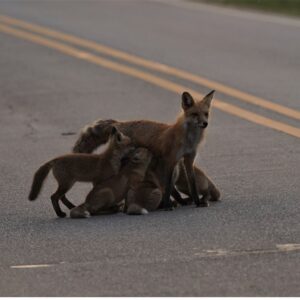
Red foxes (Vulpes vulpes) by Michael Burkhard, NCWF Photo Contest Submission
Healthy wildlife populations depend on movement, access to resources, and access to others. Animals must travel to find food, reproduce, disperse into new territory, and respond to changing conditions within their environment. When roads and other barriers interrupt those movements, isolated populations become more vulnerable to declining genetic diversity, disease, and even local extinction.
Beyond habitat impacts, roads also pose another threat that we witness nearly on a daily basis: roadway mortality.
As author Ben Goldfarb explains in his book Crossings, sometime during the twentieth century roadkill surpassed hunting as the leading direct human cause of vertebrate mortality on land. For decades, many scientists viewed roadkill as “compensatory mortality“, which assumed that the impact of animals killed by vehicles posed no real threat, as death was viewed as “balancing the scales of life”. Even Henry David Thoreau echoed this faulty sentiment when in Walden he said “I love to see that nature is so Rife with life that myriads can be afforded to be sacrificed… that tender organizations can be so serenely squashed out of existence like Pulp. tadpoles which herons gobble up, and tortoises and toads run over in the road.”
Research has since shown that wildlife roadway mortality is not merely compensatory, but often additive mortality. As noted by Goldfarb: “One of roadkill’s cruelest aspects is not how many animals it culls: it’s which ones. Wild ecosystems weed out the sick and the old – the diseased fawn devoured by wolves, the senescent moose who collapses in a snowdrift. Roadkill, by contrast, is an equal-opportunity predator, as apt to eliminate the strong as the feeble.”
This poses significant risks for threatened species, and those locked within small habitat fragments.
And yet, the impact of vehicle/wildlife collisions extend beyond wildlife. The consequences extend to people as well.
Every year in the U.S., an estimated 1.5 to 2.1 million deer-vehicle collisions occur. These crashes are responsible for up to 440 human fatalities, over 59,000 injuries, and more than $10 billion in property damage and economic losses annually. Vehicle collisions have made interactions between deer and motorists one of North America’s deadliest wildlife-related safety issues – not because deer have changed, but because our transportation system increasingly intersects with their habitat.
And these roads experiencing wildlife roadway mortality are typically the ones where wildlife experiences some limited success in crossing. Road ecologists generally consider roads carrying more than 10,000 vehicles per day to be nearly complete barriers for many wildlife species, further increasing the inability of wildlife to get from one point to another.
Wildlife Crossings Reconnect the Landscape
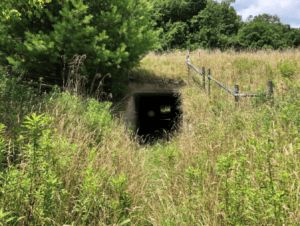 Fortunately, we know one way to address these impacts, and these projects are making headway.
Wildlife crossings – including overpasses, underpasses, and strategically placed fencing – allow animals to safely move across road-fragmented landscapes while dramatically reducing collisions with vehicles.
The concept is hardly new. France began constructing wildlife overpasses in the 1960s, inspiring similar projects throughout Europe. The first wildlife overpass in the United States opened in Utah in 1975 to help mule deer cross Interstate 15, followed by larger projects across the country.
The good news is – they work. According to the The Center for Larger Landscape Conservation, wildlife crossing structures that guide animals over or under our nation’s highways reduce wildlife-vehicle collisions by up to 97%, when placed in areas of known wildlife movement and combined with associated fencing and jump-out structures that allow wildlife caught on the highway to exit.
But these structures do more than prevent roadkill. They restore habitat connectivity by reconnecting landscapes that roads have divided. As geographer Jennifer Wolch describes it, they help create a “zoopolis” – a landscape where human infrastructure and wildlife can coexist rather than compete.
North Carolina Is Already Seeing the Need
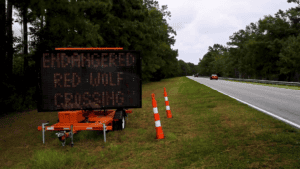 Few places illustrate this challenge and need better than North Carolina.
Across the state, wildlife must navigate approximately 80,000 miles of state-maintained highways. Across the state countless mammal, amphibian, reptile, and insect species regularly attempt to cross roadways.
North Carolina’s first comprehensive wildlife underpasses were completed in 2006 on a newly built section of U.S. 64 in Washington County. Biologists with the N.C. Wildlife Resources Commission identified specific locations, designing the structures to allow critically endangered Red Wolves and other animals to safely bypass the highway.
These threats extend beyond Red Wolves. According to a report from the Wildlands Network, the past year of roadkill surveys confirms high levels of roadkill along the crossings’ target stretches of US 64 and US 264. 5,044 observed instances of roadkill occurred across 144 species, including 1050 snakes (24 species), 1,186 turtles (9 species), 1,529 frogs (11 species), 801 birds (68 species), 450 mammals (26 species), and 28 others.
With roadway mortality being one of the highest risks to Red Wolves, and with demonstrated high numbers of roadkill events along this stretch of roadway, these existing and proposed crossings could significantly curb these threats.
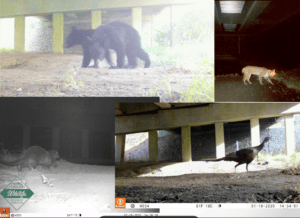 Since the first crossings were build in North Carolina, numerous wildlife crossings – including overpasses, underpasses, and culverts – have been established or approved for construction across the state. Along with the crossings themselves, critical fencing to help direct wildlife to the crossings has also been installed.
As North Carolina continues to grow, projects like this will become increasingly important. Conserving wildlife is no longer just about protecting individual parcels of land – it also means ensuring those lands remain connected.
That momentum extends beyond individual crossing projects. In recent years, the North Carolina Wildlife Resources Commission and the North Carolina Department of Transportation formalized their collaboration through a memorandum of understanding that established regular coordination meetings, allowing transportation planners and wildlife biologists to jointly identify priority crossing locations, evaluate roadkill hotspots, and incorporate wildlife connectivity into future infrastructure planning. The newly approved recurring funding strengthens that partnership by providing the resources needed to move more projects from planning to construction.
Just as important is the growing emphasis on better biological data. Conservation organizations, including North Carolina Wildlife Federation, have encouraged the agencies to standardize how wildlife-vehicle collisions are recorded and analyzed, following successful models already used in states such as Arizona and New Mexico. More consistent roadkill data, combined with GPS tracking, camera monitoring, and habitat analyses, helps identify the historical movement corridors that wildlife continue to use today – even when highways now stand in their way.
That science is already guiding some of the state’s most ambitious efforts. Through the Safe Passage initiative, researchers and conservation partners have conducted extensive wildlife movement studies in the mountains of western North Carolina to identify the best locations for crossing structures along Interstate 40 and Interstate 26. Rather than placing crossings wherever space is available, these projects are designed around decades of biological evidence, ensuring that structures are built where animals are already attempting to cross.
Wildlife connectivity also extends beyond large, iconic overpasses. Properly designed culverts and underpasses can provide critical passage for salamanders, turtles, snakes, frogs, and other small species that often receive less attention but are equally vulnerable to habitat fragmentation. Gorges State Park offers one of North Carolina’s strongest examples of how these smaller-scale structures can safely reconnect habitat for a wide range of wildlife while complementing the state’s broader connectivity strategy.
A Historic Investment in Connected Landscapes
This is where the newly approved state budget comes in, continuing to embed wildlife connectivity into North Carolina’s transportation planning.
The recurring appropriation will dedicate $5.1 million annually toward designing and constructing wildlife crossings – more than doubling the state’s previous one-time $2 million investment. Even more encouraging, many qualifying projects may leverage up to a 9-to-1 federal funding match, multiplying the state’s investment and expanding opportunities for future crossings.
More than just building bridges for wildlife, it’s about recognizing that healthy ecosystems depend on connected landscapes. Wildlife crossings reduce collisions, improve public safety, preserve biodiversity, and help ensure that North Carolina’s bears, elk, deer, salamanders, and countless other species can continue moving through the habitats they have relied upon for thousands of years.
Conservation often asks us to repair problems created by earlier generations of infrastructure. Wildlife crossings are one of the clearest examples of that work in action. North Carolina’s historic investment represents more than a budget line, but reflects a growing understanding that habitat connectivity is essential infrastructure for the good of both wildlife and people.
Every donation helps create safer pathways for North Carolina’s wildlife. Join us in protecting animals, preserving habitats, and reducing wildlife-vehicle collisions.
Written by:

– Bates Whitaker, NCWF Creative Content Manager