

Every Acre Matters: Connecting Wildlife Habitat Across North Carolina’s Electric Corridors
With more than 85 percent of North Carolina’s land in private ownership, conserving and connecting wildlife habitat requires innovative solutions. As development continues to fragment forests, farms, and natural areas, maintaining connected habitat has become just as important as protecting individual sites.
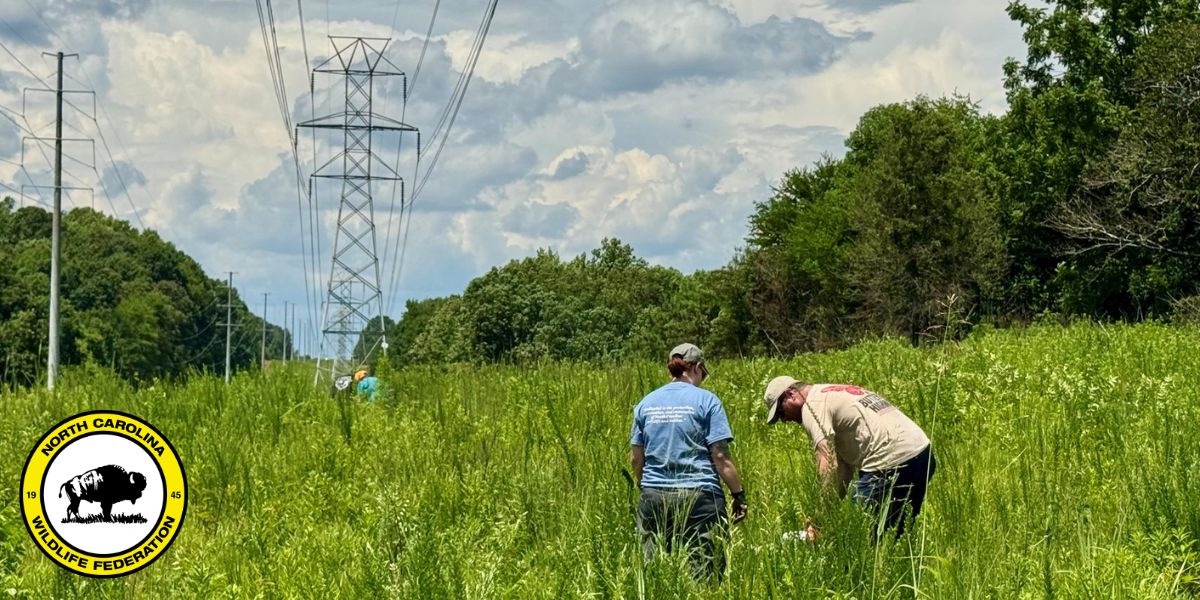
This is where Duke Energy’s transmission and distribution rights-of-way offer a unique opportunity. Stretching more than 33,000 miles across North Carolina, these corridors already support a remarkable diversity of rare and sensitive species, including Venus flytraps, pitcher plants, federally listed butterflies, and other at-risk plants and wildlife. Recognizing their conservation value, Duke Energy and North Carolina Wildlife Federation signed a memorandum of understanding to advance habitat restoration across this network.
“Every acre matters. Every species matters,” said Tim Gestwicki, CEO of the North Carolina Wildlife Federation. “As one of the fastest-developing states in the country, these wildlife corridors along these transmission lines are optimum for our conservation work.”
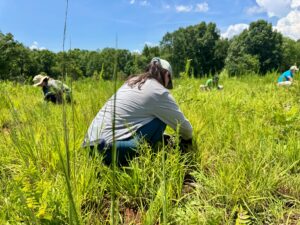
Planting milkweed along transmission corridors
For pollinators, habitat connectivity is especially important. Monarch butterflies, native bees, and other pollinating insects rely on a series of suitable habitats as they forage, reproduce, and migrate. Small, isolated patches of habitat often aren’t enough. Connected corridors allow pollinators to move safely across the landscape, increasing access to food resources, breeding sites, and genetic diversity while improving the resilience of their populations.
With an increase in urbanization and an increase in clean agriculture and clean forestry, early successional habitat is in decline. Early successional habitat includes low-growing vegetation, which is valuable for pollinators and wildlife in general. Through tree limbing, tree removal, and vegetation management, sunlight is able to reach the ground level to provide important wildlife corridors. Duke Energy’s rights-of-way provide excellent early successional habitat that’s the home of many important and federally listed rare plants and important pollinator habitats. These areas help a wide variety of species from monarch butterflies to bobwhite quail to venus flytraps and beyond.
This vision is already taking shape. In July, Duke Energy volunteers joined NCWF to plant milkweed along transmission corridors. As the sole host plant for monarch butterfly caterpillars and an important nectar source for many pollinators, milkweed helps transform these utility corridors into functioning habitat. When planted at scale across thousands of miles of rights-of-way, these efforts create a network of connected habitat rather than isolated restoration sites.
In part, conservation in the modern world means reimagining the landscapes we’ve altered so they can better support the wildlife that depends on them. By turning transmission corridors into connected habitat, this partnership is helping build a stronger future for North Carolina’s pollinators and wildlife.