
Building Better Habitat: Lake Norman’s New Artificial Reef Structures Benefit Wildlife and Anglers
As North Carolina continues to grow, conserving wildlife increasingly requires innovative solutions. In places where natural habitat has been lost or altered, that can mean creating new structures that restore places wildlife needs to find shelter, food, and places to reproduce. That conservation-minded approach is now helping strengthen freshwater habitat at one of the state’s most popular reservoirs.
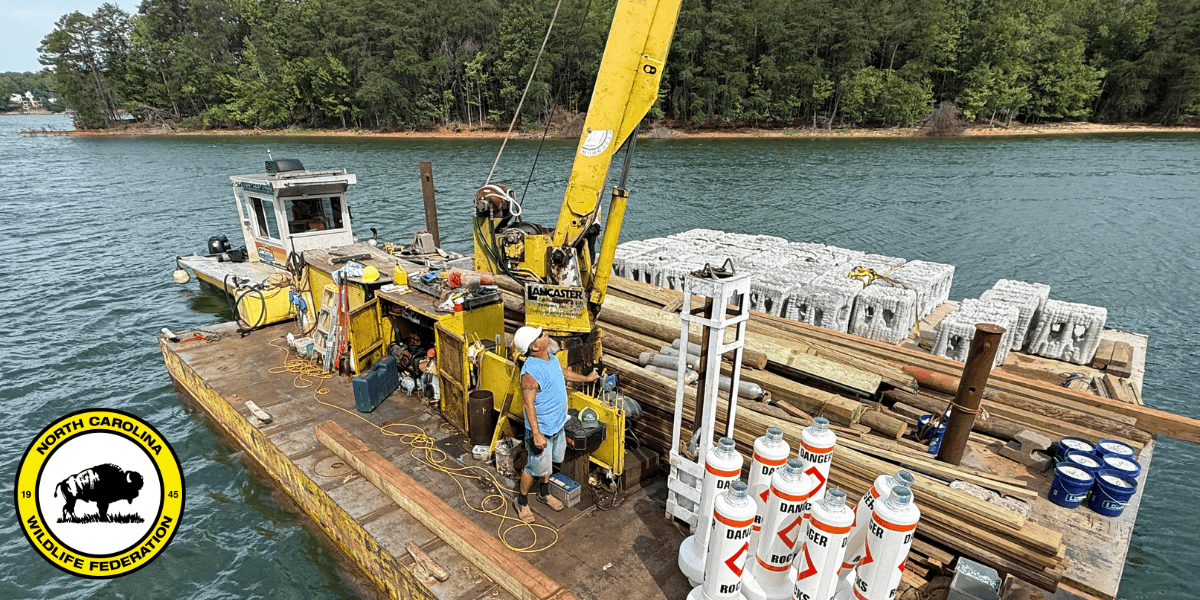
This summer, North Carolina Wildlife Federation, in collaboration with Duke Energy, Natrx, and Lake Norman State Park, installed 48 next-generation FishHouse ExoForm reef structures at two of Lake Norman’s most heavily used public fishing locations: Lake Norman State Park and Beatty’s Ford Access. While artificial structures to improve aquatic habitat is nothing new, these innovative FishHouses represent the first freshwater deployment of this technology.
Restoring What Reservoirs Lack
 Lake Norman is an incredible recreational resource, but like many man-made reservoirs, it lacks much of the natural underwater complexity found in rivers and natural lakes. When reservoirs are created, forests, streams, and wetlands are transformed into broad basins with relatively uniform bottoms. As reservoirs age, the loss of aquatic vegetation and woody structure becomes one of the primary forms of fish habitat degradation (USGS). Combined with decades of shoreline development and the removal of natural debris for recreation, many of the submerged logs, rock piles, and vegetative cover that fish rely on for shelter, feeding, and spawning have disappeared. Species like largemouth bass, one of Lake Norman’s most popular game fish, also depend on vegetative and structural cover for successful spawning and survival of young fish.
Fish depend on this complex habitat throughout their lives – from protecting young fish from predators to providing ambush points for larger species and surfaces where aquatic insects and other organisms can thrive.
The FishHouse ExoForm modules help supplement this loss of critical habitat. Each module is a durable, 3D-printed concrete structure engineered with numerous openings, crevices, and textured surfaces that maximize habitat value. As algae, freshwater mussels, aquatic insects, and microorganisms begin colonizing the structures, they will create the foundation for a diverse food web that supports healthy fisheries and abundant wildlife.
Even though the installation of the FishHouse structures is complete, the work is far from over. To better understand how these structures perform over time, Natrx will also deploy environmental DNA (eDNA) monitoring around the reefs. The technology will allow researchers to track how fish and other aquatic organisms colonize the habitat, providing valuable scientific insight into the effectiveness of next-generation reef systems in freshwater environments.
Conservation That Everyone Can Experience
 The location of these reef installations is yet one more example of how benefits to wildlife also benefit people, too. Since most fish species spawn in shallow water close to shorelines instead of in deeper areas of the lake, these FishHouse reefs were installed adjacent to two of Lake Norman’s most popular public fishing piers. Because much of the lake’s shoreline is privately owned, public fishing opportunities can be limited. Enhancing habitat at publicly accessible locations helps not only provide habitat to game fish, but ensures that more people – not just waterfront property owners or boat owners – can enjoy the benefits of a healthier fishery.
The placement also makes fishing opportunities more accessible for families, youth anglers, older adults, and individuals with disabilities who may fish from piers rather than boats.
“It is rare to have the opportunity to be part of a project that benefits both the public and the environment in such meaningful and equal ways,” said Colton Blake, superintendent of Lake Norman State Park. “Lake Norman State Park is proud and grateful to have been selected as a host site for this special effort. This project truly reflects the mission of North Carolina State Parks by advancing conservation, recreation, and education together. We extend our sincere appreciation to NC Wildlife Federation, Duke Energy, Lancaster Custom Dock & Lift Systems, and Safe Harbor Skippers Landing for their partnership and commitment in making this project a reality.”
All told, this project is a reminder that conservation works best when wildlife and people benefit together. Every fish that finds shelter, every young angler who catches their first bass from a public pier, and every partnership that invests in healthier waters contributes to a stronger future for one of North Carolina’s most treasured lakes.
Written by:

– Bates Whitaker, NCWF Creative Content Manager