
NCWF In The Field – July, 2026
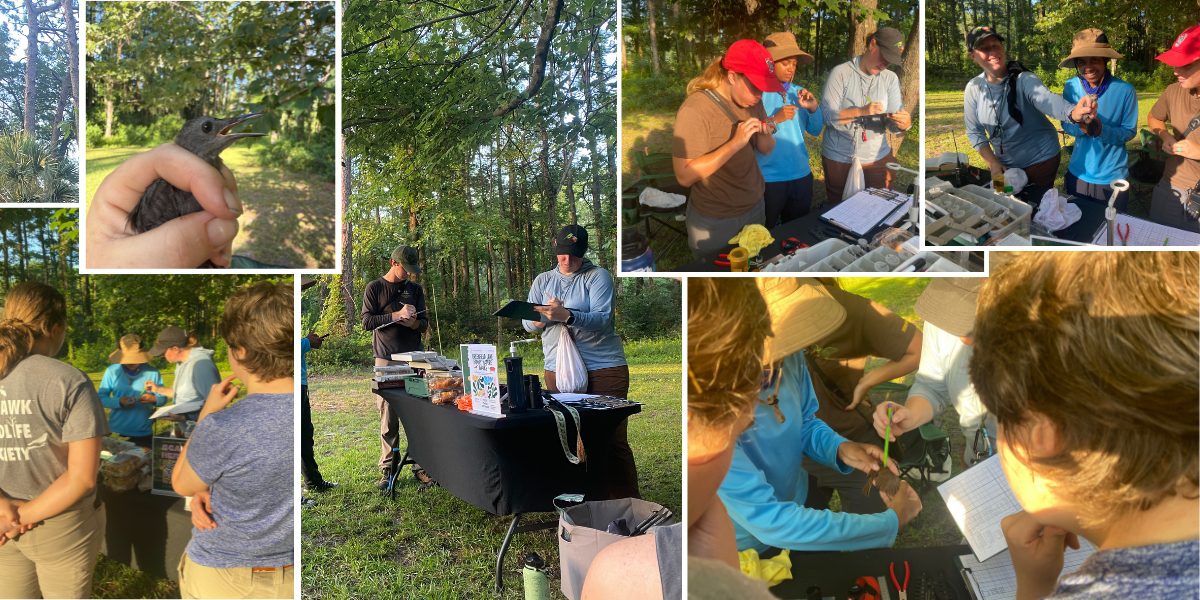
North Carolina Wildlife Federation staff and Community Wildlife Chapters connected 839 people to nature through 33 wildlife and habitat events and activities in July, including:
- Planting 137 native plants – including crimson-eyed rosemallow, New York ironweed, swamp milkweed, and purple coneflower to support birds, pollinators, and other wildlife
- Clearing 1.35 acres of invasive species – helping restore healthy habitat for native plants and wildlife across the state
- Hosting a wide range of educational and hands-on experiences – such as habitat maintenance, moth nights, community science projects, invasive species removals, wildlife trivia, wildlife film screenings, and more
- Engaging staff and volunteers from Waynesville to Carolina Beach – in meaningful conservation work, getting their hands dirty to improve wildlife habitat and connect people with nature
- Providing opportunities for people of all ages across the state – to connect with nature, learn about wildlife and habitat, and make a tangible impact alongside NCWF Community Wildlife Chapters and conservation partners
Explore our Events Calendar to discover where NCWF and our Community Wildlife Chapters are hosting in-person and virtual events near you. Check out a few highlights below from our conservation outreach team.
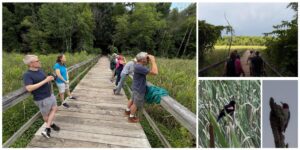
June 27, TW Gibson Park Birding Hike: NCWF Triad Wild Chapter held a nature walk at Gibson Park in Jamestown. Wildlife enthusiasts strolled through the park as the crescendo of evening bird song rose following a series of evening storms. Red-winged blackbirds, a red-headed woodpecker, and great blue herons were among the highlights of the evening saunter along the boardwalk.
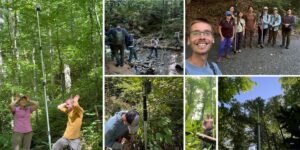
July 2, 16, and 30: Craggy Mountains Bat Monitoring: Of the 17 species of bats in North Carolina, four are federally endangered and 12 are identified as Species of Greatest Conservation Need. Many of these species – including the federally endangered gray, Indiana, northern long-eared, and Virginia big-eared bats rely on mature, intact forests for roosting and foraging. Pisgah National Forests contain some of the best available habitat for these at-risk bat species. It’s imperative that we protect this habitat in order to protect the amazing diversity of wildlife that these forests support. Conducting surveys in the National Forests and other natural areas to determine bat distribution is an integral component of protecting at-risk bat species and the habitat they call home. North Carolina Wildlife Federation, National Parks Conservation Association, and other partners are working together to survey for at-risk bat species in some of the last remaining patches of old-growth forests and maturing second-growth forests in North Carolina. Our collective goal is to fill area-specific knowledge gaps to provide the best available information for future decision-making in forest management and conservation efforts. To achieve this goal, we are deploying ultrasonic recording units at suitable locations within our study area – the Craggy Mountains – a 16,000 acre portion of Pisgah National Forest. The data will be analyzed using SonoBat – a U.S. Fish and Wildlife Service approved bat call analysis software.
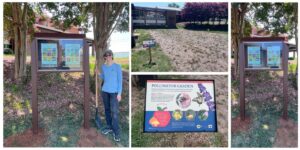
July 2, NCWF Signage Installation: NCWF installed signage at the Salvation Army Red Shield in Durham. The signs were prominently installed in front of the native piedmont prairie at the front of the building. The signs feature information about the importance of pollinator gardens and highlight some native perennial and bird species that the prairie will attract. Special thanks to the Burts Bees Foundation for their support!
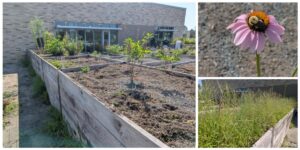
July 3, SWC Rooftop Garden Workday: NCWF South Wake Conservationists Chapter held a garden cleanup workday at Southeast Raleigh Elementary School. Volunteers help weed the raised beds and inventory the plants that had thus far survived the drought. Eight yard waste bags of invasive grasses later, and the garden looked ready to let the partridge pea and purple coneflowers thrive.

July 7 and 15: Bingham Road ReWild Workdays: NCWF ReWild AVL continues their work on a habitat restoration project at the City of Asheville Water Resources Department on Bingham Road. The crew is in the process of removing invasive plant species and prepping the area for a native planting in the fall. The two workdays this month was a huge step forward on the way to transforming this concrete desert into habitat for wildlife and a space for people to enjoy and connect with the outdoors. Big thanks to the volunteers and the City of Asheville for all their support!
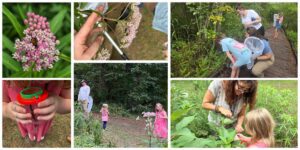
July 7, ecoEXPLORE Insect Encounters: It’s entomology season! To kick off this ecoEXPLORE field season, NCWF and Pocosin Lakes National Wildlife Refuge hosted an “insect encounters” field day in the refuge educational pollinator garden and along the Scuppernong River boardwalk in Columbia. ecoEXPLORErs of all ages went out with nets, magnifying glasses, and insect viewers to assist them in their observations. Families observed a variety of insects including hibiscus sawfly larvae that were feeding on the garden’s native crimson-eyed rosemallow and delta flower scarab on swamp milkweed, to name a couple. Observations made at this ecoEXPLORE HotSpot provide children with bonus points that can be exchanged for prizes like binoculars, insect nets, field guides, and trail cameras.
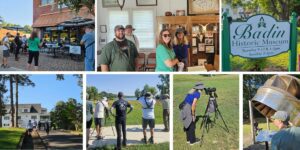
July 9, Badin Nature Tour: NCWF Uwharrie Wildlife Stewards Chapter recently gathered a group of 8 nature lovers for a walking tour through historic Badin, NC. Starting and ending at a local coffee shop, participants explored a newly planted pollinator garden by the Uwharrie Native Plants Society, practiced identifying local birds, toured the local museum, and birdwatched at the historic 1913 Badin Inn. It was the perfect blend of local history, native habitat, and community connection!

July 10, Living Shoreline Celebration: NCWF joined other conservation organizations at the St. James living shoreline celebration at Waterway Park to celebrate the collaboration between UNCW and the town of St. James in building a living shoreline oyster reef to prevent erosion, support wildlife, and increase flood resilience.
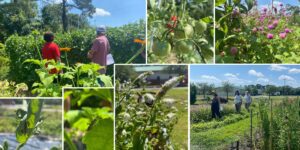
July 11, Natural Communities & Pollinators: Interns at the Rise Up community farm learned about the natural communities in the NC coastal plain, what wildlife they support, and what conservation organizations do to support them. Students practiced conducting a pollinator census, finding leaf-footed bugs, wasps, leaf hoppers, bees, and butterflies in the garden and learning all the ways insects work together with plant communities to create an interconnected web of life.
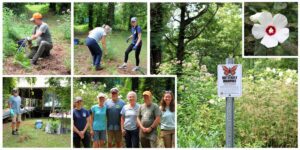
July 15, Pocosin Lakes Pollinator Garden Workday: Volunteers with NCWF Wildlife Habitat Stewards of Northeastern NC Chapter joined Pocosin Lakes National Wildlife Refuge for a morning of pollinator conservation at the visitor center’s Butterfly Highway pollinator pitstop! The crew removed five bags of invasive plants in addition to tackling multiple stands of invasive Chinese privet and young mimosa silk trees that were crowding out native vegetation. These efforts opened up space for native plants that support wildlife and habitat along the Scuppernong River. Volunteers also planted 115 native pollinator plants, including New York ironweed, crimson-eyed rosemallow, and swamp milkweed that will provide nectar, pollen, and host resources for butterflies, bees, and other essential pollinators.

July 16, Nesting Shorebird Survey at Wrightsville Beach: 260 black skimmers, 25 sandwich terns, 24 least terns, 12 common terns, 5 barn swallows, 3 brown pelicans, 2 ring-billed gulls, 1 osprey, 1 purple martin, 1 willet.

July 18, The Extraordinary Caterpillar: NCWF Charlotte Wildlife Stewards Chapter hosted a community screening of The Extraordinary Caterpillar, a beautifully produced documentary that reveals the vital role caterpillars play in our ecosystems. Eight local community partners joined Charlotte Wildlife Stewards for a welcome reception, and over 60 folks watched the film and participated in an engaging panel discussion and Q&A at The Independent Picture House in Charlotte.
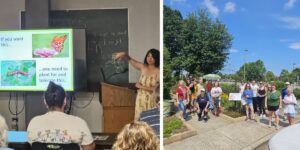
July 18, Landscaping for Wildlife: NCWF Concord Wildlife Alliance Chapter hosted a program at the Cabarrus County Center Extension Office led by Horticulture Specialist, Payton Berry. The program included an engaging wildlife presentation and a tour of the thriving pollinator garden at the Extension Office. Folks had great conversations about gardening for wildlife and were inspired to join the Certified Wildlife Habitat program.
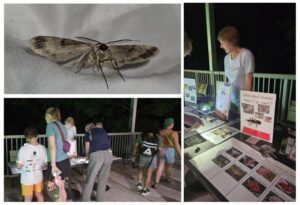
July 18, TCC Moth Madness and Movie Night: NCWF Tri-County Conservationists Chapter tabled at Moth Madness and Movie Night at the Chapel Hill Public Library. Following a screening of The Extraordinary Caterpillar, visitors made their way outside to explore educational activities and participate in moth night in the park. Kids and adults alike enjoyed observing moths and participating in the chapter’s activities where they learned to sort native vs invasive plants and match the caterpillar to the correct butterfly and larval host plant.
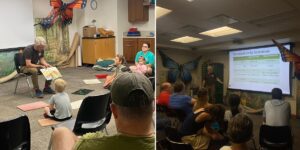
July 18, Return of the Wild at NCMNS Whiteville: Dr. Roland Kays presented on his expedition of the Lewis & Clark trail and how wildlife and landscapes have changed since early colonial settlement. Dams, hunting, cattle rearing, conservation, and development have dramatically changed many wildlife corridors, while others remain wild.
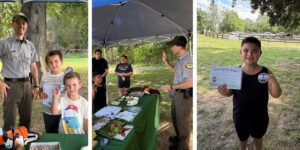
July 19, Junior Ranger Day: NCWF Uwharrie Wildlife Stewards Chapter headed up to Morrow Mountain State Park, where two families joined them for fun hands-on activities. Two enthusiastic youth even received their coveted Junior Ranger Badge.

July 19, Bird Banding at Greenfield Lake: NCWF and Cape Fear Bird Observatory used mist nets to capture and survey songbirds at Greenfield Lake. A grey catbird, Northern cardinals, and Carolina wrens were caught. A red-shouldered hawk tumbled in and out of the net in pursuit of prey. Birds are surveyed for scaly leg, fungus, injuries, and diseases that cannot be tracked from distant visual observations. All bird banding is conducted under permits issued by the U.S. Geological Survey.
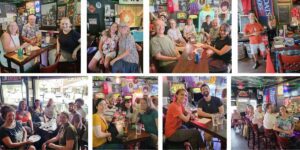
July 20, Wildlife Trivia: NCWF HAWK chapter hosted one of their largest trivia nights ever! They had 32 wildlife lovers put their knowledge to the test in hopes of winning prizes while enjoying snacks and cold beverages. Folks from neighboring chapters participated.
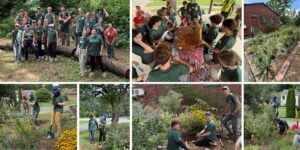
July 21, Fox Creek and Grovemont Park Workday: NCWF Swannanoa Valley Wild hosted high school student volunteers at both Fox Creek and the Swannanoa Library Pollinator Garden in Swannanoa. The volunteers (fueled by water and pizza) worked with energy and enthusiasm while managing to have fun along the way. The crew removed invasive species and broke ground for a new pollinator garden at Fox Creek Park. They also tended to the Swannanoa Library Pollinator Garden by removing weeds and building a border around the garden. The health of these community spaces are vital for getting people outside and connected to nature. And they serve as an opportunity to create habitat for wildlife. We can’t thank the volunteers enough for their work last week that will have a lasting impact in Swannanoa. And thank you to our partners – Friends of Grovemont Park and Friends of Fox Creek Park.
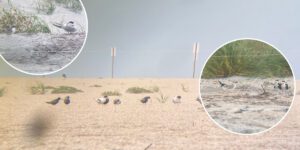
July 23, Nesting Shorebird Survey at Wrightsville Beach: 152 black skimmers (26 chicks), 45 short- billed dowitchers, 23 least terns (1 chick), 18 sandwich terns, 15 black terns, 13 common terns (5 chicks), 10 brown pelicans, 5 barn swallows, 3 sanderlings, 3 royal terns, 3 laughing gulls, 2 purple martins, 2 willets, and 1 ring-billed gull.
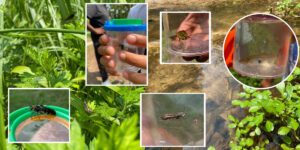
July 27, Catching Critters: The summer camp at Davis Community Center explored and identified arthropods and creek critters with magnifying boxes. Students found common Eastern bumble bees, long-legged flies, June beetles, feather-legged scoliid wasps, short-horned grasshoppers, damselflies, seed bugs, and mosquito fish.

July 29, Wildlife of Antioch: Exploring the Carolina Bays: On a quiet morning just off of highway 211, tucked behind a border of pine trees, sits a stand of rare pond cypress over a lush savanna. This Carolina Bay is unique – only extreme rainfall can saturate the basin enough to hold water. In the winter months, chicken turtles, frogs, and salamanders can be found in the damp, layered soil beneath the cypress trees. On this July morning, blooming St. Johns Wort (Hypericum denticulatum), Virginia buttonweed (Diodia virginiana), and stinking camphorweed (Pluchea foetida) speckle the understory of grasses, alive with spiders, dragonflies, bumble bees, butterflies, and beetles.
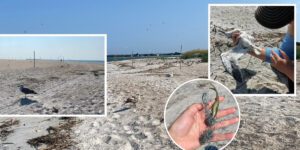
July 30, Nesting Shorebird Survey at Wrightsville Beach: 260 black skimmers (48 chicks), 5 least terns, 45 sandwich terns, 7 common terns (3 chicks), 3 brown pelicans, 2 barn swallows, 4 royal terns, 11 laughing gulls, 2 willets, 2 great black-backed gulls, a ruddy turnstone, an American herring gull, and a ring-billed gull. A black skimmer chick tangled in fishing line was freed before any long-term damage was caused. Share the shore and throw away used fishing line!
Written by:
– Page Turner, Conservation Manager
– Laura Neitzey, Refuge Conservation Manager
– Alden Picard, Conservation Manager
– Kara Solomon, Conservation Manager
– Luke Bennett, Conservation Manager

– Mary Bures, VP of Outdoor Engagement
– Emily Strongin, Community Engagement Manager