
NCWF In The Field – August, 2026
North Carolina Wildlife Federation staff and Community Wildlife Chapters connected 1,328 people to nature through 50 wildlife and habitat events and activities in August, including:
- Clearing nearly 3 acres of invasive species – helping restore healthy habitat for native plants and wildlife across the state
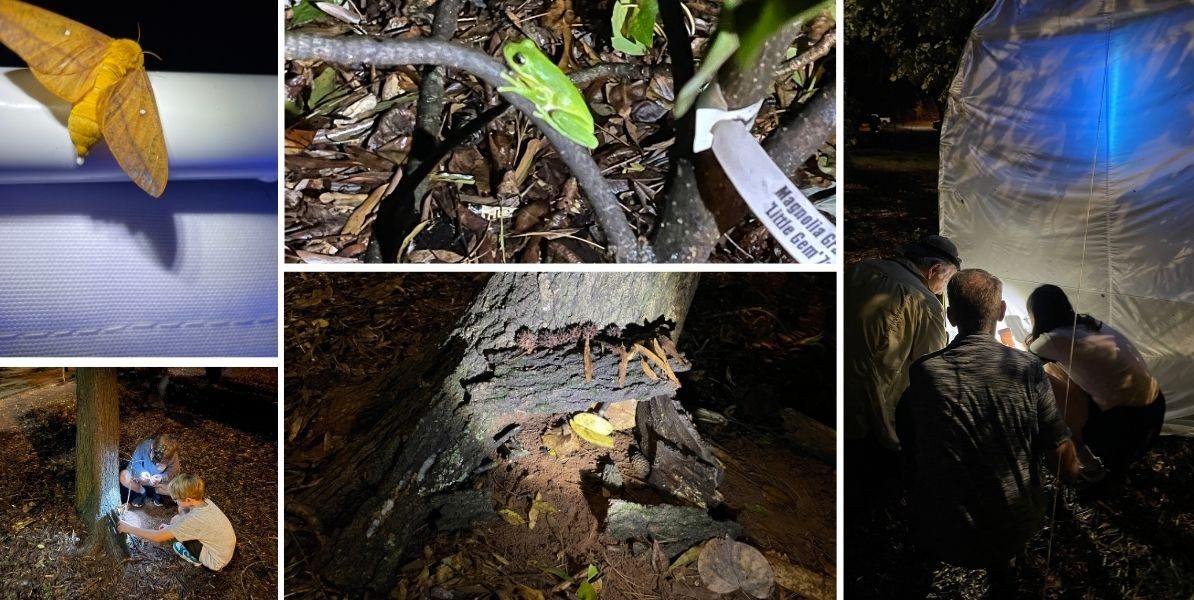
- Hosting a wide range of educational and hands-on experiences – such as moth nights, community science projects, invasive species removals, and community snorkel events
- Introducing people to North Carolina’s incredible wildlife – including species like the chimney swift, tangerine darter, and extraordinary pollinators that abound in habitats across the state
- Engaging staff and volunteers from the Blue Ridge to the Albemarle Sound – getting outside and getting their hands dirty to improve wildlife habitat and connect people with nature
- Providing opportunities for people of all ages across the state – to connect with nature, learn about wildlife and habitat, and make a tangible impact alongside conservation partners
Explore our Events Calendar to discover where NCWF and our Community Wildlife Chapters are hosting in-person and virtual events near you. Check out a few highlights below from our conservation outreach team.
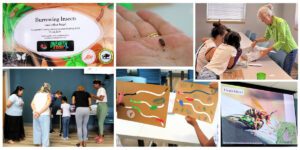
July 31, Unearth a Story: Burrowing Insects: NCWF Wildlife Habitat Stewards of Northeastern NC Chapter partnered with Pasquotank County Library to host a special program on burrowing insects as part of the library’s Summer Reading Program! Special thanks to Skadi Kylander for sharing her knowledge on insects and helping teach kids and adults alike fun facts about the insects beneath our feet and ways to distinguish insects from similar creatures. Participants enjoyed a fun burrowing insects craft and had the opportunity to hold and observe isopods, commonly known as roly pollies or pill bugs, as an example of a burrowing crustacean that’s commonly found in your backyard!
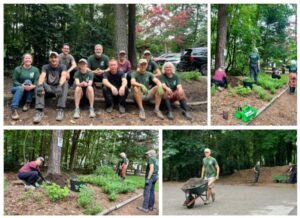
August 2, SWC Bass Lake Shade Garden Workday: NCWF South Wake Conservationists Chapter held a garden workday at their native shade plant demonstration garden at Bass Lake Park in Holly Springs. Volunteers pulled weeds and spread a fresh layer of mulch over the garden. This summer’s extreme heat, drought, and a few very hungry deer have taken a toll on both new plantings and some of the established natives. Thanks to this group’s hard work, the garden is refreshed and well‑prepared for the planting seasons ahead.
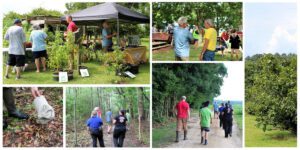
August 2, Fig Festival & Nature Walk: During Spruill Conservation Farm’s fourth annual Fig Festival in Roper, NCWF Wildlife Habitat Stewards of Northeastern NC Chapter hosted an information table with opportunities to purchase blue bird houses, Butterfly Highway seed packets, and native plants from Big Cypress Natives during festival activities. To end the weekend-long community celebration, the chapter led a guided nature walk around the conservation easement. During the walk, they were able to demonstrate their successful invasive species removal efforts in forested areas that were previously dominated by privet and nandina and now, sunlight is reaching the forest floor to promote regeneration of native species.
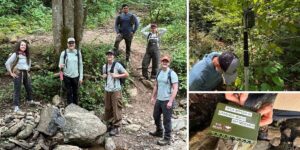
August 6 and 13, Craggy Mountains Bat Monitoring: Many bat species in North Carolina – including the federally endangered gray, Indiana, northern long-eared, and Virginia big-eared bats rely on mature, intact forests for roosting and foraging. Pisgah National Forests contain some of the best available habitat for these at-risk bat species. It’s imperative that we protect this habitat in order to protect the amazing diversity of wildlife that these forests support. Conducting surveys in the National Forests and other natural areas to determine bat distribution is an integral component of protecting at-risk bat species and the habitat they call home. North Carolina Wildlife Federation, National Parks Conservation Association, and other partners are working together to survey for at-risk bat species in some of the last remaining patches of old-growth forests and maturing second-growth forests in North Carolina. Our collective goal is to fill area-specific knowledge gaps to provide the best available information for future decision-making in forest management and conservation efforts. To achieve this goal, we are deploying ultrasonic recording units at suitable locations within our study area – the Craggy Mountains – a 16,000 acre portion of Pisgah National Forest. The data will be analyzed using SonoBat – a U.S. Fish and Wildlife Service approved bat call analysis software.
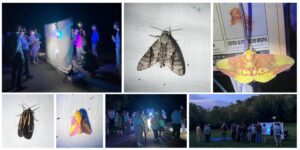
August 7, DWS Moth Night: NCWF Durham Wildlife Stewards Chapter held a moth night at Sandy Creek Park in Durham. Three large sheets were set up in various parts of the park attracting a wide variety of moths as well as their insect predators like water bugs, assassin bugs, fishflies, dragonflies, frogs, and snakes. This event, in partnership with Backyard Butterflies, was a big success! Participants made over 350 observations of 117 different species of moths and other nocturnal critters on the chapter’s iNaturalist project for this event.
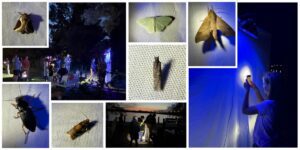
August 7, ecoEXPLORE Moth Night: NCWF and Pocosin Lakes National Wildlife Refuge partnered to host an ecoEXPLORE Moth Night where families from Columbia and surrounding communities came together to learn more about nocturnal wildlife, specifically moths, along the Scuppernong River. It was exciting and encouraging to see children with ages ranging from 3 to 17 not only come out to learn more about moths but to also experience the magic of safely exploring outside in the dark, helping to dispel the feelings that being outside at night is too dangerous. There were several times where participants left the sheet setup to poke around the water’s edge or shine a flashlight up into the trees in search of other nocturnal life. Some kids started to work together to collect sticks to make a “frog trap” (inspired by traditional fish traps) because they were enamored by how many frogs they heard calling and wanted to see them up close. While no frogs were caught, at least 15 species of moths were observed and so many memories were made!
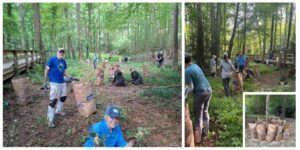
August 8, SWC Invasive Removal: NCWF South Wake Conservationists Chapter participated in an invasive removal event at the Annie Jones Trail in Cary. Volunteers from a variety of conservation groups, all brought together by The Invasive Removal Coalition of Cary, removed Japanese stiltgrass and liriope. By removing the invasive plants, volunteers were able to uncover native plants including ferns, elderberry, and mountain mint and prevent invasive plants from spreading further in the floodplain.
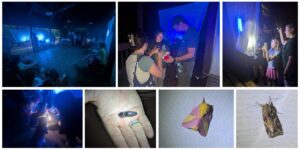
August 8, SWC Moth Night: NCWF South Wake Conservationists Chapter held a moth night at Crowder County Park in Apex. Chapter member and environmental educator, Bonnie Eamick, set up UV lights and white sheets to attract a variety of nighttime insects. Naturalists of all ages enjoyed looking for spiders and moths with moth identification help provided by Adam Prince, a Wake County park employee. Noteworthy observations included the rosy maple moth, the eastern eyed click beetle, the rhinoceros beetle, and a yellow-striped army worm. Kids in attendance enjoyed using specimen jars to catch, examine, and release the critters they caught.
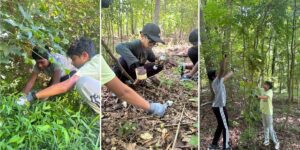
August 9, Invasive Plant Removal
NCWF Habitat and Wildlife Keepers Chapter of Matthews met on Sunday the 9th to prepare the future site of Outen Pottery Park. The group of 20 people focused on the removal of invasive species, including wisteria, Chinese holly, and Ligustrum. The work will help create a healthier habitat for future trees and native plants to thrive.
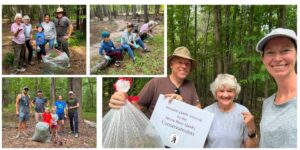
August 10-15, NRHC Big Pull: NCWF Neuse River Hawks Conservationists Chapter hosted a week-long invasive plant removal at Mill Bridge Nature Park in Wake Forest. Kids were encouraged to join the event and lend a hand because conservation isn’t just for grown-ups! Volunteers removed Japanese stiltgrass from the park, making room for wildlife and native plants to thrive.
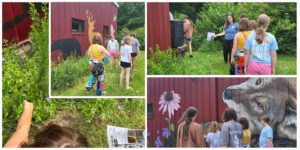
August 11, Intro to Great Southeast Pollinator Census & Red Wolf Program: NCWF welcomed Dare County 4-H summer campers to the Red Wolf Center for an introduction to the Great Southeast Pollinator Census and a Red Wolf program. Youth participants and their chaperones learned how they can participate in the Great Southeast Pollinator Census, and to get excited for this community science opportunity, we conducted a practice count in the Red Wolf Center’s educational pollinator garden. Following the count, everyone enjoyed a Red Wolf program where they had the opportunity to learn more about the biology and history of Red Wolves and were able to view the two exhibit wolves that live at the center.
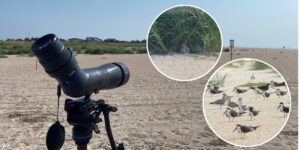
August 13, Nesting Shorebird Survey at Wrightsville Beach: 292 black skimmers, 10 sandwich terns, 7 barn swallows, 5 laughing gulls, 3 sanderlings, 3 brown pelicans, 2 house finches, 2 willets, 1 rock pigeon, 1 common tern, 1 royal tern, and 1 osprey.
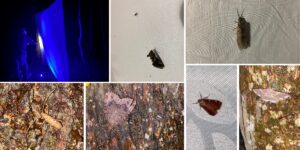
August 13, Moth Night at Carolina Beach State Park: As the sun set on New Hanover County’s largest coastal fringe longleaf habitat at Carolina Beach State Park, sheets went up and bait was set under a canopy of pine trees, hackberry, and oaks. The diurnal critters wind down and the nocturnal ones come to life, queued by emerging bats on the hunt for all insects that fly. Zale moths, idia moths, copper underwings, soybean loopers, cicadas, katydids, beetles, and fishflies sprawled across white sheets, revealing themselves in contrast from the dark savanna landscape.
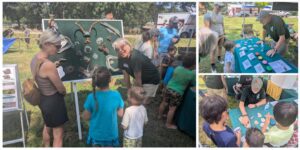
August 15, SWC Mud Day: NCWF South Wake Conservationists Chapter tabled at Mud Day at the Walnut Creek Wetland Center in Raleigh. Chapter volunteers engaged community members with interactive activities about frog calls, animal tracks, habitat matching, and wildlife signs. New this year was an activity about native vs invasive animals and plants. A little mud feels good on a hot day!
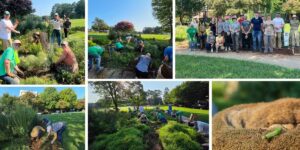
August 15, Pollinator Workday: NCWF Charlotte Wildlife Stewards Chapter teamed up with volunteers from the Central Carolinas Master Naturalist Program and Mecklenburg County Park and Recreation for a morning of maintenance at the Veteran’s Park Pollinator Pitstop. The garden was buzzing with blooms, bees, and friendly conversations! Volunteers worked through the heat and humidity, removing Bermuda grass, crabgrass, and other non-native weeds in preparation for a fall planting.
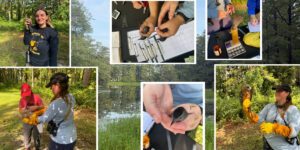
August 16, Bird Banding at Greenfield Lake: NCWF and Cape Fear Bird Observatory used mist nets to capture and survey songbirds at Greenfield Lake. Grey catbirds, Carolina wrens, and a tufted titmouse were caught. A red-shouldered hawk got stuck in a net in pursuit of prey and was released after checking for injuries. Birds are surveyed for scaly leg, fungus, injuries, and diseases that cannot be tracked from distant visual observations. All bird banding is conducted under permits issued by the U.S. Geological Survey.
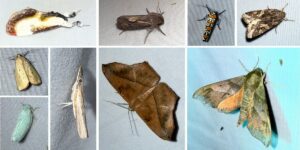
August 17, Marvelous Moth Program: There are more than 3,000 identified moth species in North Carolina. While some moths are active during the day, the vast majority are nocturnal, providing important pollination services under the cover of darkness. To celebrate these amazing creatures, NCWF Swannanoa Valley Wild hosted a moth night with Naturalist and Photographer, Sharon Mammoser. We discovered why we should care about moths, how many species exist, special adaptations they have to avoid predators, and how they’re able to thrive in the dark. Despite the storms, we had an amazing time learning from Sharon. We witnessed incredible photography and identified a variety of moth species and other insects attracted to the lights at our mothing stations!
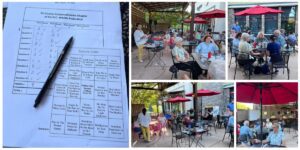
August 19, TCC Wildlife Trivia: NCWF Tri-County Conservationists Chapter held a wildlife trivia night at Breakaway Cafe in Chapel Hill. Participants played alternating rounds of wildlife-themed trivia and wildlife-themed music bingo. The chapter awarded prizes from a variety of local artists and businesses to the winning trivia team. Everyone enjoyed good food, good company, and great trivia questions!
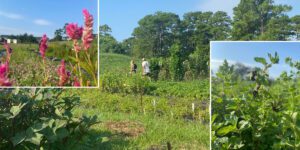
August 21, Great Southeast Pollinator Census: NCWF and volunteers from Rise Up Community Farm sat with the pollinators at one of the many flowering pitstops around the farm. Participants were surprised by how many small bees are pollinating around us that we rarely stop to notice!
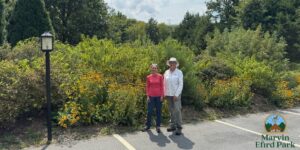
August 21 and 22, Great Southeast Pollinator Census- Habitat Builders
NCWF Habitat Builders Chapter spent two days counting pollinators in the well-established gardens at Marvin Efird Park in Marvin, NC, contributing valuable observations to the Great Southeast Pollinator Census. The gardens were buzzing with activity, with swamp and butterfly milkweed, black-eyed Susans, and goldenrod attracting the greatest number of pollinators. It was a great opportunity to enjoy the gardens while helping gather important data.
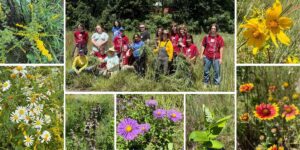
August 21, Karen Kragnolin Meadow Workday: NCWF ReWild AVL and Patchwork Meadows hosted an awesome workday at Karen Cragnolin Park along the French Broad River in Asheville. We worked alongside Warren Wilson’s hardworking student crew who volunteered as part of the college’s annual service day throughout the community. Together, we removed invasive plant species from the meadow to clear the way for native plant species to thrive and provide food and shelter resources to pollinators and other wildlife. We learned about the incredible restoration story of Karen Cragnolin Park that started with RiverLink who restored what was once a junkyard covered by roughly an acre of concrete into a 5 acre public greenspace. After nearly 15 years of soil remediation work, meadow installation efforts began in 2023 with Patchwork Meadows. Even after portions of the park experienced severe flooding during Helene — with areas submerged under approximately 15 feet of water and covered in several inches of sediment — native grasses rebounded quickly, demonstrating the resilience of healthy native ecosystems.
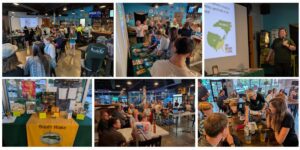
August 21, SWC Wildlife Trivia: NCWF South Wake Conservationists Chapter held a wildlife trivia night at Black Dog Bottle Shop in Holly Springs. Participants played six rounds of wildlife-themed trivia with categories like: Carolina critters, wings over NC, under NC water, NC flora, bugs and insects, and more. The chapter awarded prizes to the winning trivia teams, and everyone learned a thing or two about NC wildlife!
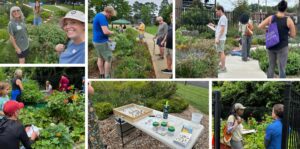
August 22, Pollinator Garden Crawl: NCWF Charlotte Wildlife Stewards Chapter partnered with the City of Charlotte Landscape Management Division and Mecklenburg County Extension Master Gardener Volunteers to host a Pollinator Garden Crawl as part of the Great Southeast Pollinator Census. Folks of all ages were eager to participate in community science, many for the first time. More than 60 pollinator enthusiasts flittered from garden to garden, completing multiple counts before finishing the day at Birdsong Brewing to celebrate their contributions to conservation over a frosty beverage!
August 22, Great Southeast Pollinator Census- Uwharrie Wildlife Stewards
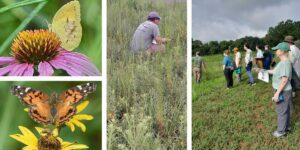
NCWF Uwharrie Wildlife Stewards chapter participated in the Great Southeast Pollinator Census for the first time this year! Members were given exclusive access to private land with minimal foot traffic, providing an opportunity to observe pollinators in a relatively undisturbed habitat. 16 pollinator enthusiasts participated, carefully counting pollinators and submitting vital population data promoting pollinator conservation across the Southeast.
August 22, Walk with a Naturalist
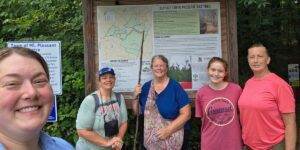
NCWF Concord Wildlife Alliance Chapter gathered with a small group on a drizzly Saturday morning to explore Buffalo Creek Nature Preserve. The group traversed nearly two miles of trail, taking in the preserve’s quiet landscape and learning more about the plants and ecology of this local natural area.
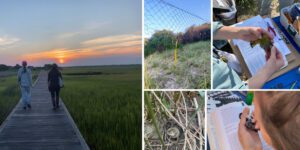
August 25, Bird Banding at Fort Fisher: NCWF and Cape Fear Bird Observatory used mist nets to capture and survey migratory songbirds at Fort Fisher. A Louisiana waterthrush, yellow warbler, Carolina wren, and black and white warbler were caught. Rough green snakes, Eastern rat snakes, and terrapin shells were seen during net checks. Mixed flocks of ibis, great egrets, snowy egrets, and tricolored herons roosted as they journey south for migration. Birds are surveyed for scaly leg, fungus, injuries, and diseases that cannot be tracked from distant visual observations. All bird banding is conducted under permits issued by the U.S. Geological Survey.
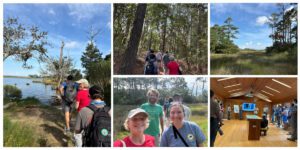
August 26-27, NC Prescribed Fire Council Annual Meeting: NCWF joined agency and NGO partners from across the state to participate in the NC Prescribed Fire Council’s annual meeting in Nags Head. Presentations covered subjects ranging from prescribed fire and at-risk species to smoke management and predicting weather conditions for ideal burn days to air quality monitoring and human health. It was a wonderful opportunity to connect with fire practitioners near and far to share ideas and resources for ways to strengthen community engagement, education, and participation in using prescribed fire as a land management tool. We enjoyed a guided field trip provided by The Nature Conservancy to tour their Nags Head Woods Preserve in Kill Devil Hills. At this site, TNC implements a variety of conservation measures, including prescribed fire, to conserve one of the East Coast’s largest remaining maritime forests and the teaming biodiversity supported by the preserve.
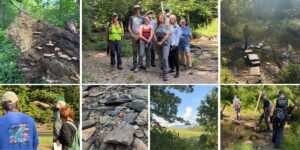
August 28, Blue Ridge Parkway Workday: NCWF High Country Wild alongside Transition Blue Ridge, Blue Ridge Group of the Sierra Club, and High Country Audubon joined forces to help maintain Old John’s River Road hiking path along the Blue Ridge Parkway. This is one of the most beloved areas of the High Country. Cutting back encroaching rhododendron, briars, and branches; removing small fallen trees that block the trail; and improving trail tread is a great way to improve access to nature and the outdoors. High Country Wild plans to host nature outings and more maintenance workdays on this newly adopted trail.
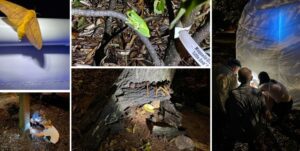
August 28th, Moth Night: NCWF Charlotte Wildlife Stewards Chapter teamed up with the City of Charlotte Landscape Management to host Moth Night at Tuckaseegee Arboretum and Gardens in Charlotte. Over 20 insect enthusiasts showed up to connect with our night-flying pollinators and other nocturnal critters. A few enthusiastic youth even built a fairy house for wildlife. Thank you to naturalist Ken Kneidel and City Arborist Laurie Reid for their time and expertise.
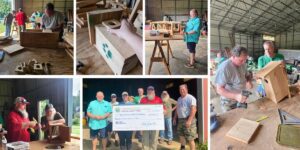
August 29, Wood Duck Box Workday
The NCWF Piedmont Area Wildlife Stewards Chapter recently built new wood duck nesting boxes to support wood ducks throughout the region. Wood ducks rely on a variety of wetland habitats, including backwater marshes, rivers, and small ponds, where suitable nesting sites can be limited. This project also brought the community together, with several of the boxes started by a local Boy Scout troop before being completed by NCWF PAWS members.
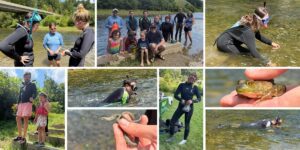
August 29, Community Snorkel on the Watauga River: NCWF High Country Wild alongside MountainTrue geared up with wetsuits, snorkels, view buckets, field guides, and more as we explored the Watauga River! We viewed a variety of aquatic and terrestrial wildlife including crawfish, snails, stoneflies, mayflies, frogs, snakes, salamanders, and numerous fish species including Tennessee darters and northern hogsuckers. Kids, students, and adults of all ages enjoyed this special event and learned about the connection between healthy waterways and biodiversity.
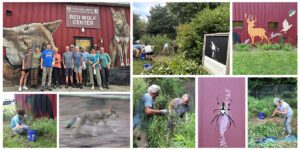
August 29, Pollinator Garden Workday & Red Wolf Program: NCWF Wildlife Habitat Stewards of Northeastern NC Chapter hosted a pollinator garden workday and Red Wolf program at Pocosin Lakes National Wildlife Refuge’s Red Wolf Center in Columbia. Volunteers came together to enhance the center’s educational pollinator garden by removing invasive plants, trimming back overgrown trees, and reestablishing a walking path in the garden. This facility provides critical public access to Red Wolf education and outreach for our local communities and visitors traveling from all over the world. The pollinator garden not only serves as wildlife habitat but it also provides additional enrichment and education opportunities as visitors enjoy viewing the mural and photo exhibit in between Red Wolf programs. Following the workday, volunteers enjoyed a Red Wolf program with NCWF’s Red Wolf Education and Outreach Coordinator, Katerina Ramos, who shared recent Red Wolf Recovery Program updates and provided an opportunity to view the two Red Wolves that live on habitat at the Red Wolf Center.
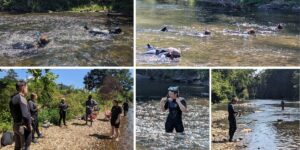
August 30, Blue Ridge Snorkel Trail Adventure: NCWF ReWild AVL and Smoky Mountains Wilderness Watch with support from Lauren Diaz at Amphibian and Reptile Conservancy experienced the Pigeon River through the eyes of a fish! We explored the unique aquatic species hidden beneath the surface including crayfish, mussels, salamanders, snails, insects, and a variety of native fish species. This event gave us the opportunity to highlight the incredible biodiversity of our North Carolina mountain rivers. The event took place on the Blue Ridge Snorkel Trail, a collection of curated snorkel sites throughout North Carolina’s mountain rivers that provides a fun and educational outdoor adventure.
Written by:
– Page Turner, Conservation Manager
– Laura Neitzey, Conservation Manager
– Alden Picard, Conservation Manager
– Kara Solomon, Conservation Manager
– Luke Bennett, Conservation Manager
– Mary Bures, VP of Outdoor Engagement
– Emily Strongin, Community Engagement Manager