

Restoring and Connecting Habitat Where Wildlife Needs it Most – Chantilly Ecological Sanctuary
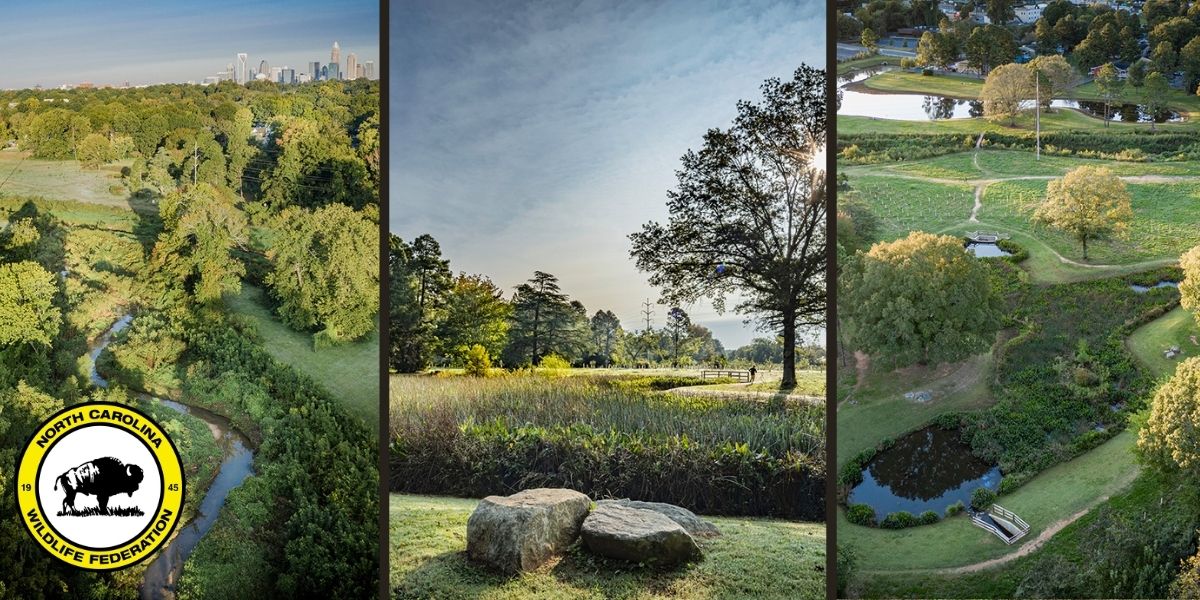
Photo Courtesy of Wildlands Engineering
When people think about wildlife habitat, many may picture vast mountain forests, grasslands, or coastal marshes.
But some of North Carolina’s most important conservation work is happening in the heart of our cities. As the third fastest-growing state in the country, North Carolina continues to experience rapid development, with expanding neighborhoods, roads, and other infrastructure reshaping the landscape. This growth often comes at the expense of natural habitats and essentially creates a resource desert for wildlife—fragmenting the spaces wildlife depends on to find food, shelter, water, and places to raise their young.
Amid broad expanses of concrete and asphalt, it can be hard to imagine wildlife flourishing—but with thoughtful habitat restoration, even urban landscapes can become thriving refuges for nature. That’s where places like Chantilly Ecological Sanctuary come in.
Just minutes from Uptown Charlotte, Chantilly Ecological Sanctuary has become a thriving example of how restoring urban landscapes can create habitat for wildlife while improving the quality of life for the people who live nearby and connecting communities once separated by concrete.
Today, the 24-acre sanctuary hums with life. Native pollinator meadows buzz with bees and butterflies. Warblers, herons, and more than 160 documented bird species find food, water, and shelter along Briar Creek. Wetland plants like blue-flag iris, pickerelweed, and native hibiscus filter stormwater before it reaches local waterways, helping protect water quality while creating habitat for countless species.
Photo Courtesy of Wildlands Engineering
Carolina Burgett, Project Manager at Charlotte-Mecklenburg Storm Water Services, explains that “Chantilly Ecological Sanctuary has rehabilitated the urban stream corridor – growing back floodplain habitats where homes once sat at the highest flood risk in the county.” With reshaped stream banks encouraging streams to flood the floodplain more frequently, stormwater runoff can “slow down and spread out,” returning sediment and nutrients back to the land that otherwise become pollutants when washed downstream, nourishing native vegetation, and replenishing the water table. “With increased stream and stream-side (riparian) habitat complexity,” Burgett says, “we are building a more diverse and resilient ecosystem that provides regional benefits.”
But just a few decades ago, this oasis in the desert looked very different.
The site was once covered by apartment buildings, parking lots, and pavement constructed within Briar Creek’s floodplain. As Charlotte grew, impervious surfaces and development increased throughout the watershed, stormwater runoff intensified flooding, placing residents and infrastructure at greater risk. Following repeated flood events, the apartments were removed through a FEMA flood mitigation program, opening the door for an ambitious restoration effort.
Mecklenburg County, Charlotte-Mecklenburg Storm Water Services, and numerous partners worked together to restore more than 4,400 feet of stream, reconnect the floodplain, improve stormwater management, and allow Briar Creek to function more naturally. What was once a heavily developed property became an opportunity to restore the landscape—for both people and wildlife.
Since 2018, North Carolina Wildlife Federation has helped transform the restored floodplain into the vibrant ecological sanctuary visitors experience today.
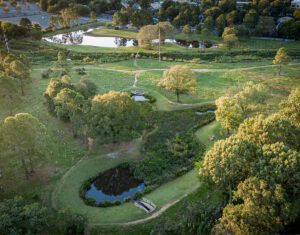
Photo Courtesy of Wildlands Engineering
Working alongside Charlotte-Mecklenburg Storm Water Services, NCWF and hundreds of volunteers through NCWF Charlotte Wildlife Stewards Chapter, have planted 70 native trees, installed hundreds of live tree stakes, sowed many pounds of pollinator seed, installed bird and bat houses and turtle platform, planted a wet pond littoral shelf of 300 wetland plugs, removed 500 pounds of invasive plants, collected 2,200 pounds of litter from Briar Creek, added two educational signs to help visitors better understand the importance of healthy habitat, and connected neighbors to the site through bird walks and environmental education programs.
For Burgett, the work at Chantilly is far from finished. “This land will continue to be a work in progress and we are thrilled to have the support of NCWF and local volunteers enhancing the habitat further through great projects.”
“Chantilly Ecological Sanctuary is a great example of how wildlife habitat can be restored in an ever growing city,” says Donna Bolls, NCWF Charlotte Wildlife Stewards Chapter President. “Over the past several years, NCWF Charlotte Wildlife Stewards Chapter has supported sanctuary with projects that enhance habitat.”
“For example, this spring we installed a turtle basking platform in the water quality pond. Within a couple of days, turtles had found it. Now we call it the wildlife platform since it’s also enjoyed by geese and, most recently, a heron. It’s our joy and privilege to be a partner in conserving this urban oasis,” Bolls says.
The profound impact and outcomes of the shared commitment to the ecological sanctuary through more than six restoration projects over the past nearly 10 years speak for themselves.
Native vegetation improves soil health, filters polluted runoff, and supports cleaner air and water. Restored wetlands and floodplains help reduce flooding by slowing and storing stormwater. Most importantly, wildlife has reclaimed a place where it can feed, nest, and raise the next generation—even in the heart of Charlotte’s urban center.
“Chantilly Ecological Sanctuary gives us hope for what’s possible when communities come together to restore wildlife habitat in the places where they live,” says Tim Gestwicki, CEO, North Carolina Wildlife Federation. “When volunteers choose to plant native trees, restore wetlands, remove invasive species, and create spaces for wildlife, they are helping bring back the food, shelter, and nesting habitat that birds, pollinators, amphibians, and other wildlife need to thrive.”
“Chantilly is a powerful reminder that meaningful wildlife conservation can happen anywhere—and that when people invest in the habitat around them, wildlife benefits right alongside their communities,” Gestwicki says.
Urban habitat restoration reminds us that connectivity doesn’t stop at the edge of a wildlife refuge. As North Carolina continues to grow, parks, greenways, restored streams, natural corridors, and a yard become increasingly important links in the larger landscape. These spaces allow birds, bees, butterflies, amphibians, and other wildlife to find refuge in developed areas while giving people opportunities to experience nature close to home.
Wildlife doesn’t recognize city limits.
By restoring places like Chantilly Ecological Sanctuary, the conservation community that is NCWF inspires other projects like it, connecting wildlife and people to the natural world that sustains us all.