

Moths: The Night Shift of Pollination – A Look at NCWF’s Moth Nights
When we think of pollinators, butterflies and bees are usually the first to come to mind. Many are bright, beautifully patterned, and easy to notice as they flit and buzz around our yards and gardens.
But some of our most important pollinators aren’t quite as easy to notice. One reason is simple: they’re most active at night.
There are more than 3,000 identified moth species in North Carolina, compared with 177 butterfly species. While some moths are active during the day, the vast majority are nocturnal, providing important pollination services under the cover of darkness. Worldwide, between 75% and 85% of all moth and butterfly species are nocturnal, with moths making up the vast majority of that group.
Nocturnal pollination is especially important because many plants are specifically adapted to being pollinated at night, producing much of their nectar after dark. Moths are estimated to provide up to 98% of nocturnal pollination, and 289 species across 75 plant families are partially or exclusively pollinated by moths.
Moths rely on the moon and stars to help them navigate, generally traveling in straight paths. But that same reliance on natural light can become a problem with the presence of artificial light. Streetlights, porch lights, and other sources of nighttime illumination can disorient moths and contribute significantly to mortality among moths and other nocturnal insects.
Beyond their role as pollinators, moths are also an important part of terrestrial food webs, providing a major food source for insectivorous nocturnal predators.
However, some moths have even evolved ways to avoid becoming prey themselves. Moths such as tiger moths and underwing moths have specialized ears on their thorax or abdomens that can detect the echolocation calls of bats. Research from Wake Forest University found that when tiger moths hear an approaching predator, they may respond with evasive dives or even acoustic aposematism, producing ultrasonic clicks that communicate to bats that they don’t taste good or are dangerous to eat.
During the day, nocturnal moths spend most of their time hiding and resting. Many species are remarkably well camouflaged, blending into tree bark, leaf litter, tall grasses, and other parts of their surroundings.
While nocturnal moths can be difficult to spot both during their nighttime activities and while they’re resting during the day, there are some fun and surprisingly effective ways to see them in action.
NCWF’s Community Wildlife Chapters host Moth Nights throughout the summer, giving people a chance to see the incredible diversity of North Carolina’s nocturnal moths and other nighttime insects.
What is a Moth Night?
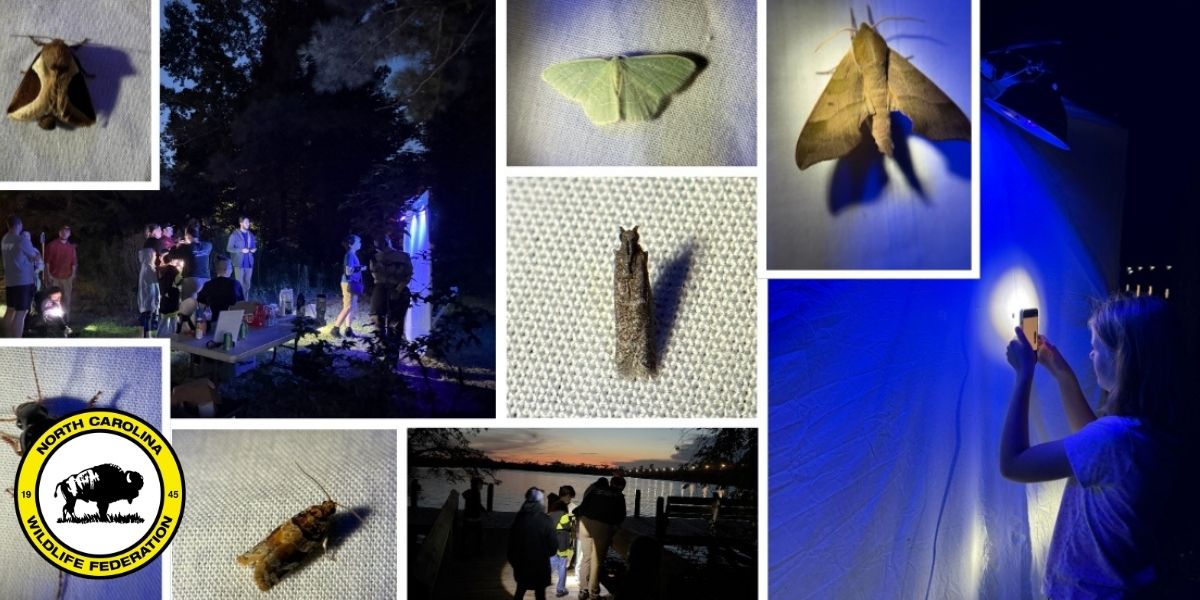
During a Moth Night, white sheets are hung up and illuminated with bright UV black lights. The combination creates a large, light-colored backdrop that attracts moths and other cool insects, and makes them much easier to observe and photograph and submit observations to community science initiatives like National Moth Week. On a good night, dozens or even hundreds of moths can show up, representing an incredible variety of species. Not all moths are attracted to the light; species like underwings are attracted to a sugary, fermented mixture of overripe bananas, molasses, brown sugar, and stale beer painted onto tree trunks.
Here are some photos and recaps from NCWF’s Community Wildlife Chapter Moth Nights, along with some of the species participants were able to identify.
May 29, CWA The Unseen World of Moths: NCWF Concord Wildlife Alliance Chapter stepped into the hidden world of moths at Woodland Discovery in Concord. Local moth experts set up white sheets and blacklights to attract these lepidopterans for examination up close. As the darkness settled, folks pulled out their flashlights and headlamps to observe and photograph tulip tree beauties, luna moths, and other creatures of the night.
June 23, CWS Moth Night: NCWF Charlotte Wildlife Stewards Chapter joined Mecklenburg County Natural Resources staff to celebrate National Pollinator Week with Moth Night at Reedy Creek Nature Preserve. A large crowd, including many first-time “mothers”, showed up to participate, and folks were not disappointed. Grapevine loopers, tulip-tree beauties, grass tubeworm moths, and even a false underwing made an appearance. The clouded underwing was the highlight for many!
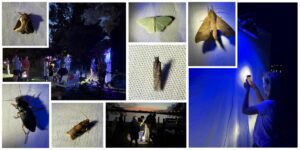
August 7, ExoExplore Moth Night: At NCWF and Pocosin Lakes NWR’s ecoEXPLORE Moth Night, families from Columbia and surrounding communities came together to learn more about nocturnal wildlife, specifically moths, along the Scuppernong River. It was exciting and encouraging to see children with ages ranging from 3 to 17 come out to learn more about moths and get to see that the dark isn’t as scary as many of us were taught. There were several times where participants left the sheet setup to go poke around the water’s edge or shine a flashlight up into the trees in search of other nocturnal life. Some kids started to work together to collect sticks to make a “frog trap” (inspired by traditional fish traps) because they were enamored by how many frogs they heard calling and wanted to see them up close. While no frogs were caught, at least 15 species of moths were observed and so many memories were made!
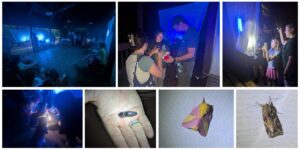
August 8, SWC Moth Night: NCWF South Wake Conservationists Chapter held a moth night at Crowder County Park in Apex. Chapter member and environmental educator, Bonnie Eamick, set up UV lights and white sheets to attract a variety of nighttime insects. Naturalists of all ages enjoyed looking for spiders and moths with moth identification help provided by Adam Prince, a Wake County park employee. Noteworthy observations included the rosy maple moth, the eastern eyed click beetle, the rhinoceros beetle, and a yellow-striped army worm. Kids in attendance enjoyed using specimen jars to catch, examine, and release the critters they caught.
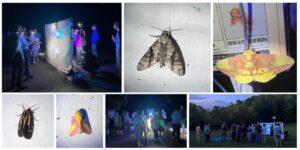
August 7, DWS Moth Night: NCWF Durham Wildlife Stewards Chapter held a moth night at Sandy Creek Park in Durham. Three large sheets were set up in various parts of the park attracting a wide variety of moths as well as their insect predators like water bugs, assassin bugs, fishflies, dragonflies, frogs, and snakes. This event, in partnership with Backyard Butterflies, was a big success! Participants made over 350 observations of 117 different species of moths and other nocturnal critters on the chapter’s iNaturalist project for this event.
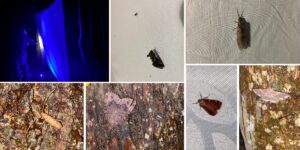
August 13, Moth Night at Carolina Beach State Park: As the sun set on New Hanover County’s largest coastal fringe longleaf habitat at Carolina Beach State Park, sheets went up and bait was set under a canopy of pine trees, hackberry, and oaks. The diurnal critters wind down and the nocturnal ones come to life, queued by emerging bats on the hunt for all insects that fly. Zale moths, idia moths, copper underwings, soybean loopers, cicadas, katydids, beetles, and fishflies sprawled across white sheets, revealing themselves in contrast from the dark savanna landscape.
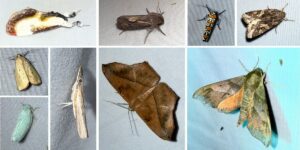
August 17, Marvelous Moth Program: There are more than 3,000 identified moth species in North Carolina. While some moths are active during the day, the vast majority are nocturnal, providing important pollination services under the cover of darkness. To celebrate these amazing creatures, NCWF Swannanoa Valley Wild hosted a moth night with Naturalist and Photographer, Sharon Mammoser. We discovered why we should care about moths, how many species exist, special adaptations they have to avoid predators, and how they’re able to thrive in the dark. Despite the storms, we had an amazing time learning from Sharon. We witnessed incredible photography and identified a variety of moth species and other insects attracted to the lights at our mothing stations!
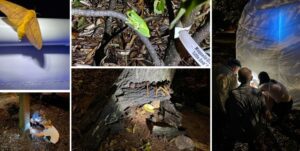
August 28th, Moth Night: NCWF Charlotte Wildlife Stewards Chapter teamed up with the City of Charlotte Landscape Management to host Moth Night at Tuckaseegee Arboretum and Gardens in Charlotte. Over 20 insect enthusiasts showed up to connect with our night-flying pollinators and other nocturnal critters. A few enthusiastic youth even built a fairy house for wildlife. Thank you to naturalist Ken Kneidel and City Arborist Laurie Reid for their time and expertise.