
The Future is Wild: NCWF’s 2026 Scholarship Winners
Wildlife enforcement, invasive bass, Red Wolves, marine fisheries, sea turtles, and rare butterflies.
Seven undergraduate, graduate, and Ph.D. students received 2026 North Carolina Wildlife Federation scholarships to support their studies and careers in wildlife conservation. Matthew Graff received the $2,500 Alamance Wildlife Club Sponsored Grant, and Sam Prescott received the $2,500 Conservation Leadership Scholarship. Paige Meadows, Alannah Anderson, Lindsay Curl, Sweta Dixit, and Laura Taylor each received $1,500 scholarships.
“NCWF is pleased to offer these scholarships to the outstanding undergraduates and graduates in the field of wildlife conservation. The quality of these individuals is very high – across the board,” says NCWF VP of Conservation Policy Manley Fuller. “As these scholarships provide assistance to the award recipients in furthering their career objectives, we look forward to seeing how they will help advance a future for wildlife in North Carolina.”
 Alamance Wildlife Club Sponsored Grant: Matthew Graff (NC State University)
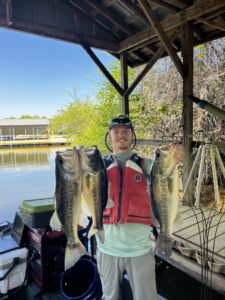 Alamance Wildlife Club Sponsored Grant:
 Matthew Graff is a first-year master’s student in Fisheries, Wildlife, and Conservation Biology at NC State University. His research examines the spatial ecology and capture efficiency of largemouth bass and invasive Alabama bass in a North Carolina Piedmont reservoir using acoustic telemetry to better understand fish movement and habitat use. Inspired by a lifelong passion for fishing and aquatic conservation, Matthew aspires to become a state fisheries biologist, applying science-based management strategies to protect freshwater ecosystems and sustain recreational fisheries. He is committed to connecting scientific research with public outreach, ensuring that stakeholders have the knowledge needed to support effective conservation. Beyond his research, Matthew has held leadership roles with Trout Unlimited’s Costa 5 Rivers program, participated in the American Fisheries Society, volunteered with environmental education programs for elementary students, and served his local community through outreach with his church.
Conservation Leadership Scholarship: Sam Prescott (NC State University)
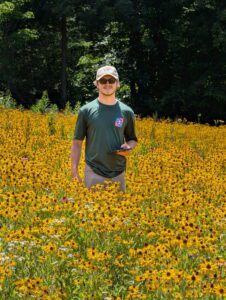 Sam Prescott is a rising junior at NC State University studying Fisheries, Wildlife, and Conservation Biology with a concentration in Wildlife Science and minors in Applied Ecology and Religious Studies. Sam is passionate about protecting natural resources and hopes to pursue a career as a game warden or conservation officer, serving as a trusted advocate for wildlife and the environments that support them. Through this career path, Sam aims to combine public service, education, and conservation enforcement to help people better understand the importance of protecting natural resources. Inspired by a lifelong appreciation for the outdoors, Sam is committed to encouraging responsible stewardship and ensuring future generations can experience the beauty of North Carolina’s wildlife and wild places. Sam hopes to be a positive presence in the community by connecting with the public, promoting conservation ethics, and defending the natural resources they value.
Paige Meadows (NC State University)
Paige Meadows is a rising senior at NC State University pursuing dual bachelor’s degrees in Fisheries, Wildlife, and Conservation Biology with a concentration in Wildlife Science, and  Agricultural Business Management with a concentration in Biological Science, along with a minor in Environmental Education. She is passionate about inspiring others to protect wildlife and natural resources through education and community engagement. Paige hopes to pursue a career as a park ranger with the U.S. Army Corps of Engineers or in environmental or agricultural education, where she can connect people of all ages with conservation and stewardship. She is also interested in research that addresses wildlife-related crop damage, combining her interests in agriculture and wildlife management to develop practical conservation solutions. Paige’s long-term goal is to foster a greater appreciation for the natural world and empower future generations to become active stewards of North Carolina’s wildlife and environment.
Alannah Anderson (NC State University)
Alannah Anderson is a rising senior at NC State University majoring in Marine Science with a concentration in Biological Oceanography and minors in Biological Sciences, Zoology, and  Applied Ecology. Her research has explored the impacts of marine bottom trawling and the effectiveness of the Fisheries Reform Act, strengthening her interest in fisheries management and coastal conservation. Alannah is passionate about science communication and natural resource stewardship, with aspirations to educate the public while protecting North Carolina’s coastal ecosystems through a career in natural resource management. She has contributed data visualizations for the North Carolina Wildlife Federation’s Marine Fisheries Trial information page and has volunteered with the North Carolina Zoo and Historic Yates Mill County Park, supporting wildlife research and habitat restoration. Alannah hopes to inspire others to value and protect North Carolina’s diverse coastal wildlife through conservation, education, and public engagement.
Lindsay Curl (NC State University)
Lindsay Curl is a rising fourth-year Ph.D. candidate in Marine Science at NC State University. Her research focuses on seagrass restoration, microplastics, and sea turtle conservation, with an 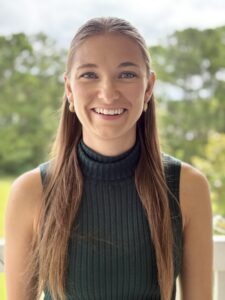 emphasis on developing innovative solutions to protect North Carolina’s coastal ecosystems. Lindsay is currently advancing a novel conservation project that explores the use of shark-shaped decoys to reduce sea turtle boat strikes, minimize bycatch, and support successful seagrass restoration. Beyond her research, she is an active member of the North Carolina Plastic Coalition and the Scientific Research and Education Network (SciREN), where she promotes environmental stewardship, science education, and community engagement. Lindsay aspires to become a faculty professor, combining research, teaching, and mentorship while expanding opportunities for students to pursue marine science. Her long-term goal is to inspire the next generation of conservation leaders through applied research, coastal restoration, and science communication.
Sweta Dixit (NC State University)
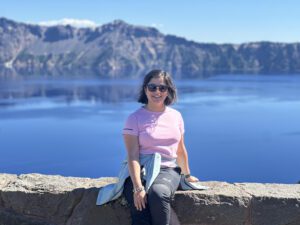 Sweta Dixit is a Ph.D. candidate in Parks, Recreation, and Tourism Management at NC State University, where her research focuses on the human dimensions of wildlife conservation and fostering human-wildlife coexistence. Her work examines public tolerance and communication surrounding critically endangered species, including North Carolina’s Red Wolves and Florida panthers, through community engagement, public surveys, and conservation messaging research. Originally from Nepal, Sweta brings valuable international perspective shaped by firsthand experiences with human-wildlife conflict and the challenges of balancing community needs with wildlife protection. She aspires to work with nonprofit or nongovernmental organizations to develop collaborative conservation strategies that connect research, policy, and local communities. Sweta has held numerous leadership and service roles, including serving as a graduate student leader at NC State, supporting environmental education initiatives, and contributing to community development projects in Nepal and beyond. She is committed to creating inclusive conservation solutions that benefit both people and wildlife.
Laura Taylor (NC State University)
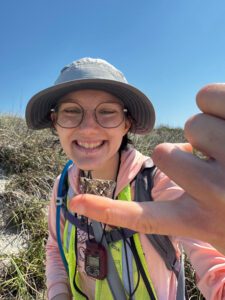 Laura Taylor is a fourth-year Ph.D. student in Fisheries, Wildlife, and Conservation Biology at NC State University. Her research examines how climate change and urbanization affect the Crystal skipper, a rare butterfly found only along a 50-kilometer stretch of North Carolina’s barrier islands. Laura is passionate about conducting applied research that supports wildlife conservation and human-wildlife coexistence, with career aspirations of becoming a research scientist at a state or federal agency. Beyond her dissertation research, she is actively involved in science communication and public outreach, sharing information about native pollinators and Crystal skipper conservation through workshops, community events, and stakeholder meetings across North Carolina. Laura also serves as Treasurer of the Graduate Student Association of Biology, supporting graduate student programming and professional development. She hopes to advance science-based conservation strategies that help protect North Carolina’s biodiversity while fostering resilient communities and ecosystems.