
NCWF In The Field – June, 2026
North Carolina Wildlife Federation staff and Community Wildlife Chapters connected 2,087 people to nature through 63 wildlife and habitat events and activities in June, including:
- Planting 445 native trees and plants – including buttonbush, Baptisia, milkweed, Fraser fir, and more to support birds, pollinators, and other wildlife
- Removing 350 pounds of trash from habitats across the state, helping keep urban, woodland, and aquatic ecosystems clean and healthy
- Hosting a wide range of educational and hands-on experiences such as pollinator habitat maintenance, frog walks, community science projects, native plantings, invasive species removals, and more
- Engaging staff and volunteers from Boone to Wilmington in meaningful conservation work, getting their hands dirty and feet wet to improve wildlife habitat
- Providing opportunities for people of all ages across the state to connect with nature, learn about wildlife and habitat, and make a tangible impact alongside NCWF Community Wildlife Chapters and conservation partners
Explore our Events Calendar to discover where NCWF and our Community Wildlife Chapters are hosting in-person and virtual events near you. Check out a few highlights below from our conservation outreach team.
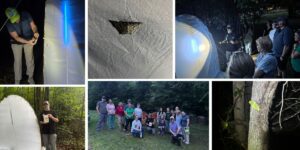
May 29, CWA The Unseen World of Moths: NCWF Concord Wildlife Alliance Chapter stepped into the hidden world of moths at Woodland Discovery in Concord. Local moth experts set up white sheets and blacklights to attract these lepidopterans for examination up close. As the darkness settled, folks pulled out their flashlights and headlamps to observe and photograph tulip tree beauties, luna moths, and other creatures of the night.

May 30, Kids in the Creek: Swannanoa Valley Wild! alongside Amphibian and Reptile Conservancy had a blast at Robert Lake Park in Montreat introducing kids to the wild aquatic world along Flat Creek! We geared up with goggles, snorkels, nets, identification guides, magnifying glasses, and nets as we explored the creek searching for crawfish, stoneflies, snails, and other interesting macroinvertebrates as we discussed biodiversity and the importance of healthy waterways. We also gave some love to our vertebrate friends like salamanders and fish. For more information about Flat Creek and the ongoing Flat Creek 2040 project, check out Swannanoa Valley Wild’s website!
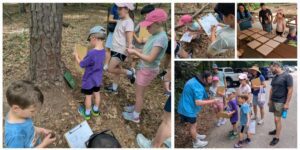
May 30, SWC Nature’s Secret Superpowers: NCWF South Wake Conservationists Chapter hosted an Eco Kids event in partnership with NCWF Great Outdoors University at Bass Lake Park in Holly Springs. Kids, and adults alike, discovered some of the amazing ways animals adapt to their environment. From hiding using camouflage to displaying bright warning colorations, animals have some unique superpowers! Participants first had to match example cards of camouflage and mimicry, then everyone went for a short walk down Bass Lake Trail to record observations of interesting local animal adaptations.
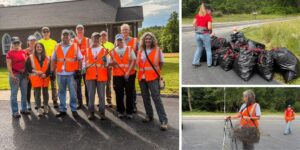
May 30, Elk Creek Road Litter Sweep. High Country Wild alongside the Powderhorn Mountain Community in Deep Gap removed garbage from Elk Creek Road and the surrounding area. Trash and debris in waterways create a host of problems for wildlife including entanglement, ingestion, habitat contamination, and degraded water quality. Cleanup efforts are vital in keeping our waterways clean and maintaining suitable habitat for wildlife.
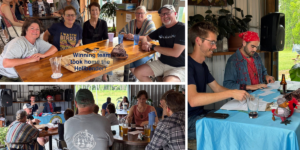
May 31, Wildlife Trivia: ReWild AVL alongside Blue Ridge Audubon hosted Wildlife Trivia at Turgua Brewing. Questions about crawdads, flying squirrels, ancient trees, hellbenders, freshwater mussels and more kept the crowd thinking hard, laughing, and cheering each other on. It was a tough competition requiring a tiebreaker question, but in the end our quizmasters awarded the coveted Hellbender prize to just one team!

June 2, Mount Mitchell Fraser Fir Workday: Conservation Partners with the Southern Appalachian Spruce Restoration Initiative gathered alongside a dedicated group of volunteers near the top of Mount Mitchell. The workday included transplanting over 200 Fraser fir trees from a site that will be impacted by Mount Mitchell infrastructure improvement project to a restoration site where over 300 red spruce trees were planted in 2023 (read more). Adding Fraser fir trees to the restoration site is a big continued step toward the overall goal of restoring the site to spruce-fir forest. Spruce-fir forests in North Carolina are home to federally listed spruce-fir moss spider and Carolina northern flying squirrel; as well as a long list of species of conservation concern including the northern saw-whet owl, brown creeper, black-capped chickadee, and numerous salamanders.
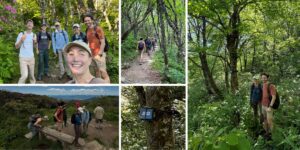
June 4, Cerulean Warbler & Avian Diversity Study: The North Carolina Wildlife Federation led volunteers in the field from the Southern Environmental Law Center to monitor and record cerulean warblers within Craggy Mountains – Pisgah National Forest where the presence of ceruleans and many other avian species is largely unknown. The goal of the project is to fill area-specific knowledge gaps to provide best available information for future decision making in forest management and conservation efforts including support for the proposed Craggy National Scenic Area. The survey is a collaborative effort between the North Carolina Wildlife Federation, National Parks Conservation Association, the Center for Biological Diversity, Defenders of Wildlife, MountainTrue, and the N.C. Wildlife Resources Commission with support from the U.S. Forest Service.
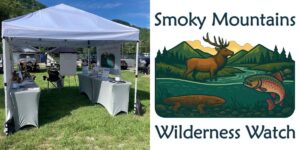
June 5 and 27, Smoky Mountain Wilderness Watch Outreach Events: Smoky Mountains Wilderness Watch is a new chapter of NCWF. In June, they participated in Jeepfest and the Haywood Pride Festival. The chapter engaged community members across the Smoky Mountains to foster community buy-in and support for the chapter’s mission to rewild, protect and conserve habitat creating a more livable landscape for humans and wildlife in Jackson, Swain, and Haywood counties.

June 6, SWC Lake Crabtree Pollinator Festival: In preparation for National Pollinator Week, NCWF South Wake Conservationists Chapter tabled at the annual Pollinator Festival at Lake Crabtree County Park. Participants enjoyed wildlife habitat themed activities, with a special focus on pollinators. Visitors of all ages matched pollinators to their host plant, tested their knowledge with NC wildlife trivia, decorated pollinator fans, and played “spot the pollinator” on a puzzle board.
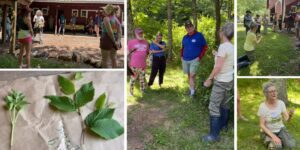
June 6, Foraging the Wild: NCWF High Country Wild hosted a foraging event in West Jefferson for the second year in a row! Led by Brenda Smith, an amazing foraging enthusiast and guide, who shared her knowledge and passion with the group. And a big thanks to High Country Wild board members Wendee Wechsberg and Jeff Land for once again opening their beautiful property and making this unique experience possible. The chapter discovered edible plants, geeked out over ground dwelling critters, and learned how to see the landscape through a new lens. It was a wonderful day of exploration, education, and community.

June 6, UWS Invasive Plant Removal: NCWF Uwharrie Wildlife Stewards Chapter partnered with Morrow Mountain State Park to lead community volunteers in a morning of invasive species removal. Volunteers target Japanese stiltgrass (Microstegium vimineum), a highly invasive annual grass found throughout the Park. Hand pulling prevents stiltgrass from going to seed and further invading habitat!

June 7, Pride Bird Walk: Cape Fear Audubon and Cape Fear Bird Observatory led a bird walk at Ev-Henwood nature preserve. Nearly 100 people showed up and less than 5 had been to the preserve before! We saw a hummingbird sitting on her nest in a sweet gum tree, a yellow-billed cuckoo, summer tanagers, brown-headed cowbirds, an ibis, and heard cardinals, prothonotary warblers, and Northern parulas.
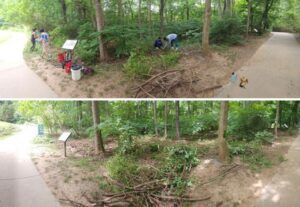
June 7, HAWK Invasive Removal: NCWF Habitat and Wildlife Keepers (HAWK) Chapter continued their hard work managing invasive plant species at Squirrel Lake Park in Matthews. A group of 11 community volunteers spent the morning removing kudzu, autumn olive, and privet. Squirrel Lake Park is a Certified Wildlife Habitat and the location of Kids In Nature Day in Matthews.
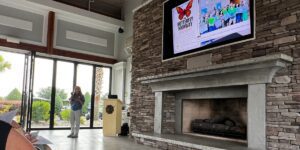
June 8, Plant This, Not That: Brunswick County is one of the fastest growing counties in the state. Many new residents are unfamiliar with our native plants and wildlife. Plant This, Not That offers native alternatives to common ornamental plants. Community members can get a glimpse into the ecosystems of the diverse coastal plan through the landscaping choices they make in their own backyards.
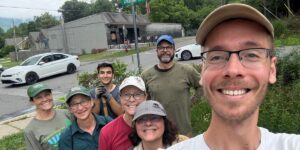
June 9, Lake Tomahawk Wildlife Garden Workday: Swannanoa Valley WILD is transforming the Lake Tomahawk Wildlife Garden in Black Mountain. Thanks to an awesome group of volunteers, the chapter is continuing to make strides to reclaim the garden from non-native invasive species and promote habitat for wildlife. Keep an eye out for more opportunities to make a difference in Swannanoa Valley. We promise that they feel less like work and more like fun, and hope that you’ll leave feeling inspired and connected!

June 9, CWS The Little Things That Run The World: NCWF Charlotte Wildlife Stewards Chapter partnered with Independent Picture House, Charlotte’s only nonprofit arthouse cinema, to host a community screening of The Little Things That Run The World in celebration of Pollinator Month. Folks grabbed refreshments and packed the room to learn about the insects that hold the fabric of life all together. Folks enjoyed an engaging discussion after the film and explored ways to take action for pollinators!
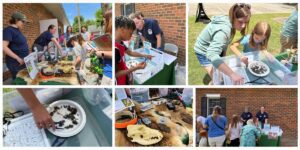
June 9, Tyrrell County Library Summer Reading Kickoff: NCWF and Pocosin Lakes National Wildlife Refuge participated in Tyrrell County Library’s Summer Reading Program Kickoff event for their “Unearth a Story” program theme this year. To get in the spirit of the program season, we hosted an owl pellet discovery activity and Red Wolf tracking program for youth and families to enjoy!
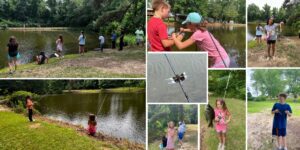
June 10, Coharie Fish Camp: Page and Ryleigh (UNCW) assisted with the Coharie youth camp fishing day, hooking worms, stringing bobbers, teaching kids to cast, and sometimes even catching a bluegill or spotted bass.

June 11, BearWise Program: NCWF ReWild AVL and Artemis Sportswomen welcomed Ashley Hobbs, Special Projects Biologist and BearWise Coordinator for the North Carolina Wildlife Resources Commission for a BearWise program at the Reuter Center at UNC Asheville. Spring and summertime means native black bears in Western North Carolina are more active and remain so through the fall! Ashley shared ways to prevent conflicts with black bears, provided resources to resolve problems with black bears, and encouraged community initiatives to keep black bears wild. This was an engaging and practical program with tools and smart solutions on how homeowners, businesses and communities can coexist with bears.

June 13, UCWC Kayak at Cane Creek: An ambitious group of paddle enthusiasts joined NCWF Union County Wildlife Chapter for a guided paddle tour around Cane Creek Reservoir in Waxhaw. Paddlers saw cormorants, herons, and dragonflies while enjoying a beautiful morning on the water!
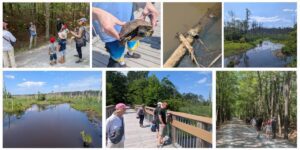
June 13, SWC Hoppy Herp Hike: NCWF South Wake Conservationists Chapter hosted a nature walk along the American Tobacco Trail. NCWF Conservation Coordinator Kara Solomon led a herp hike listening and looking for reptiles and amphibians. Nature enthusiasts of all ages enjoyed a stroll in the shade looking for herps on the trail and in ditches along the path. The best opportunity for herp spotting was in the wetland over Beaver Creek. Lots of turtles were seen sunning themselves, but most herps were smart and burrowed down to stay cool. Participants observed a snapping turtle, yellow-bellied slider, and a painted turtle in addition to some non-herp friends like large-mouth bass, bluegill, birds, and dragonflies galore.
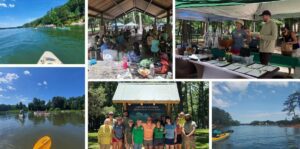
June 13, CWS Wild on the Water: NCWF Charlotte Wildlife Stewards Chapter hosted their annual paddle fundraiser at Latta Nature Preserve in Huntersville. Over 40 energetic paddlers set out for a guided tour on Mountain Island Lake. Paddlers saw nesting ospreys and lots of great blue herons. Native wetland plants like water willow and buttonbush were in bloom. After the paddle, participants enjoyed a picnic lunch, raffle, and silent auction. Money raised will go towards wildlife habitat restoration projects and family and youth engagement in Mecklenburg County.
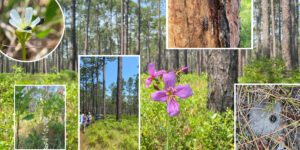
June 14, Bird Walk at Green Swamp: NCWF and Cape Fear Audubon hiked through Green Swamp Preserve, seeing common nighthawks circle in the sky, nuthatches running up and down the sides of pine trees, and red-headed woodpeckers gliding from tree-to-tree. Venus flytraps, grasspink orchids, meadowbeauties, St. John’s-wort, coastal false asphodel, and pitcher plants in bloom under a chorus of indigo buntings, tree swallows, chickadees, prothonotary warblers, and Bachman’s sparrow.
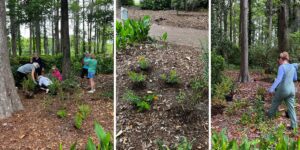
June 16, Greenfield Lake Planting: NCWF and Cape Fear Garden Club added 18 species of native plants to the floodplain to increase food, shelter, and diversity for wildlife in one of Wilmington’s biodiversity hotspots.
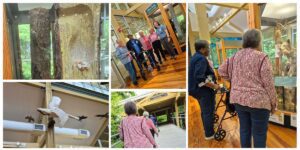
June 16, Tyrrell County Seniors Refuge Program: NCWF and Pocosin Lakes National Wildlife Refuge hosted a group of seniors from Tyrrell County for a special introduction program to the refuge at the refuge visitor center in Columbia. So many wonderful questions were asked about the refuge and the diverse species of wildlife that it supports. Guests especially enjoyed viewing the Red Wolf exhibit that features two of the original Red Wolves that were released on Alligator River National Wildlife Refuge in 1987.
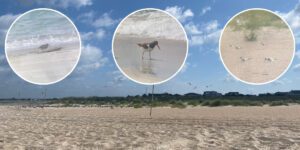
June 18, Nesting Shorebird Survey at Wrightsville Beach:1 American oystercatcher, 2 willets, 2 ruddy turnstones, 7 laughing gulls, 4 ring-billed gulls, 320 black skimmers, 147 least terns, 10 common terns, 4 sandwich terns, 13 royal terns, 1 great blue heron, 10 brown pelicans, 1 osprey, 1 bald eagle, and 2 barn swallows.
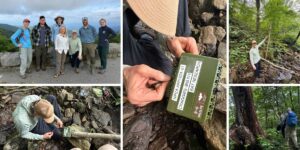
June 18, Craggy Mountains Bat Monitoring: Of the 17 species of bats in North Carolina, four are federally endangered and 12 are identified as Species of Greatest Conservation Need. Many of these species – including the federally endangered gray, Indiana, northern long-eared, and Virginia big-eared bats rely on mature, intact forests for roosting and foraging. Pisgah National Forests contain some of the best available habitat for these at-risk bat species. It’s imperative that we protect this habitat in order to protect the amazing diversity of wildlife that these forests support. Conducting surveys in the National Forests and other natural areas to determine bat distribution is an integral component of protecting at-risk bat species and the habitat they call home. North Carolina Wildlife Federation, National Parks Conservation Association, and other partners are working together to survey for at-risk bat species in some of the last remaining patches of old-growth forests and maturing second-growth forests in North Carolina. Our collective goal is to fill area-specific knowledge gaps to provide the best available information for future decision-making in forest management and conservation efforts. To achieve this goal, we are deploying ultrasonic recording units at suitable locations within our study area – the Craggy Mountains – a 16,000 acre portion of Pisgah National Forest. The data will be analyzed using SonoBat – a U.S. Fish and Wildlife Service approved bat call analysis software.
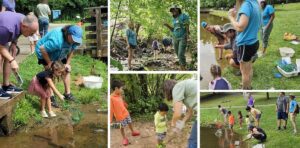
June 19, HAWK River Critters & Pond Pals: NCWF Habitat And Wildlife Keepers Chapter partnered with Great Outdoors University to engage youth and families in a pond and stream exploration. Kids of all ages had fun in the sun exploring aquatic wildlife at Squirrel Lake Park in Matthews. Folks caught fish, tadpoles, and aquatic invertebrates. Participants left with wet hands, wet feet, and smiles on their faces!
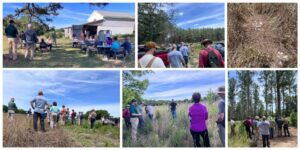
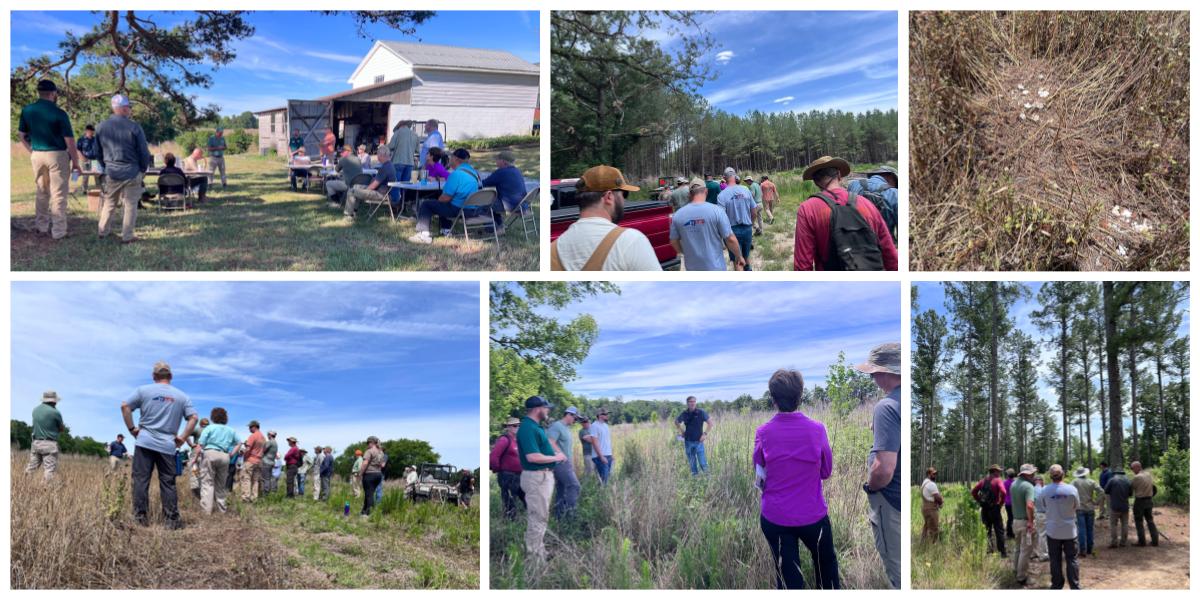
June 20, NCWF Deer, Turkey, and Beyond Private Land Workshop: NC Wildlife Resources Commission and NCWF hosted a workshop to teach landowners how to manage habitat for deer and turkey. The tour began with tips for managing early successional habitat by providing forage and brooding areas and ended with tips for managing forests for game species. Highlights of the day included an albino deer and a predated turkey nest spotted in one of the food plots. The day was a fantastic networking opportunity for landowners and experts alike and a crash course in managing private lands for wildlife.
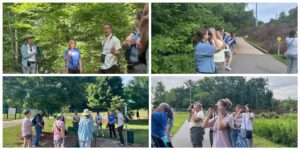
June 20: CWA Guided Bird Walk: NCWF Carolina Wildlife Alliance Chapter invited Dr. Tony Lombardino, who holds a PhD in Neuroscience, to Hector Henry Greenway for a beautiful walk. Participants were encouraged to use their ears as well as eyes to identify local birds. Some species of note were the Red-eyed Vireo and Indigo Bunting.
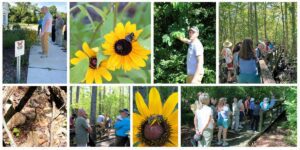
June 20, Native Plant Walk at Camden County Public Library: NCWF Wildlife Habitat Stewards of Northeastern NC Chapter hosted a guided native plant walk at the Camden County Public Library. Matt Hilton, owner of Big Cypress Natives and chapter board member, led the group and talked about the native plants chosen for the library’s Butterfly Highway pollinator garden and why they are significant for wildlife and an overall healthy ecosystem. Folks then crossed the street where the tour continued on the Senior Boardwalk Trail, where the group identified and discussed the native and non-native plants that make up this beautiful habitat along the Pasquotank River.

June 20-21, Bird Banding at Greenfield Lake: NCWF and Cape Fear Bird Observatory used mist nets to capture and survey songbirds at Greenfield Lake. A Carolina chickadee, Northern cardinals, grey catbirds, Carolina wrens, and a brown thrasher were caught, with over 20 species calling at the lake’s edge. Birds are surveyed for scaly leg, fungus, injuries, and diseases that cannot be tracked from distant visual observations. All bird banding is conducted under permits issued by the U.S. Geological Survey.
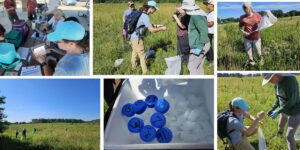
June 22, NCWF Bumble Bee Atlas: NCWF partnered with the Central Carolinas Master Naturalist Program and NCWF Charlotte Wildlife Stewards Chapter to participate in the Southeast Bumble Bee Atlas at Clarks Creek Nature Preserve in Charlotte. The Southeast Bumble Bee Atlas is a community science project led by the Xerces Society to track bumble bee populations across the Southeast. Volunteers collected 35 bumble bees representing three different species. The majority of the bees were collected while visiting wild bergamot (Monarda fistulosa), a proven pollinator magnet.
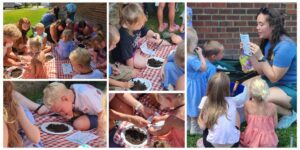
June 23, Soil Detectives!: NCWF partnered with Tyrrell County Library as part of their “Unearth a Story” Summer Reading Program to lead a soil-themed program for preschoolers and their families. Participants became soil detectives as they searched through nutrient-rich soil to discover all different types of critters and natural materials. What was the story they unearthed you might ask? The story is that we humans are incredibly connected to soil and it’s important that we acknowledge that we share the soil beneath our feet with wildlife communities of all shapes and sizes and that they help keep the soil healthy for the plants we all need to survive!
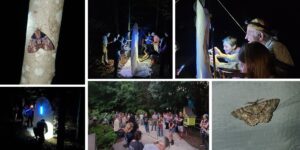
June 23, CWS Moth Night: NCWF Charlotte Wildlife Stewards Chapter joined Mecklenburg County Natural Resources staff to celebrate National Pollinator Week with Moth Night at Reedy Creek Nature Preserve. A large crowd, including many first-time “mothers”, showed up to participate, and folks were not disappointed. Grapevine loopers, tulip-tree beauties, grass tubeworm moths, and even a false underwing made an appearance. The clouded underwing was the highlight for many!
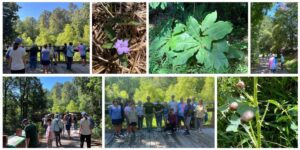
June 24, NRHC Dunn Creek Greenway Nature Walk: NCWF Neuse River Hawks Conservationists Chapter went on a nature walk along a new section of the Dunn Creek Greenway in Wake Forest. Chapter leaders led the group along the greenway, pointing out invasive and native plants along the way. Participants saw an owl, red-tailed hawk, and lots of umbrella magnolias (a species more common in the mountains). The walk concluded at a small stormwater stream that the chapter hopes to fill with native plants in the fall.

June 24 and 28, Grandfather Mountain and Valle Crucis Pollinator Popup Programs: High Country Wildlings, a youth initiative program of NCWF High Country Wild getting kids outside connected to nature, celebrated pollinator week at Grandfather Mountain and Valle Crucis Park! Alongside the Xerces Society and Grandfather Mountain’s team of naturalists, the Chapter helped guide activities to learn more about native pollinators, why they are important, and what we can do to support them. A few days later, High Country Wildlings hosted more pollinators programs at Valle Crucis Park. Engaging kids and adults in pollinator themed activities to raise awareness for pollinators and spread the word about what we can do to protect them!

June 24, NABat Survey, Beaufort County: To support NC Wildlife Resources Commission’s NABat community science program, NCWF went out in the field to Beaufort County with a local volunteer to conduct an acoustic survey. It didn’t take long after sunset to begin spotting bats swooping down across the dimming sky in search of flying insects! Using an echometer for this survey, species including Seminole bats, tri-colored bats, big brown bats, and little brown bats were observed. This survey data is submitted to state biologists to assist their research as they track changes in population trends across North Carolina. To learn more about how you can get involved, visit https://nc-wild.org/nabat/.

June 25, Pollinator Pitstop Maintenance Day: Pollinator pitstop crew volunteers with NCWF Wildlife Habitat Stewards of Northeastern NC Chapter came together to check on several community Butterfly Highway pollinator gardens in the area and helped remove unwanted weeds and invasive plants so that visitors of all ages can enjoy observing the native plants and variety of wildlife that depend on them. Volunteers were thrilled to see multiple species of bees, wasps, and butterflies enjoying the native blooms!
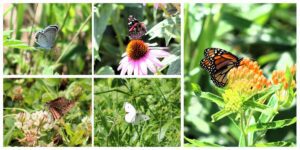
June 26, Carolina Butterfly Monitoring Program Survey: NCWF Wildlife Habitat Stewards of Northeastern NC Chapter spent the day conducting butterfly surveys as part of the Carolina Butterfly Monitoring Program. Species observed included monarchs, short-tailed blues, red admirals, cabbage whites, and Horace’s duskywings. These surveys provide valuable data to researchers who are studying butterfly habitat and population trends across North Carolina. What an impactful way to support and celebrate pollinator conservation during Pollinator Week!

June 27, Hands on Forestry Workshop: The North Carolina Wildlife Federation alongside EcoForesters and Southern Appalachian Highlands Conservancy hosted a hands-on forestry workshop all about invasive species identification and control at Bowditch Bottoms in Yancey County. Invasive plant species control is a critical step in promoting a well-rounded ecosystem. By taking action to control and eradicate invasive plant species, we can help protect native biodiversity, restore ecosystem functionality, and ensure a healthier and more balanced natural world for both people and wildlife. Thanks to all the engaged workshop participants for all the great questions and for taking action for wildlife and habitat!

June 27, CWS Pollinator Workday: The Pollinator Pitstop installed at Veterans Park in Charlotte is flourishing, and so is the Bermuda grass and other weeds. NCWF Charlotte Wildlife Stewards Chapter and Central Carolinas Master Naturalist volunteers showed up in full force to weed and mulch this 1,000 square foot habitat!
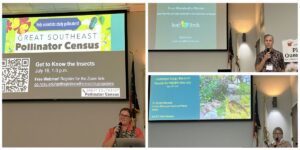
June 27, Backyard to Biodiversity Pollinator Symposium: To close out Pollinator Week, several NCWF Wildlife Habitat Stewards of Northeastern NC Chapter board members engaged in a continuing education opportunity at the Nash County Master Gardeners’ Pollinator Symposium where the focus was backyard biodiversity. Attendees learned more about how native plants can transform everyday spaces into thriving wildlife habitat. The chapter strives to bring this knowledge and experience to communities across northeastern NC and looks forward to sharing new information that they learned and applying it to projects and educational events across the region!
Written by:
– Page Turner, Conservation Coordinator
– Laura Neitzey, Refuge Conservation Coordinator
– Alden Picard, Conservation Coordinator
– Kara Solomon, Conservation Coordinator
– Luke Bennett, Conservation Coordinator

– Mary Bures, VP of Outdoor Engagement