
NCWF In The Field – May, 2026
North Carolina Wildlife Federation staff and Community Wildlife Chapters connected 1,256 people to nature through 39 wildlife and habitat events and activities in May, including:
- Planting 257 native trees and plants – including blueberry, Lobelia, milkweed, wax myrtle, buttonbush, switchgrass, river oats, and more to support birds, pollinators, and other wildlife
- Removing 100 pounds of trash from habitats across the state, helping keep urban, woodland, and aquatic ecosystems clean and healthy
- Hosting a wide range of educational and hands-on experiences such as pollinator habitat maintenance, frog walks, community science projects, native plantings, invasive species removals, and more
- Engaging staff and volunteers from the Blue Ridge to Cape Lookout in meaningful conservation work, getting hands dirty and feet wet to improve wildlife habitat
- Providing opportunities for people of all ages across the state to connect with nature, learn about wildlife and habitat, and make a tangible impact alongside NCWF Community Wildlife Chapters and conservation partners
Explore our Events Calendar to discover where NCWF and our Community Wildlife Chapters are hosting in-person and virtual events near you. Check out a few highlights below from our conservation outreach team.

May 2, Annual Chapter Caucus: NCWF welcomed Community Wildlife Chapter leaders from across the state to the annual in-person Chapter Caucus at the 2026 Governor’s Conservation Achievement Awards. Over 30 chapter leaders participated in team-building, discussions, and the sharing of ideas and resources to improve chapter impact in their communities.
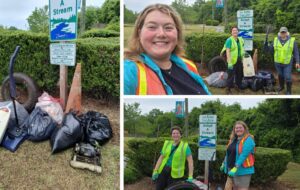
May 2, Village Greenway & Stream Cleanup: NCWF Concord Wildlife Alliance Chapter hosted their annual litter sweep along Academy Branch, a tributary of Buffalo Creek that runs along the Village Greenway in Concord. Volunteers braved the weather and removed nearly 100 lbs of trash, including a tire and parts from three different vacuum cleaners! Kudos to these dedicated volunteers!
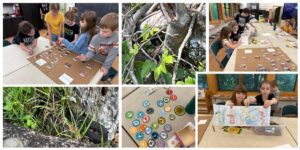
May 5, Case of Misssss-Snaken Identity with ecoEXPLORE: NCWF and Pocosin Lakes National Wildlife Refuge slithered into the world of “misssss-snaken” snake identifications for this month’s ecoEXPLORE collaboration. Families learned about commonly misidentified snake species and put their snake knowledge to the test through a matching activity that divided local snake species into venomous and non-venomous categories. We learned more about why ALL snakes play an important role in a healthy ecosssssystem and enjoyed a stroll along the Scuppernong River to look for camouflage snakes in their natural habitat!
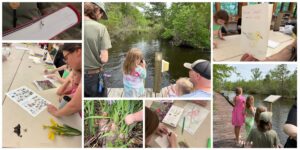
May 6, Birdwatching Nature Journals & Scavenger Hunt: NCWF, Pocosin Lakes National Wildlife Refuge, and Pocosin Arts School of Fine Craft celebrated our last art and nature collaboration of the season by enjoying a guided bird walk/scavenger hunt along the Scuppernong River Interpretive Boardwalk where we observed prothonotary warblers, great crested flycatchers, common yellowthroats, pine warblers, and a great blue heron along with yellow-bellied sliders, a Carolina mantis, and a broad-headed skink. Following the walk, participants created detailed journal entries, detailing the field marks of the species they observed!
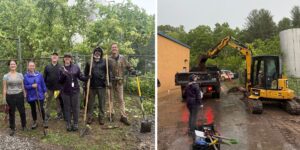
May 6, Bingham Road Habitat Workday: NCWF ReWild AVL broke ground on a habitat restoration project at the City of Asheville Water Resources Department on Bingham Road. The crew worked hard in the rain to remove invasive plants and prep the area for a native planting. The workday was a huge step forward on our way to transforming this concrete desert into habitat for wildlife and a space for people to enjoy and connect with the outdoors. Big thanks to the volunteers and the City of Asheville for all their support!
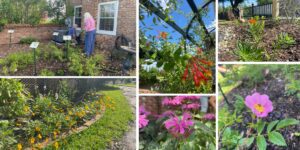
May 6, Meet the Gardeners: NCWF Habitat Stewards and Master Gardener volunteers maintained the native gardens at Latimer House, weeding between blooming Carolina rose (Rosa caroliniana), butterfly milkweed (Asclepias tuberosa), bee balm (Monarda didyma), and coral honeysuckle (Lonicera sempervirens).
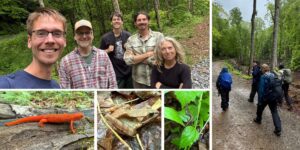
May 7, Cerulean Warbler & Avian Diversity Study: The North Carolina Wildlife Federation led volunteers in the field to monitor and record cerulean warblers within Craggy Mountains – Pisgah National Forest where the presence of ceruleans and many other avian species is largely unknown. The survey is a collaborative effort between the North Carolina Wildlife Federation, National Parks Conservation Association, the Center for Biological Diversity, Defenders of Wildlife, MountainTrue, and the N.C. Wildlife Resources Commission with support from the U.S. Forest Service.
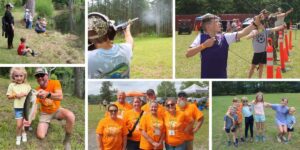
May 9, Youth Day: Over 500 youth and adults joined NCWF Gaston PAWS Chapter and Gaston County Ducks Unlimited to participate in Youth Day. This Free event at Wood Duck Farm in Gastonia gets families outside enjoying fishing, skeet shooting, frisbee golf, games, and more. Folks enjoyed great food, snow cones, and rock climbing while connecting with nature and the outdoors!

May 9, Wild Neighbors Library Tour: NCWF Swannanoa Valley Wild and the Friends of the WNC Nature Center got WILD at the Swannanoa Public Library. Kids of all ages had the opportunity to meet reptile and amphibian animal ambassadors as we explored the important connection between wildlife and habitat. After our animal ambassador program, we ventured into the garden for hands-on activities taking action for pollinators and native plants.

May 9, Green Swamp Tour: NCWF and the Sierra Club Croatan chapter hosted outdoor enthusiasts from out of and across the state for a glimpse of the many rare carnivorous plants and orchids at Green Swamp Preserve. Blooming pogonias (Cleistesiopsis oricamporum, Pogonia ophioglossoides), bladderworts (Urticularia subulata, Urticularia striata), and butterworts (Pinguicula caerula, Pinguicula lutea) decorated the trail edges. Sundew (Drosera brevifolia, Drosera capillaris, Drosea intermedia) rosettes and the early developing flower stems from venus flytraps (Dionaea muscipula) captured the attention of the curious. Many varied blooms from purple, sweet, and yellow pitcher plants (Sarracenia purpurea, Sarracenia flava, Sarracenia rubra) drooped over clumps of wiregrass (Aristida stricta), Southern bayberry (Morella caroliniensis), and coastal plain St. John’s wort (Hypericum brachypyllum).

May 9, NRHC Stonemill Falls Invasive Removal and Trash Cleanup: NCWF Neuse River Hawks Conservationists Chapter held a stream cleanup and invasive plant removal along Sanford Creek in Wake Forest. Volunteers picked up trash and removed invasive Japanese honeysuckle, Chinese privet, and Japanese stiltgrass. At the end of the workday, participants were treated to a common watersnake sunning itself on this unique granite rock outcropping.
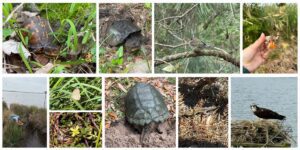
May 10, Pine Island Audubon Sanctuary BioBlitz: Community volunteers, naturalists, and scientists from around the state came together to participate in NC Audubon’s Pine Island Audubon Sanctuary’s 2026 BioBlitz event in Corolla! NCWF staff and a local Wildlife Habitat Stewards of NE NC chapter leader were happy to contribute to this data collection initiative to assist the sanctuary with their management efforts.
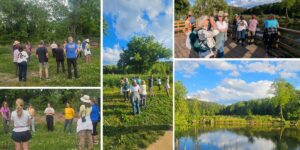
May 13, Birds, Habitat, & Community: NCWF ReWild AVL hosted an awesome event at Karen Cragnolin Park along the French Broad River in Asheville. A special thank you to our wonderful partners and speakers: Amy Jackson for leading such an engaging bird walk and sharing her expertise in bird identification. Emily Sampson of Patchwork Meadows for teaching us about the native meadow installation and the importance of restoring habitat with native plants. And Hannah Coats of RiverLink for sharing the incredible restoration story of Karen Cragnolin Park. We learned that the site was once a junkyard covered by roughly an acre of concrete, among other contaminants before restoration began in 2006. After nearly 15 years of soil remediation work, meadow installation efforts began in 2023. Even after portions of the park experienced flooding during Helene — with areas submerged under approximately 15 feet of water and covered in several inches of sediment — native grasses rebounded quickly, demonstrating the resilience of healthy native ecosystems
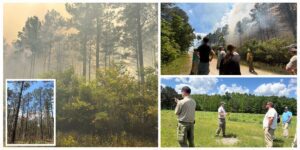
May 13, NC Certified Burner Training Field Day: NCWF staff and Wildlife Habitat Stewards of NE NC Chapter leaders completed the first step in their NC Certified Burner Training on May 11-13. For those attending the field day in Gates County, we were able to view a 24 acre site at Merchants Millpond State Park where prescribed fire has been used to manage an open field habitat for wildlife. Conditions for prescribed burning were ideal on the training day which provided us with the opportunity to go out to an active burn on Chowan Swamp Game Land with NC Wildlife Resources Commission. We’re excited to bring the knowledge gained in this course to our habitat management toolbox in northeastern NC
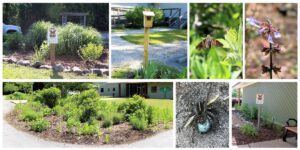
May 13, Butterfly Highway Garden Maintenance Day: NCWF Wildlife Habitat Stewards of Northeastern NC Chapter visited three of their local community Butterfly Highway pollinator gardens for routine maintenance and seasonal cleanup. Chapter volunteers have played a central role in establishing sites at Dismal Swamp State Park, Dismal Swamp Canal Visitor Center, and Merchants Millpond State Park and they continue to support the long-term success of these habitats as part of their regional pollinator conservation initiative.

May 14, Frog Walk: Wildlife enthusiasts joined NCWF Union County Wildlife Chapter for a frog walk at Cane Creek Park in Waxhaw. Participants ventured out at dusk to listen and look for frogs and other amphibians around the 350-acre lake at the park!
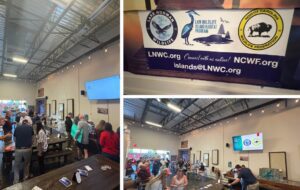
May 14, Island Habitat Social: The Lake Norman wildlife community had a great evening at Eleven Lakes Brewing during the NCWF Lake Norman Wildlife Chapter’s Island Adopter Social event. Volunteers adopted many new islands across Catawba, Mecklenburg, Iredell, and Lincoln counties. A special shoutout to Lake Norman Wildlife sponsors, Eleven Lakes Brewing and Safe Harbor Westport, for supporting the event and donating the grand raffle prize!

May 14, SWC Invasive Removal: NCWF South Wake Conservationists Chapter, in partnership with Wake Audubon, held an invasive removal workday at Carroll Howard Johnson Environmental Education Park in Fuquay-Varina. After a season of removing invasives from this section of the park, the understory has now been opened up! Volunteers cut Chinese Privet, revealing a number of hidden treasures like pawpaw and 10 species of ferns that had been smothered by invasive plants. Planning continues at this park for future invasive removal efforts and planting projects as areas are opened up and freed of invasives.
May 14, Wilmington’s Hidden Gem: Greenfield Lake: Extension agents from over 30 states convened in Wilmington for the ANREP conference. Their field trip to Greenfield Lake included a wildlife kayak tour, viewing eight American alligators and many grackles, woodpeckers, and songbirds in the cypress dome ecosystem. On shore, they planted over 250 native plants in the park’s first native plant garden by the boathouse overlook. 14 species were chosen for floodplain resilience and water filtration to transform the garden bed from an ornamental landscape to an ecological hotspot.
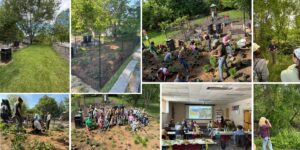
May 15 – 17, High Country Wildlife Habitat Steward Training: NCWF High Country Wild hosted Western NC’s first Wildlife Habitat Steward training in Boone. 25 participants spent the weekend engaged with experts in the field on a variety of topics as we learned about the interconnectedness of wildlife, habitat, and people. We took a closer look at local ecology and how to restore ecological function. We discovered the foundational nature of native plants and the abundance of opportunity right outside the door in our backyard and community spaces. We learned how to conduct site assessments and how to apply our knowledge by completing a habitat installation at the Town of Boone’s North Street Park! What was once 500 square feet of grass is now a bountiful native plant garden featuring over 200 native plants thanks to our friends at Carolina Native Nursery in Burnsville. We planted New England aster, blue wild indigo, blazing star, anise hyssop, purple coneflower, and more in an effort to plant the seed for conservation in the High Country.

May 16, DWS Sandy Creek Nature Walk: NCWF Durham Wildlife Stewards held a nature walk in Sandy Creek Park. Wildlife enthusiasts strolled through the park, listening and looking for birds, beavers, amphibians, and other wildlife as they walked. The many herons that nest and roost in the park, including Great Blue Herons and Yellow-crowned Night Herons, were among the favorites of the morning!
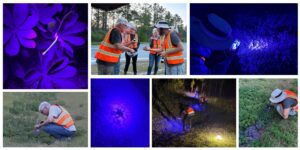
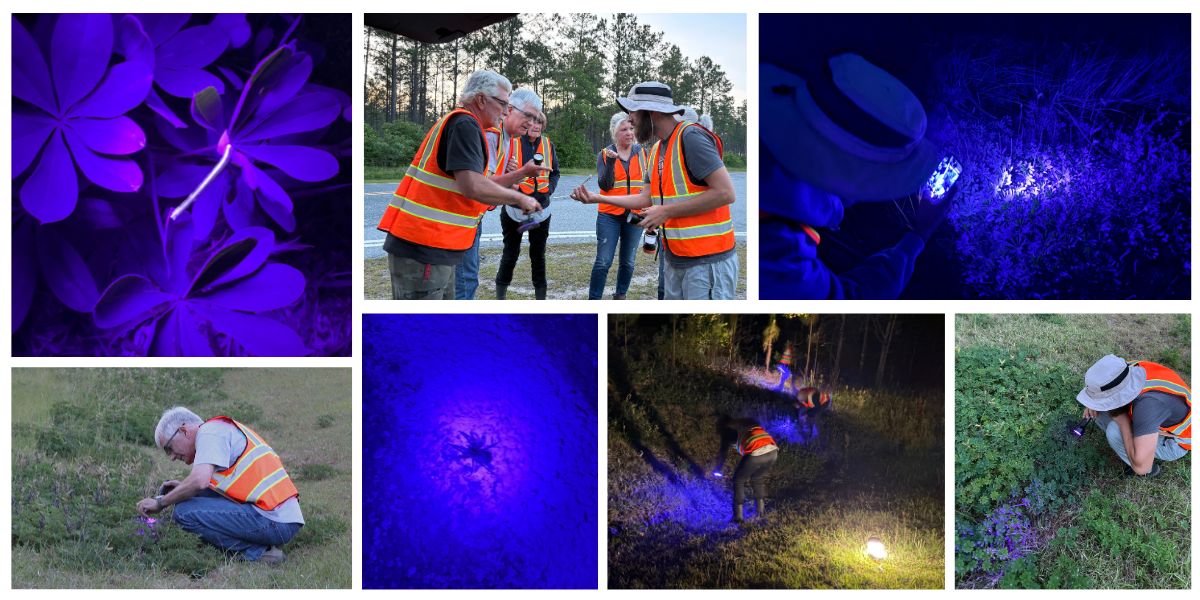
May 16, Frosted Elfin Caterpillar Survey: NCWF Wildlife Habitat Stewards of Northeastern NC went out to Chowan Swamp Game Land to continue their support for frosted elfin monitoring efforts, but this time, they went out in search of bioluminescent elfin caterpillars. Black lights in hand, volunteers scanned the tops of the sundial lupine flowers, where the caterpillars are most often observed feeding, with hopes of seeing a glowing caterpillar on their host plant. No frosted elfin caterpillars were spotted, but volunteers enjoyed the evening sounds of birdsong from species like Eastern whip-poor-wills, summer tanagers, and Chuck-will ’s-widow–North America’s largest nightjar, that breeds in North Carolina’s coastal and piedmont oak and pine woodlands.

May 16, Leland in Bloom: Habitat stewards tabled for Butterfly Highway at Leland in Bloom, educating new residents in Leland about local native plants and the importance of gardening for wildlife!

May 16, SWC Wild About Nature: NCWF South Wake Conservationists Chapter tabled at the Wild About Nature Festival in Holly Springs. Participants learned about beavers, animal tracks, and the many types of wildlife habitat found across the state. As an added bonus, a select few native plants were available for folks to take home. Kids and adults alike enjoyed the chapter’s wildlife and habitat matching game, animal track casts, beaver pelt, and wildlife trivia!
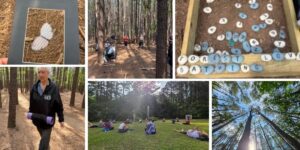
May 17, Forest Bathing: A dedicated group of tree lovers joined NCWF Habitat and Wildlife Keepers Chapter for a Forest Bathing workshop at Purser-Hulsey Park in Matthews. Participants were guided into nature and invited to engage all 5 senses during this hands-on introduction to forest therapy.

May 21, NRHC Monthly Nature Walk: NCWF Neuse River Hawks Conservationists Chapter went on a nature walk through a local member’s pollinator garden and down to Horseshoe Creek. The group was invited to tour this native plant oasis for inspiration for their own yards. Participants then continued down to explore a nearby creek connected to a local nature preserve.
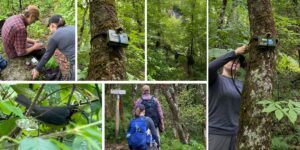
May 21, Cerulean Warbler & Avian Diversity Study: The North Carolina Wildlife Federation led volunteers in the field from Hemlock Restoration Initiative to monitor and record cerulean warblers within Craggy Mountains – Pisgah National Forest where the presence of ceruleans and many other avian species is largely unknown. The survey is a collaborative effort between the North Carolina Wildlife Federation, National Parks Conservation Association, the Center for Biological Diversity, Defenders of Wildlife, MountainTrue, and the N.C. Wildlife Resources Commission with support from the U.S. Forest Service

May 22, SWC Rooftop Garden Workday: NCWF South Wake Conservationists Chapter’s Eco Kids gardening project on the roof of the Southeast Raleigh Elementary School held their final hands-on workday before summer break. Everyone was excited by how big the pollinator plants had grown in such a short time! Students got their hands dirty and harvested fresh vegetables that they got to take home. Students also left with a certificate of accomplishment and a packet of Butterfly Highway seed mix gifted by the chapter. Activities with students will resume in the fall, but maintenance will continue over the summer–stay tuned if you are interested in lending a hand!

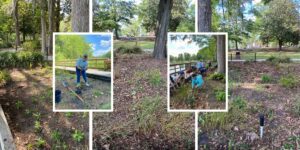
May 23, Pollinator Workday: NCWF Charlotte Wildlife Stewards Chapter joined forces with Central Carolinas Master Naturalist volunteers and other community volunteers to do some maintenance work on Pollinator Pitstop at Veterans Park in Charlotte. Volunteers removed Bermuda grass, weeded borders, and added compost and mulch to the native plants. Volunteers left wet, dirty, and happy to put in the work!.
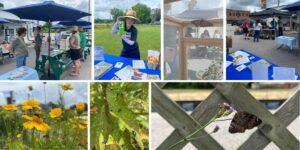
May 23, SSS Monarch Meet-Up: The Southeastern Swamp Stewards chapter hosted the 5th annual Monarch Meet-Up at Penn’s Grill in Whiteville. Visitors got to see the Butterfly Highway Pitstop in bloom, buzzing with pollinators. A freshly emerged monarch butterfly dried its wings and visitors were able to purchase native plants from vendors and celebrate our pollinators with some butterfly-themed arts and crafts.

May 26, Pollinator Garden Workday: NCWF Uwharrie Wildlife Steward Chapter leaders and volunteers joined forces to work in the pollinator garden at South Stanly Middle School. The garden is home to many native plant species and serves as a Pollinator Pitstop along the Butterfly Highway. Volunteers got their hands dirty weeding and mulching the Schoolyard Habitat.
Written by:
– Page Turner, Conservation Coordinator
– Laura Neitzey, Refuge Conservation Coordinator
– Alden Picard, Conservation Coordinator
– Kara Solomon, Conservation Coordinator
– Luke Bennett, Conservation Coordinator
– Mary Bures, VP of Outdoor Engagement