
Fox Creek Park: A Story of Restoration, Ecology, and Community
It’s a Sunday afternoon in late March at Fox Creek Park in the heart of Swannanoa. Unseasonably warm without a cloud in the sky. The park is springing back to life as the elderberry cranes toward the sunshine and the tulip poplar and white oak leaves begin to unfurl and coat the park in a fresh green glow. All is quiet aside from a lawn mower roaring off in the distance and the resident red-shouldered hawks crying overhead as they protect their newly laid eggs from pesky blue jays. Within the relative silence, the park is humming with life. Hundreds of plant and animal species are emerging, hunting, feeding, and foraging. Taking advantage of this small and vital pocket of habitat, heightened by one of the first warm days of spring sparking an urgency to survive, grow, and reproduce.
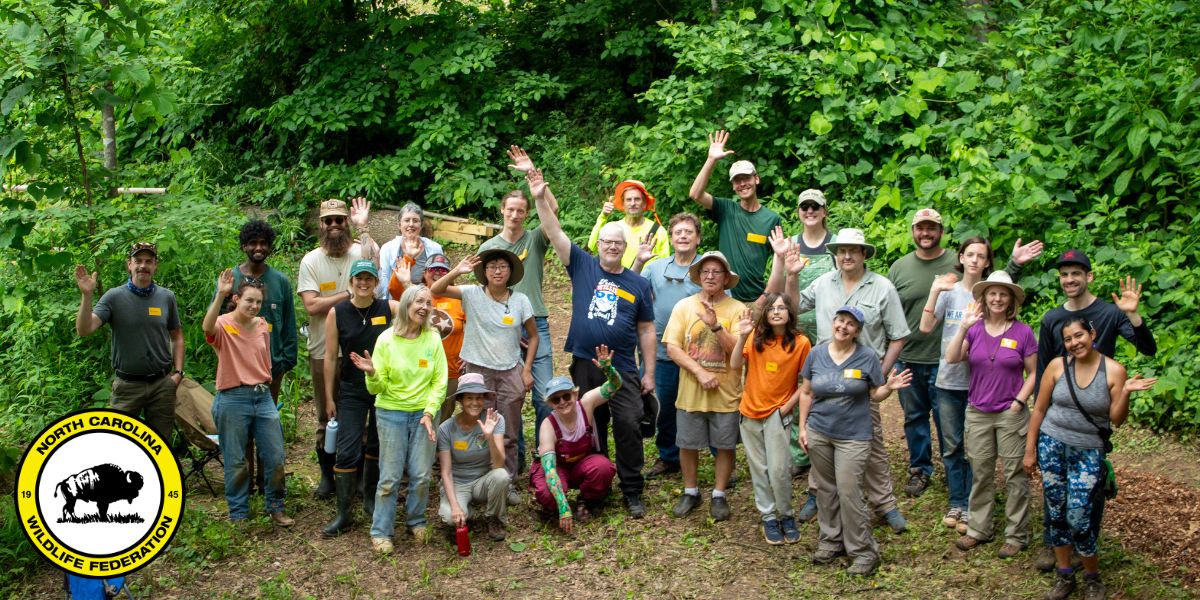
An unassuming red E-Z Up tent propped up in the middle of the park signifies that today is special. Today is a Fox Creek Park workday. And not just any workday! It’s the annual Whiffle Dodger Day where neighbors, friends, and family gather at the two-acre park to get a little dirty, parade down the trails, clap hands to live music, and share a meal fit for royalty. Deep in the forests of western North Carolina, there is said to be a small, mysterious creature known as “The Swannanoa Wiffle-dodger.” This mysterious (likely mythical) creature serves as the perfect ambassador for the day. Embodying the wild, joyful, and maybe slightly absurd spirit of Fox Creek Park. Perfectly complementing the vast amount of running jokes such as the coffin toolbox and yellow duct tape nametags that color the workdays with laughter and camaraderie.
And today we celebrate progress at Fox Creek Park. We celebrate grassroots conservation in action and a thriving community dedicated to showing up and pitching in. And we have already seen tremendous progress! A comeback story not even Hollywood could replicate. Fox Creek Park was once choked out in invasive kudzu then devastated by Helene as the storm deposited silt, altered the creekbed, scattered debris, and allowed invasive species like kudzu and multiflora rose to continue their foothold and overtake the creekbanks. Most communities would throw up their hands, throw in the towel and succumb to apathy. But not Swannanoa and not Fox Creek Park.
Within a few months after Helene, volunteers returned to the park – removing invasive plant species, clearing debris, building trails, and reconstructing bridges all while maintaining a deeply engrained, unshakeable optimism. This continued for months and months, with volunteers working tirelessly to restore Fox Creek. The work was by no means glamorous… but absolutely necessary to revive the park’s critical ecological function for wildlife. A critical step to renewing the community’s connection to nature and essential to reinvigorating and bringing the community together with a shared purpose.
People and organizations began to take notice of what was going on at Fox Creek. It’s hard to ignore dozens of volunteers taking time out of their weekend to bake in the sun and rip out kudzu. The support network both in and outside of the community began to grow and expand as the story resonated. North Carolina Wildlife Federation and our local chapter, Swannanoa Valley Wild, jumped in head first to work alongside the Friends of Fox Creek Park. Welcomed with open arms, we began to pool resources and explore possibilities for the future. Working together to achieve a common mission of showcasing Western North Carolina ecology and wildlife through educational opportunities, grassroots conservation, and active stewardship at Fox Creek Park. The mission, momentum, and community buy-in attracted more partners, including two partners in particular who recently got on board and helped turn our dreams into reality: The Pigeon River Fund of The Community Foundation of Western North Carolina and National Wildlife Federation’s Trees For Wildlife™ Program.
These organizations have been instrumental in the recent progress at Fox Creek Park. In the past year through their support, we’ve nearly eradicated the kudzu along the creekbank, planted over a thousand native tree and shrub livestakes, sowed over 10 pounds of native wildflower seeds, engaged over 100 volunteers, and provided multiple opportunities for the Swannanoa community to connect with nature and wildlife through meaningful environmental education programs at Fox Creek Park led by local experts.
Today, Fox Creek Park supports a diversity of plants and animals – pale jewelweed, spicebush, tulip poplar treasure trees, mountain doghobble, Eastern screech owls, migratory warblers, summer azure butterflies and luna moths, mining bees, red foxes, star-nosed moles, black bears, red and mud salamanders, snakes (yes, snakes), crack capped polypores, and so much more that thrive in the recovering habitat.
If you take a stroll along Fox Creek, you’ll immediately notice the transformation and abundance of life. Stay long enough and you’ll likely run into a friendly face, and a neighbor will hand you a shovel to continue the work. Fox Creek Park is a testament to the fact that measurable progress happens when communities come together to heal both the land and water. Measurable progress happens when communities step outside and show up – and at Fox Creek Park, this community will continue to show up because the work for wildlife, habitat, and community will never be done. There’s always more to do, but when you’re working alongside people you care about in a place that means so much, it feels less like work and more like something else. It feels like something deeper and more foundational, something we want to define but can’t quite find the words. Call it hope. Call it resiliency. At Fox Creek Park, it’s second nature.
Please enjoy a few highlights below from Fox Creek Park this past year!
Removing Invasive Kudzu, Privet, & Multiflora Rose
Invasive plant species form dense monocultures, crowding out native vegetation and reducing biodiversity. At Fox Creek Park, we worked directly with Raven Invasive Plant Management alongside volunteers to mechanically remove invasive plant species along the creekbank without the use of chemicals. This took numerous workdays over the course of multiple seasons. We have already seen positive results as native plant species like elderberry and jewelweed are starting to repopulate the creekbank. Invasive plant species removal is a critical step in promoting a well-rounded ecosystem. By taking action to control and eradicate invasive plant species, we can help protect native biodiversity, restore ecosystem functionality, and ensure a healthier and more balanced natural world for both people and wildlife.
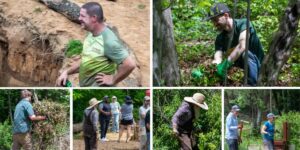
April, 2025 – Volunteers from the neighborhood gather for an invasive plant species removal workday at Fox Creek Park.
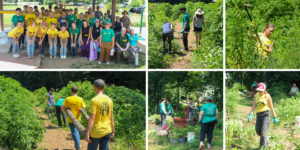
June, 2025 – High School students and volunteers from the neighborhood gathered at Fox Creek Park to remove invasive plant species and help out with the extensive trail building effort and invasive plant removal operation.
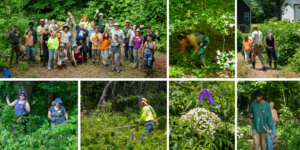
June, 2025 – Volunteers from the neighborhood gather for an invasive plant species removal workday at Fox Creek Park.
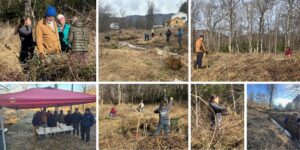
January, 2026 – Neighborhood volunteers worked alongside Raven Invasive Plant Management to remove a huge portion of invasive kudzu along Fox Creek.
Planting Native Trees, Shrubs, & Wildflowers
Native plants are acclimated to the region and help native wildlife through interdependent and mutually beneficial relationships. Wildlife often rely on specific native plant species for food and shelter to survive and reproduce. In addition to providing habitat for wildlife, the roots of native plants reduce erosion, keeping soil in place in riparian areas and helping to improve water quality by intercepting pollutants and reducing sedimentation in streams and rivers. Planting native plants in bare areas is also effective at reducing the spread of invasive plant species. While native plants along the water’s edge provide shade, resulting in cooler temperatures and more favorable conditions for aquatic wildlife. At Fox Creek Park we planted over a thousand native tree and shrub livestakes including ninebark, buttonbush, elderberry, viburnum, and silky willow along with sowing over 10 pounds of native wildflower seeds to support insect populations and pollinators at the park.
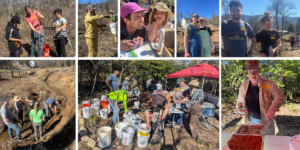
February, 2026 – Volunteers from the neighborhood spent the day planting native trees and shrub livestakes along Fox Creek. This was a significant moment following the incredible amount of invasive kudzu that’s been removed along the creek in preparation for a native planting. Chris from WNC Grows provided an excellent demonstration on how to harvest and plant livestakes. After the work was done, volunteers were treated to free plants and a freshly cooked meal.
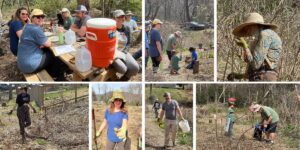
March, 2026 – Neighborhood volunteers gathered at Fox Creek Park to spread wildflower seeds.
Hosting Environmental Education Programs
The nature deficit is a growing problem and affects both children and adults. Getting people outdoors improves physical well-being, cognitive abilities, makes them feel less anxious, more attentive, and encourages problem solving and creativity. Research also shows that if people do not explore the natural world and experience learning and playing outdoors, they are less likely to become the future leaders for conservation so crucial to our environment and general future. Artist Carolina Corona, Naturalist Luke Cannon, and Forester Chris DeFiore all hosted programs at Fox Creek this past year. Experts in their field, inspiring us to all take a closer look at the natural world each through a different lens. Opening our eyes to the wildlife and habitat at Fox Creek Park worth celebrating and protecting.
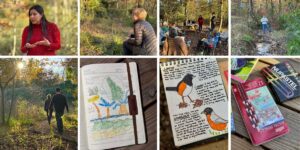
November, 2025 – Carolina Corona of Corona Fine Art was our guide as we walked, observed, sketched, and reflected at Fox Creek Park. Nature journaling is a life changing practice that deepens one’s connection with nature and establishes a greater sense of place. It uses writing, drawing, and numbers to help us slow down, pay attention, foster curiosity, and build a more robust memory and understanding of the natural world.
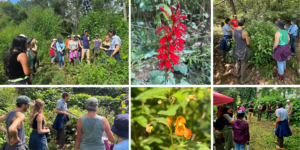
August, 2025 – Luke Cannon revealed the hidden wonders of the natural world, from the sweet surprise of jewelweed blossoms to the aromatic spicebush and the resilient black walnut (impossible to crack unless you have a turkey gizzard!). This immersive experience reminded us that Fox Creek is a thriving sanctuary for wildlife, a space to unwind and appreciate, and a haven for human connection.
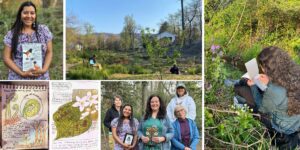
April, 2026 – Carolina Corona of Corona Fine Art came out for round two of nature journaling at Fox Creek Park. Inspiring the community to slow down, walk, observe, sketch, and reflect.
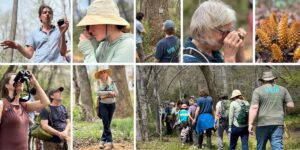
April, 2026 – We explored all things WILD! at Fox Creek Park with Luke Cannon. We experienced the songs of the brown thrasher, stories of an old black locust tree, travels of a crack capped polypore fungus, and adventures of a mischievous groundhog. All while the park’s resident red shouldered hawks cried and screeched overhead.
How You Can Help
- Join a Community Wildlife Chapter
- Attend an upcoming volunteer opportunity
- Plant native trees and perennial pollinator plants in your backyard
- Stay up to date on opportunities to take action for wildlife and habitat in North Carolina.
- To get involved in the Swannanoa Valley, visit Fox Creek Park’s or Swannanoa Valley Wild’s Website.
Written by:
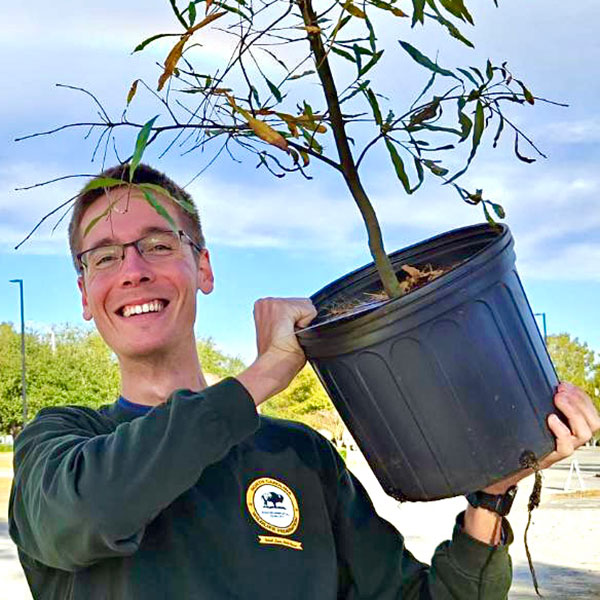
– Luke Bennett, Conservation Coordinator